2,000 working hours, 2,000 spray cans and 2,600 litres of paint: Estonia’s biggest mural is complete
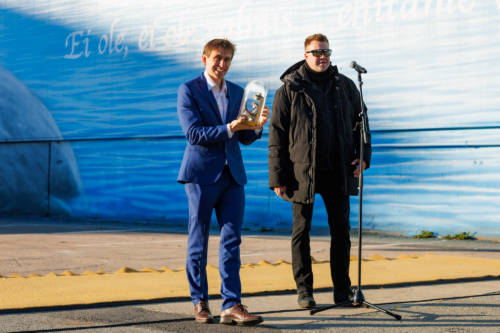
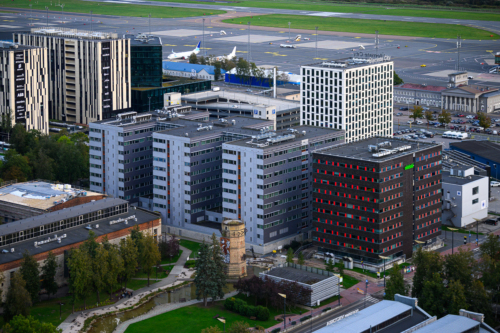
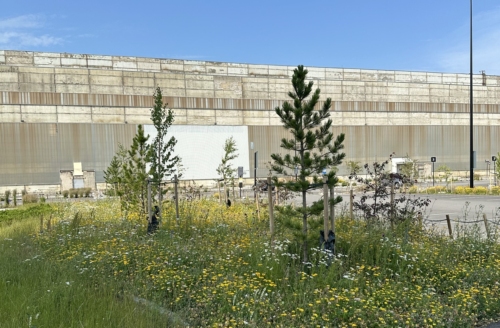
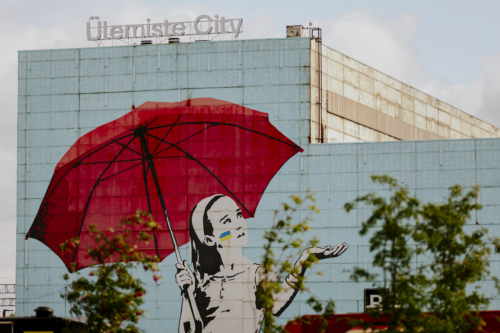
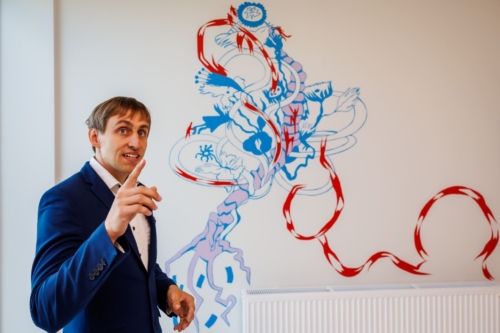
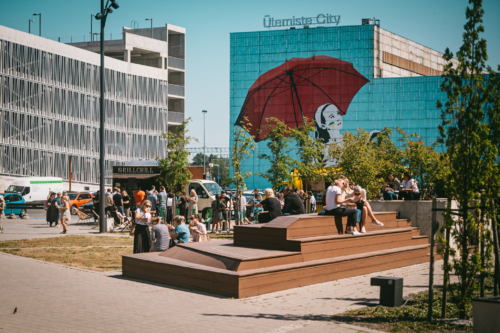
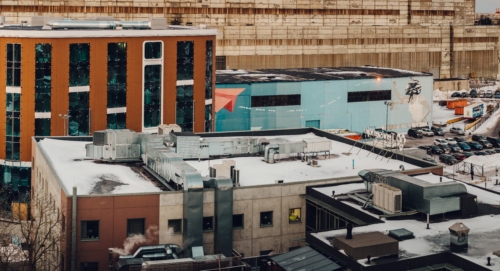
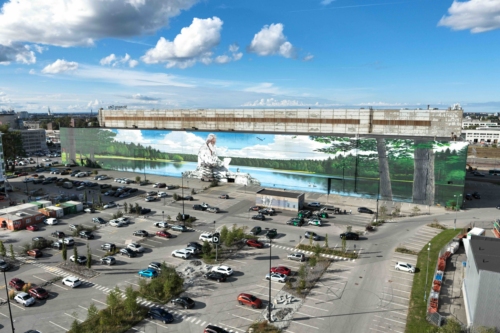
Street artist Silver “Sboy” Seeblum has completed “Ülemiste Vanake in the Lake Office” (“Ülemiste Vanake järvekontoris”), a mural of nearly 5,000 m2in Ülemiste City, Tallinn. Covering the façade of a historic industrial building, it is one of the largest spray paint artworks in Europe led by a single artist.
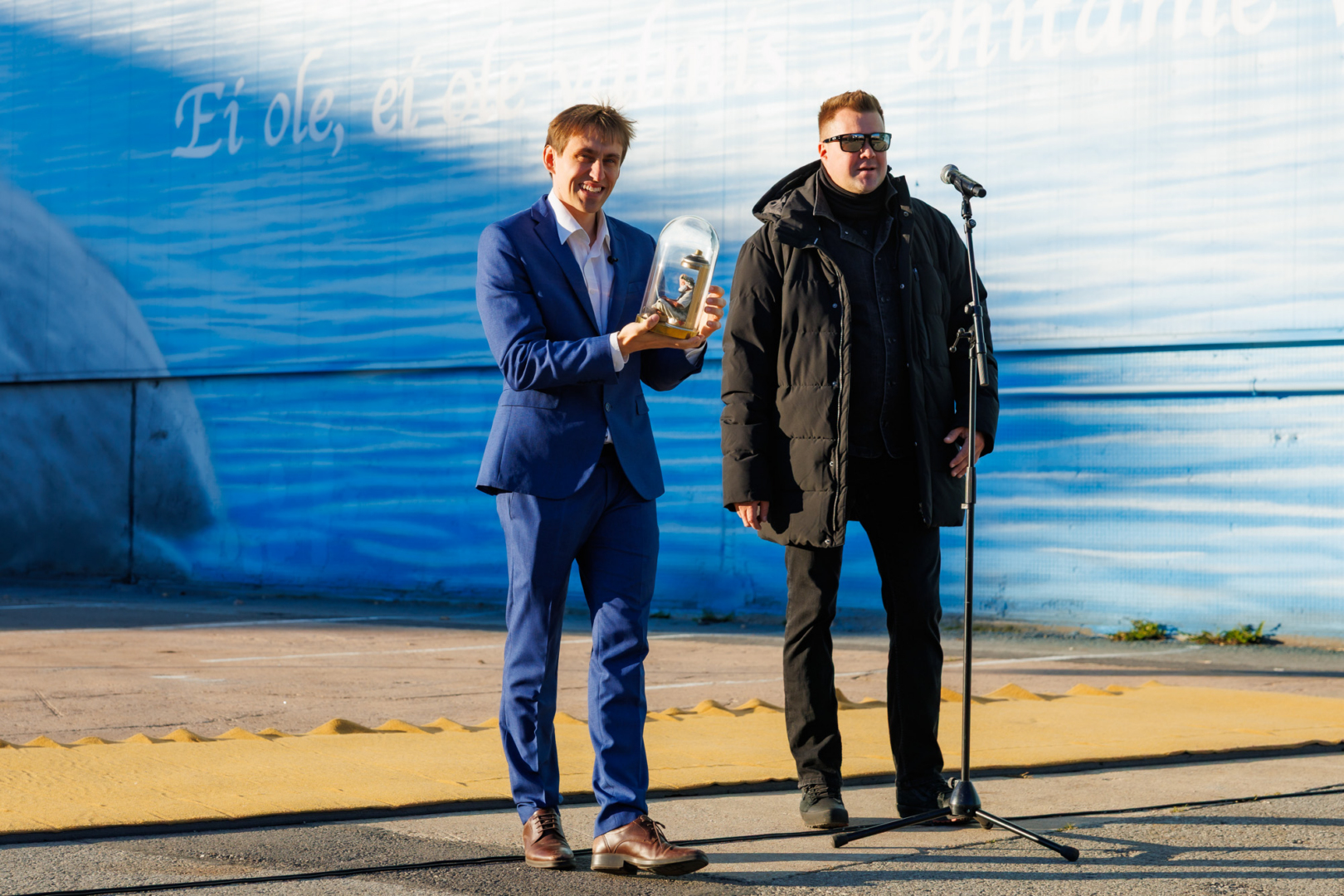
Street artist Silver “Sboy” Seeblum and his three-member team began work on Estonia’s largest mural at the end of April. After nearly half a year of work, the façade of the historic industrial building is now covered by “Ülemiste Vanake in the Lake Office”, the largest mural in Estonia and one of the largest in Europe.
“The whole project is so insanely big that I alone have certainly put in 2,000 working hours. In the final weeks the working days were 20 hours long, and the only rest came with pouring rain, which, despite the forecasts, we did not get much of at Ülemiste,” Seeblum said.
According to Sten Pärnits, Chairman of the Management Board of Mainor Ülemiste, the developer of Ülemiste City, the giant mural has given the campus, and in fact the whole of Tallinn, a new landmark.
“The idea behind the mural was not only to bring life to the wall of a dull industrial building, but to create something in this area that could become a memorable calling card for air travellers arriving in Tallinn and departing from it,” Pärnits explained.
He added that what Seeblum and his team have achieved is remarkable, and the scale of the work can only truly be grasped by coming to the campus and seeing the nearly 5,000 square metre wall with your own eyes. “We gave Silver a free hand, and the result is inspiring for the entire business campus community. It proves that there really are no limits to human ability.”
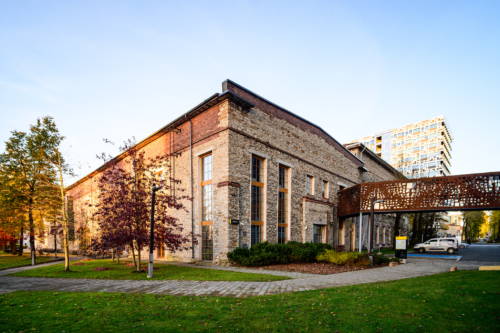
The team first sanded around 3,000 square metres of polycarbonate panels with four machines, cleaned the rust off the metal parts and pressure washed the entire surface. The metal details were repainted, and the plaster and stone were deep impregnated. The entire 4,995 square metre surface was then covered first with white primer and then with another coat of white paint. Seeblum drew the outlines of the design onto the wall himself, using a battery powered paint sprayer and virtual reality glasses. In June, the whole team covered the larger areas with base tones. Since the beginning of July, Seeblum has worked on the mural mostly alone, with only an assistant to help. According to the artist, painting the background took nearly two months, and Ülemiste Vanake himself three weeks.
The mural used nearly 2,000 spray cans of 0.4 litres and over 2,600 litres of Caparol paint, primer, metal paint and impregnating agent. Seeblum used around 50 shades and mixed many of them further by eye. The finest lines were drawn with spray caps brought from Spain.
“Towards the end it was really hard, but I regret nothing, and not once did I feel that I could not do it. I knew that afterwards I would feel proud and good. I live in the Lurich building in Ülemiste City myself, and every day I see from my 10th floor window what I have done. And I would do it again,” Seeblum said.
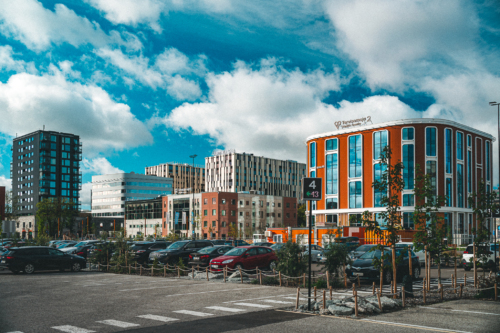
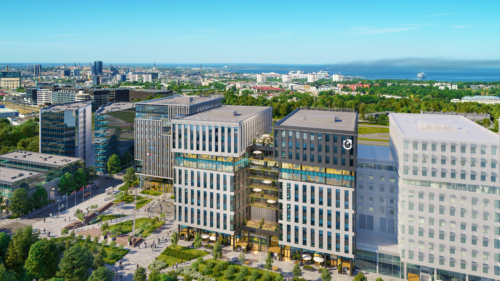
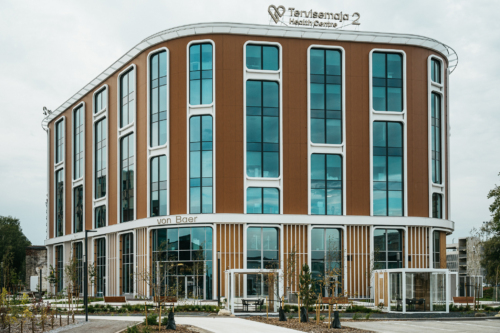
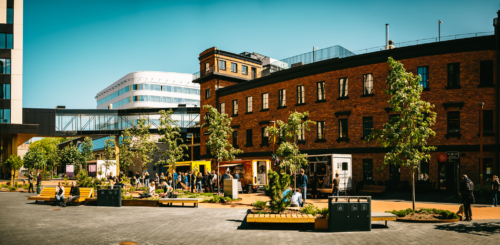
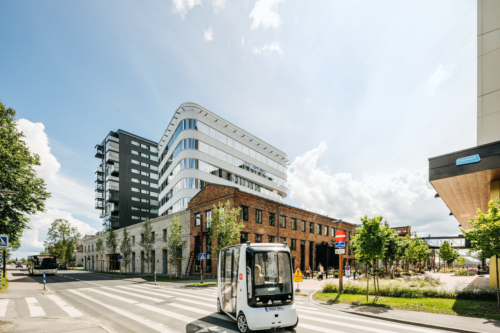
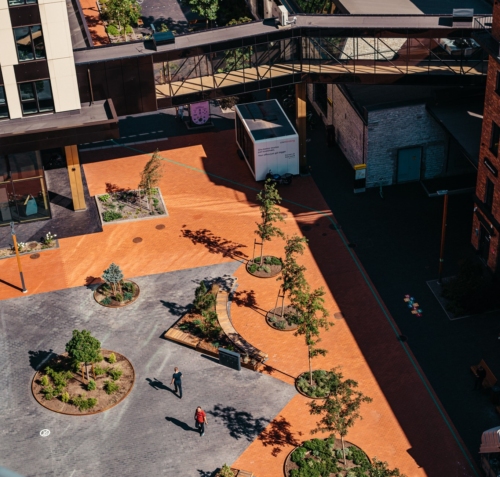
Ülemiste City is the largest business campus in the Baltics: home to nearly 400 companies and a working, learning and living environment for 18,000 people. Ülemiste City is developed by Mainor Ülemiste, a subsidiary of Mainor AS. The 30 hectare campus has 170,000 square metres of leasable office space.
Silver “Sboy” Seeblum is an Estonian street artist, designer, tattoo artist and graffiti artist who has been active since 1999. He is the organiser of the “Eesti 100” international street art festival, which produced nearly 60 murals across Estonia. Seeblum leads the Sprayer Tallinn team, which specialises in creating large scale spray paint artworks.
According to Estonian folklore, Lake Ülemiste on the edge of Tallinn is home to a spirit known as the Old Man of Ülemiste (Ülemiste vanake). Once a year, on a dark autumn night, he rises from the lake, walks to the city gates and asks the watchman: “Is Tallinn finished yet?” The answer is always the same: “No, there is still much to build.” If anyone ever told him the city was complete, he would release the waters of the lake and drown Tallinn. The legend has long served as a reminder that the city must never stop growing, and today it symbolises Tallinn’s spirit of constant development.