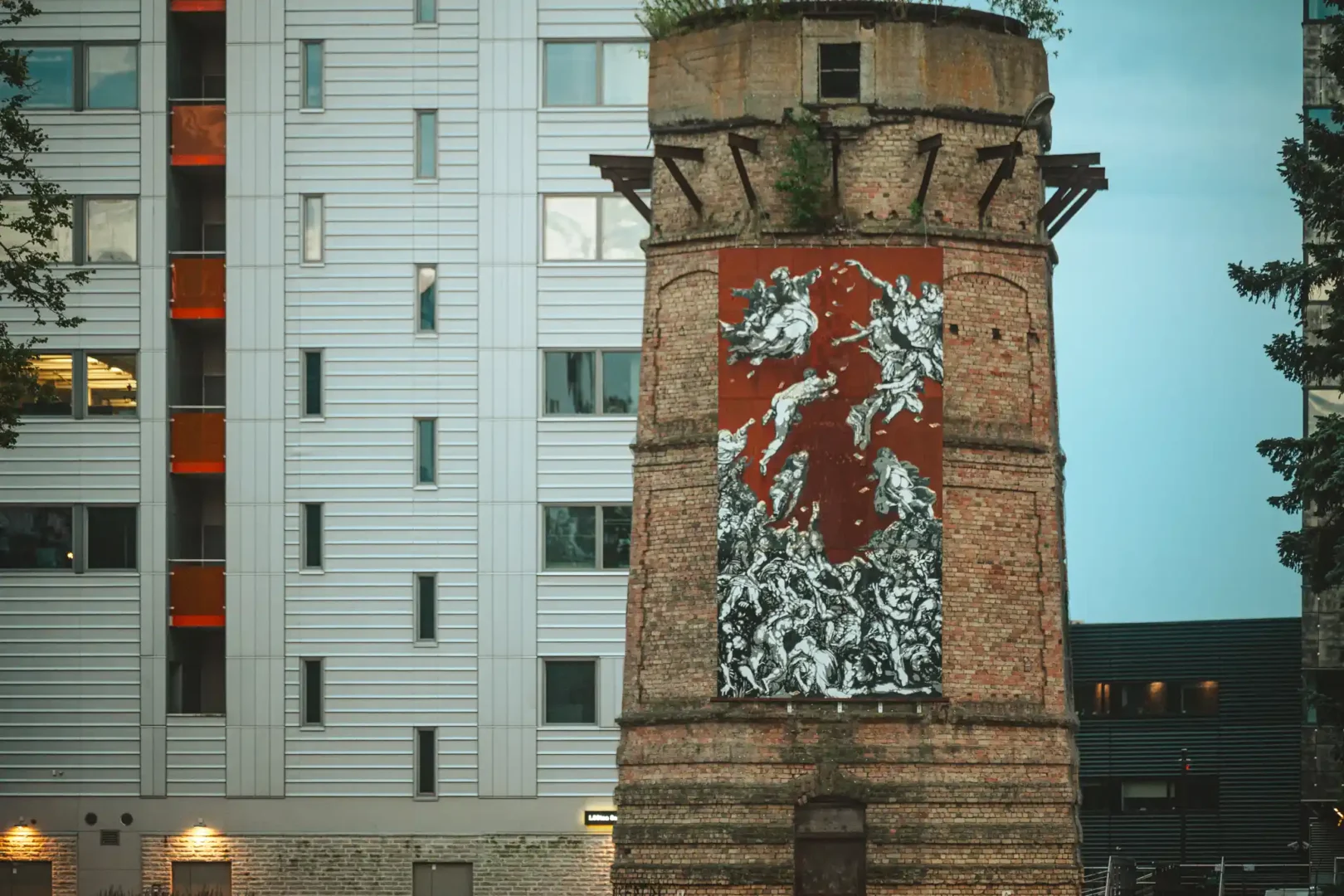
The Last Judgement Day
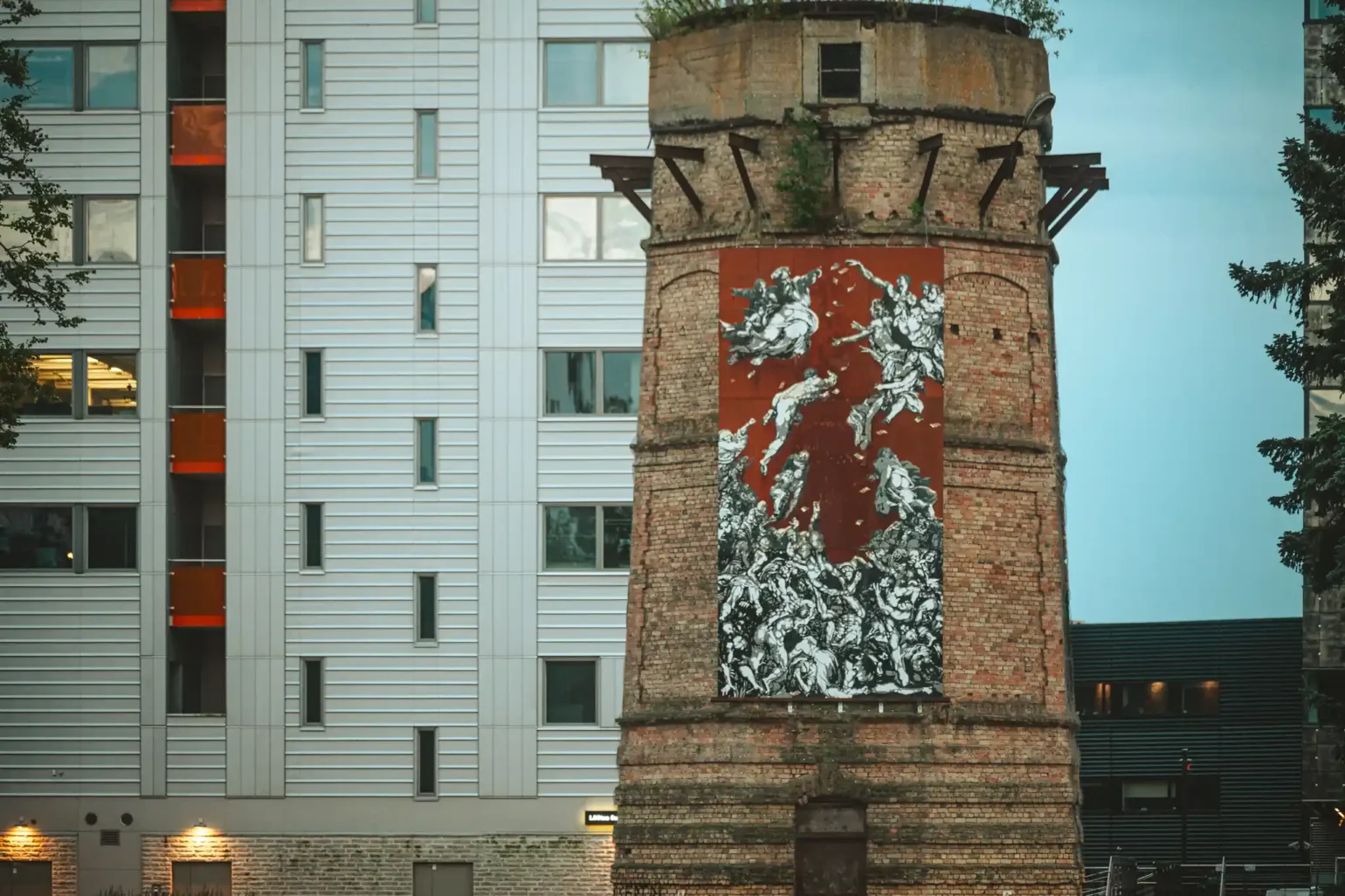
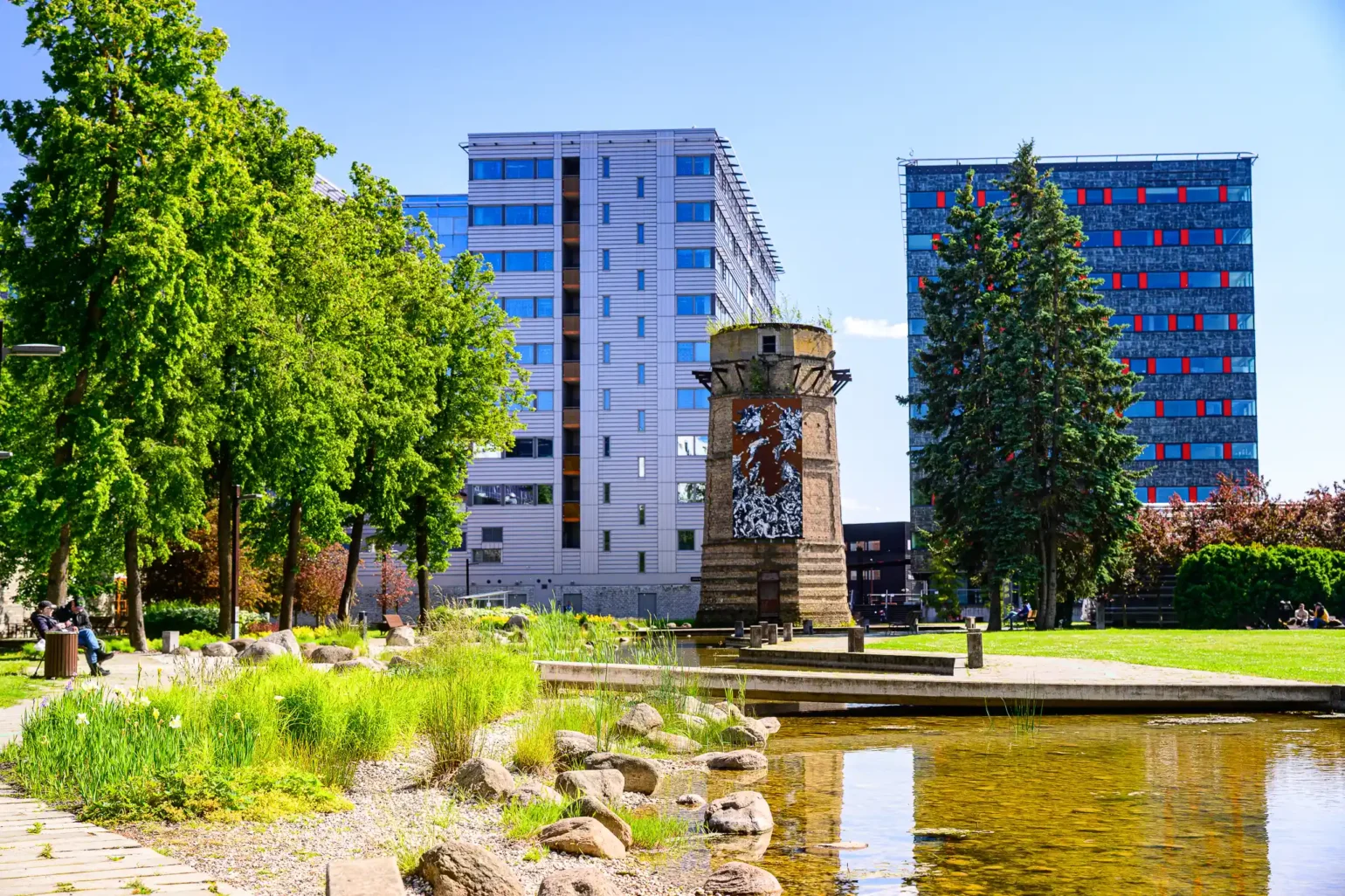
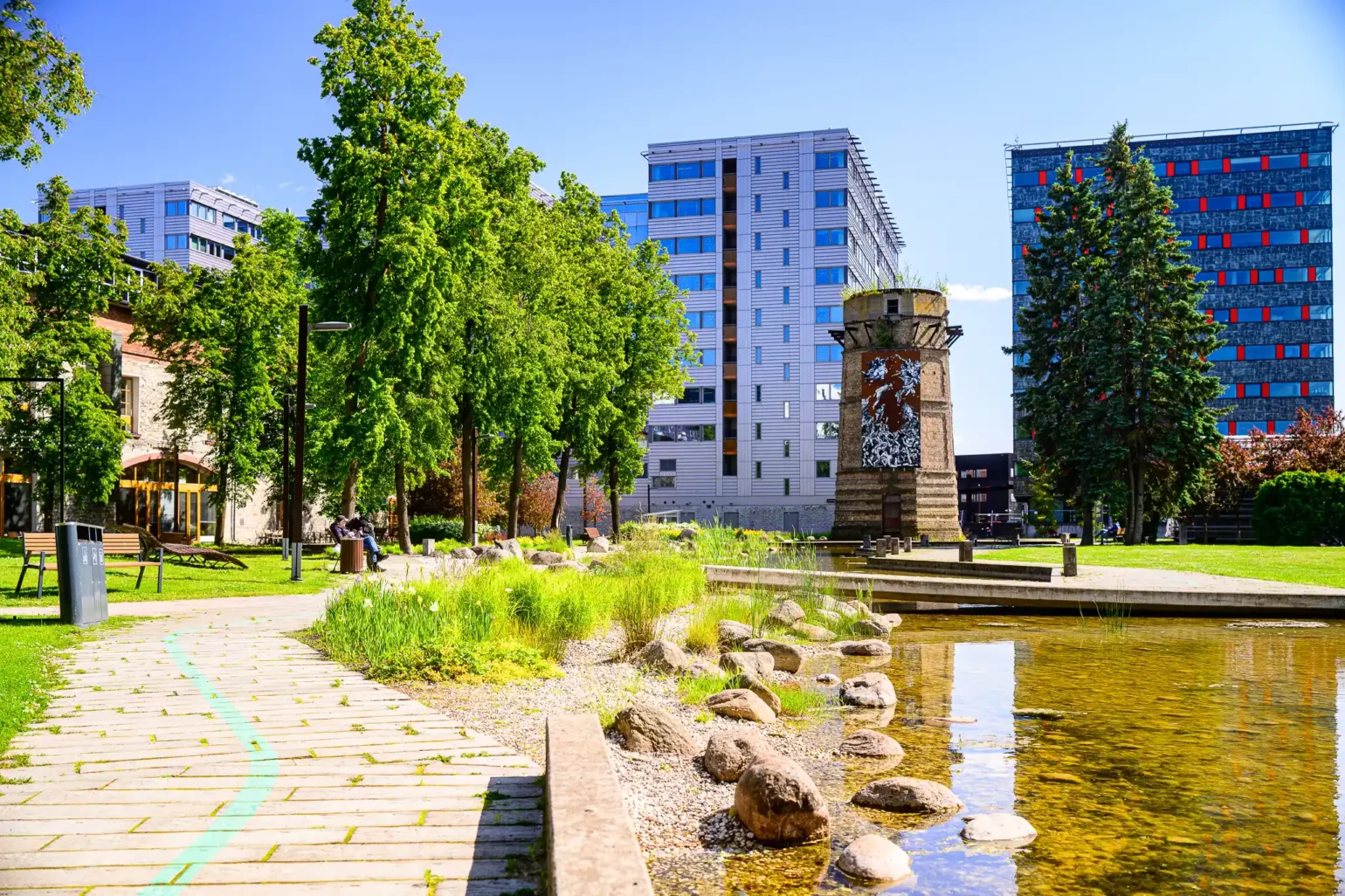
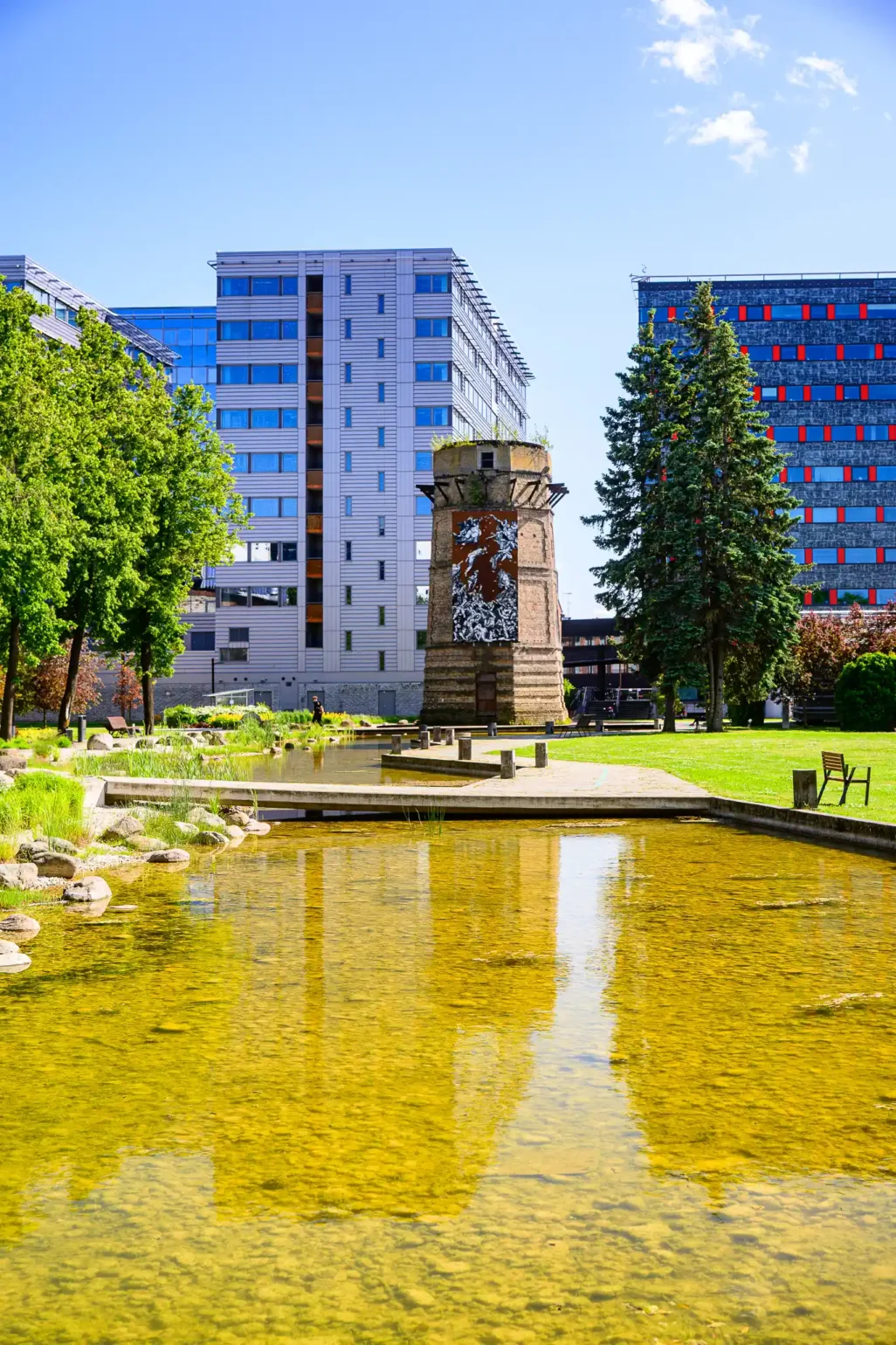
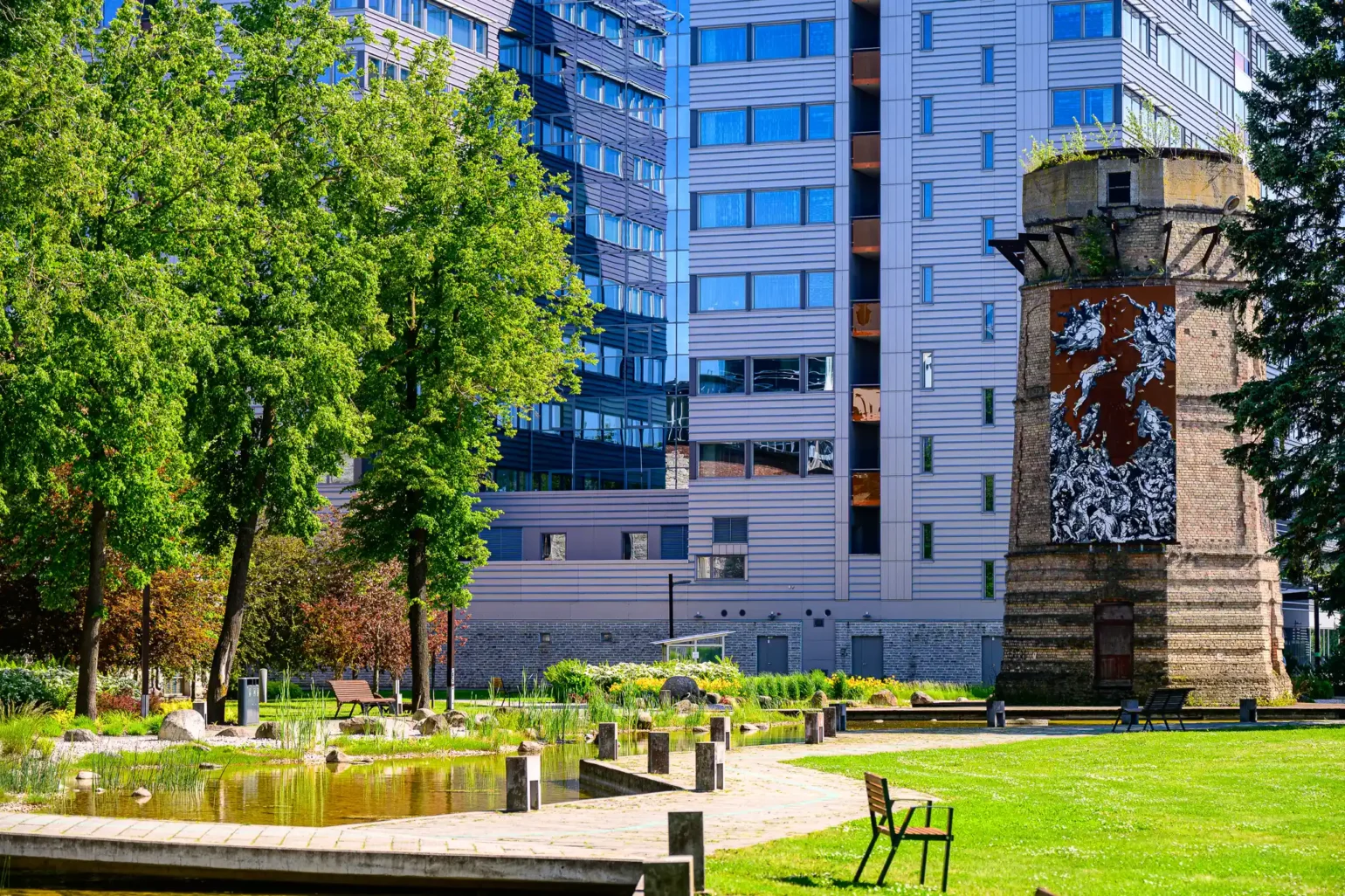
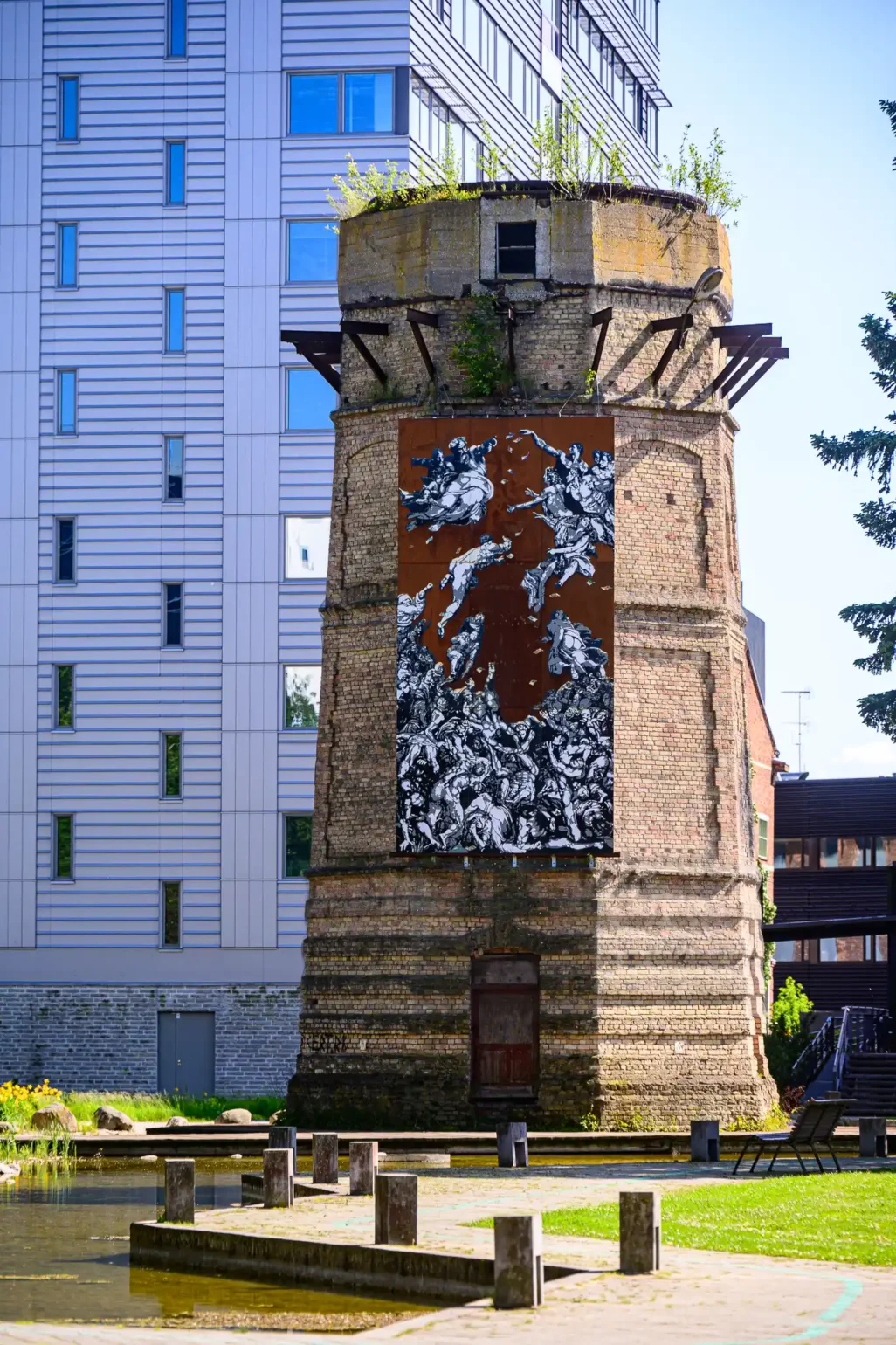
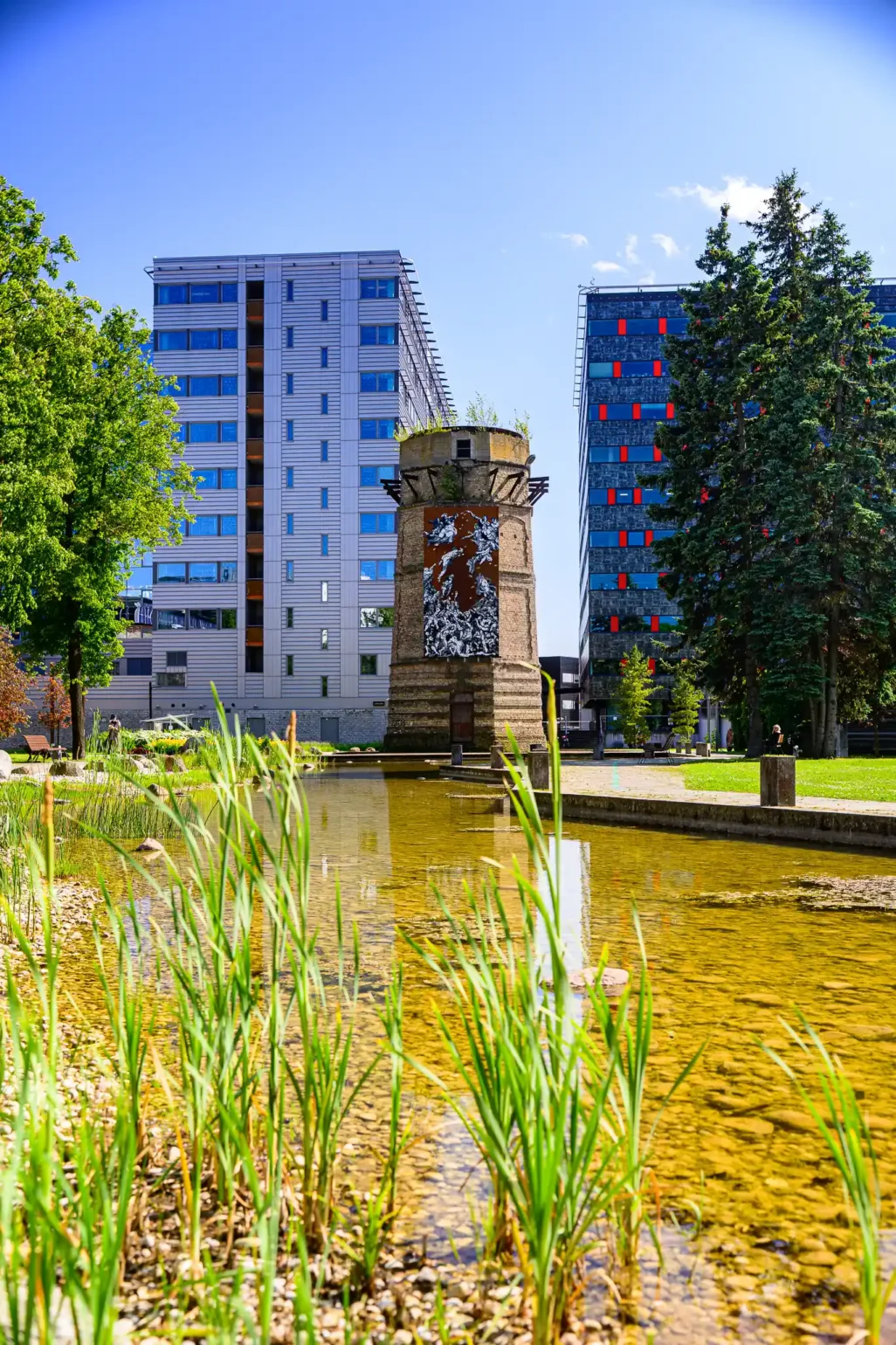
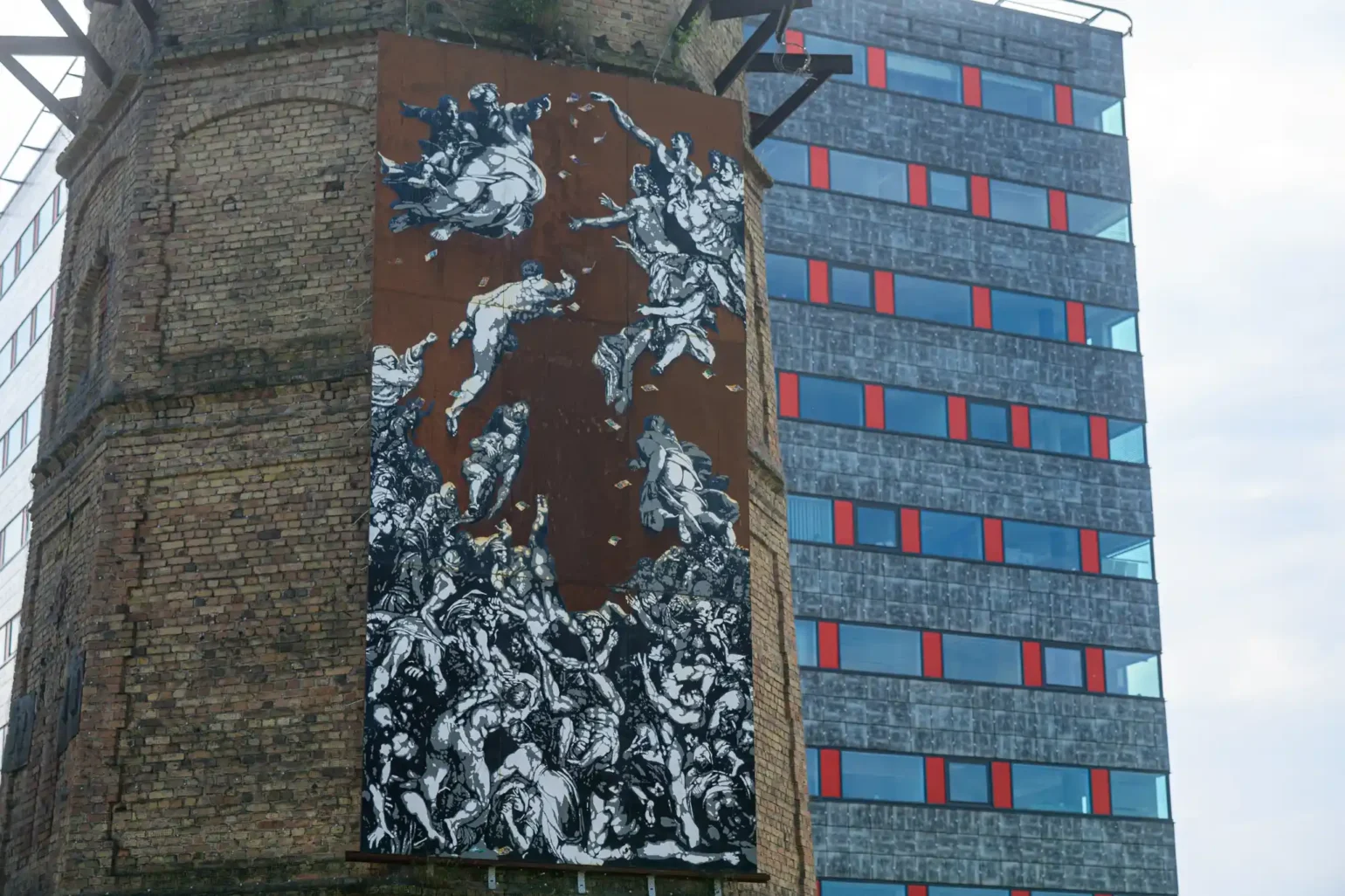
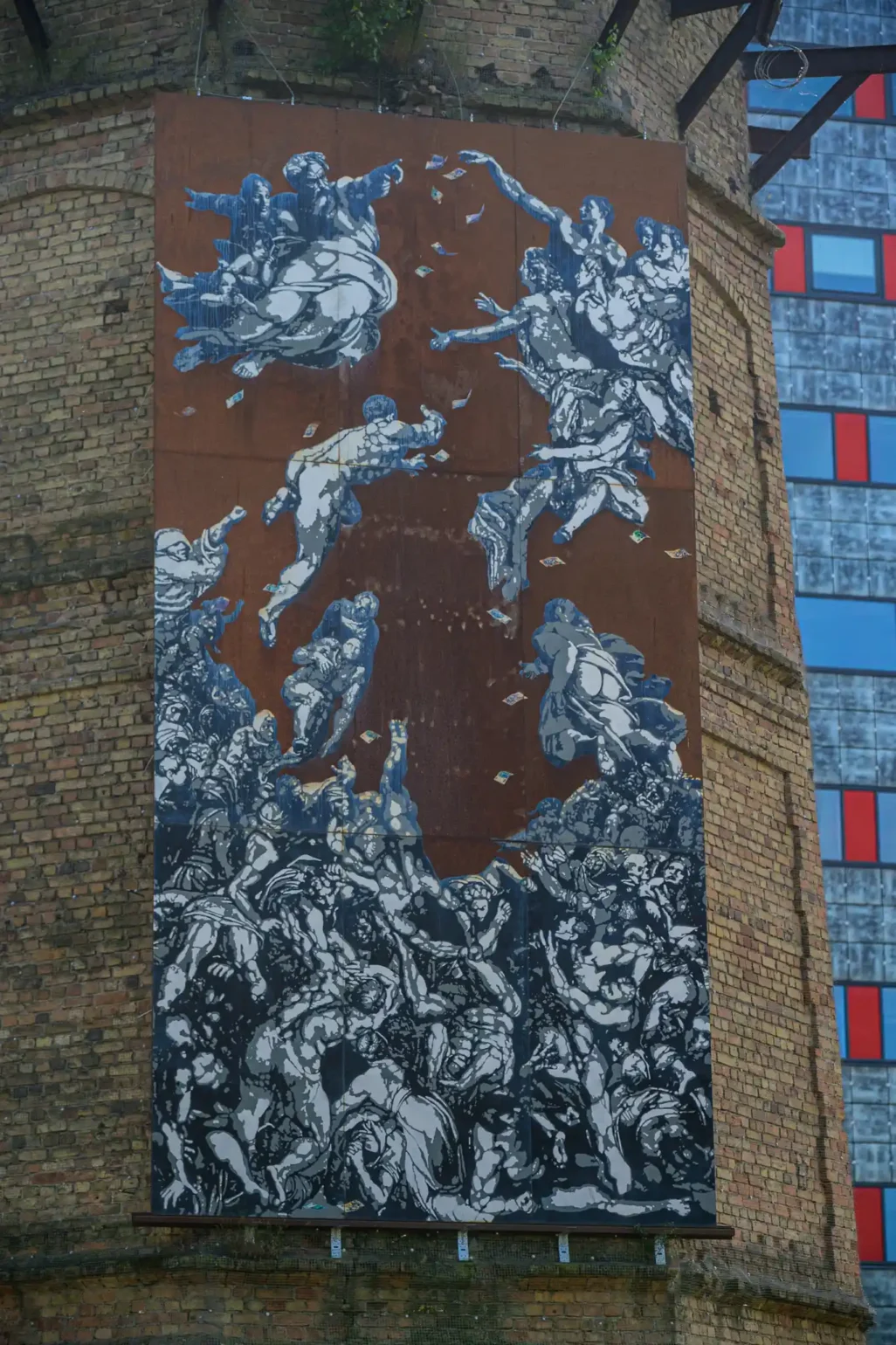
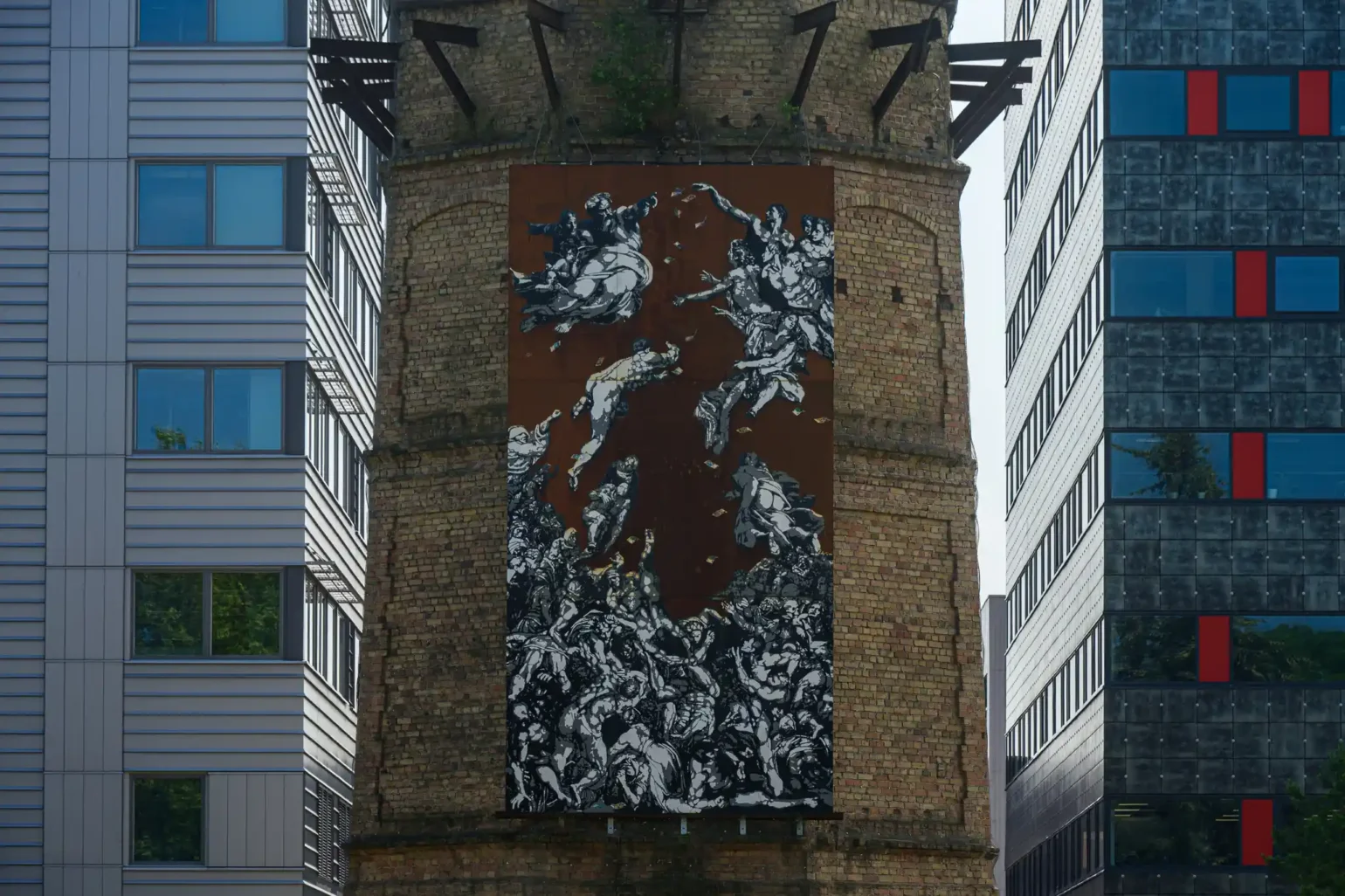
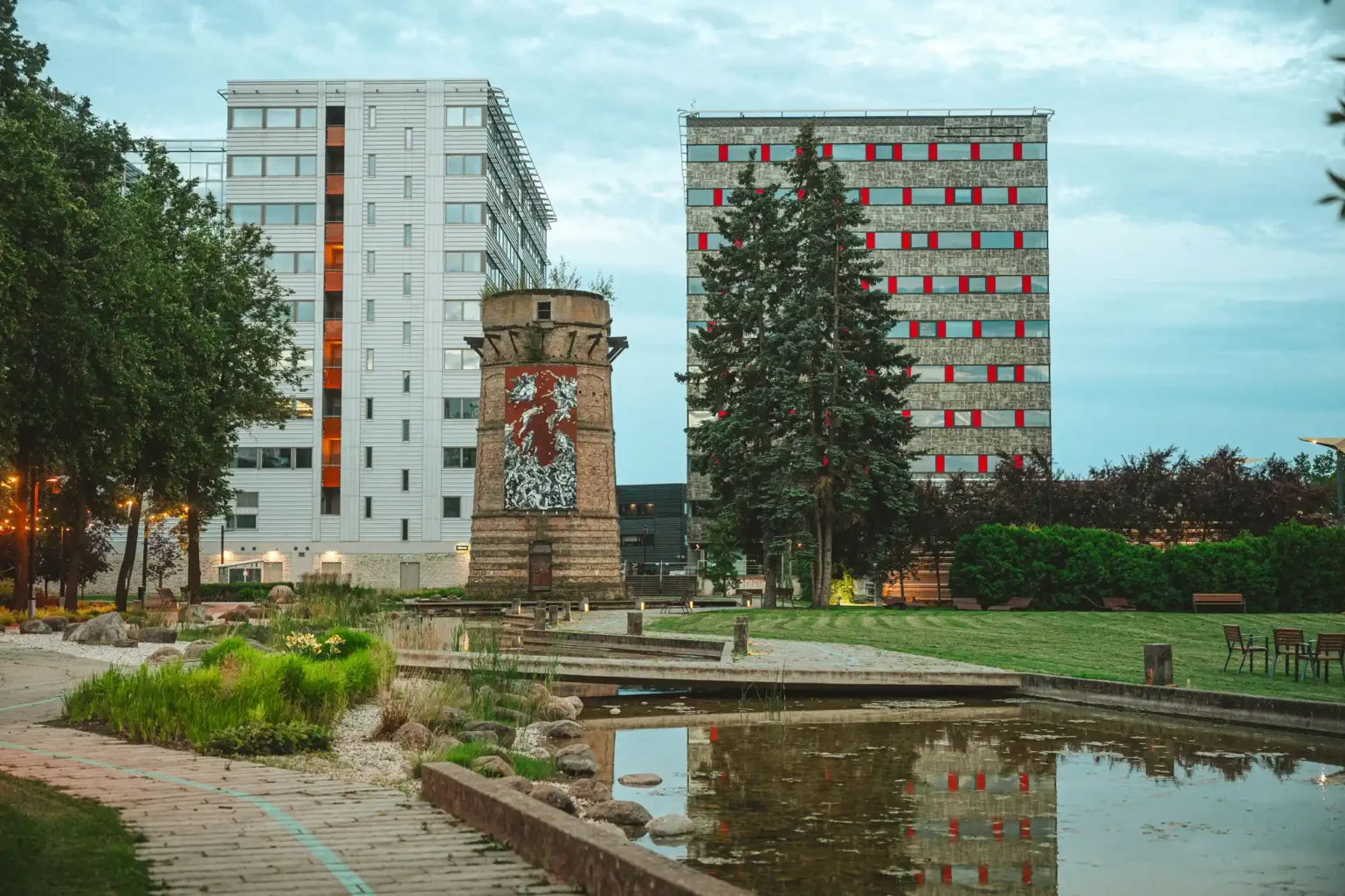


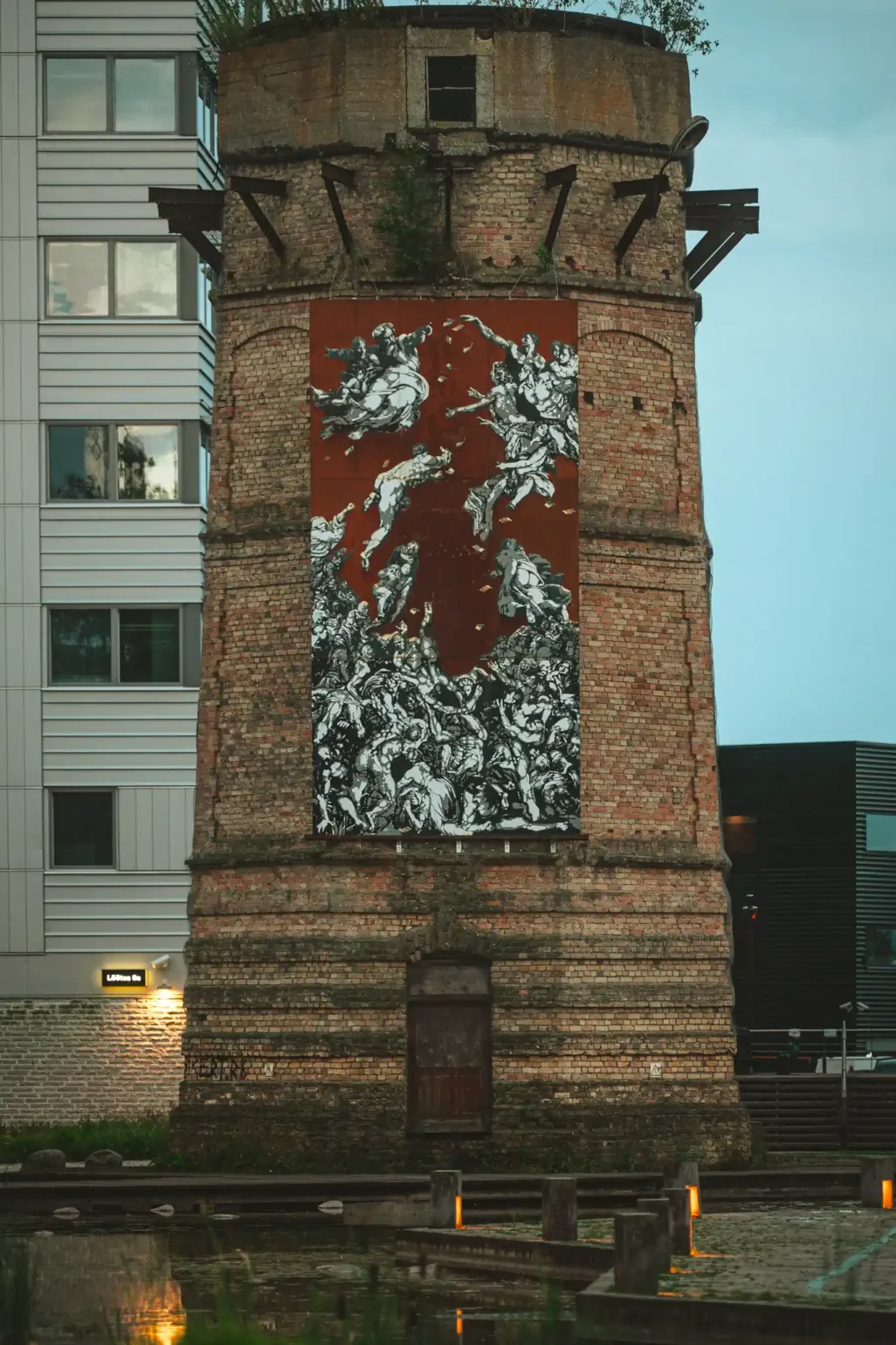
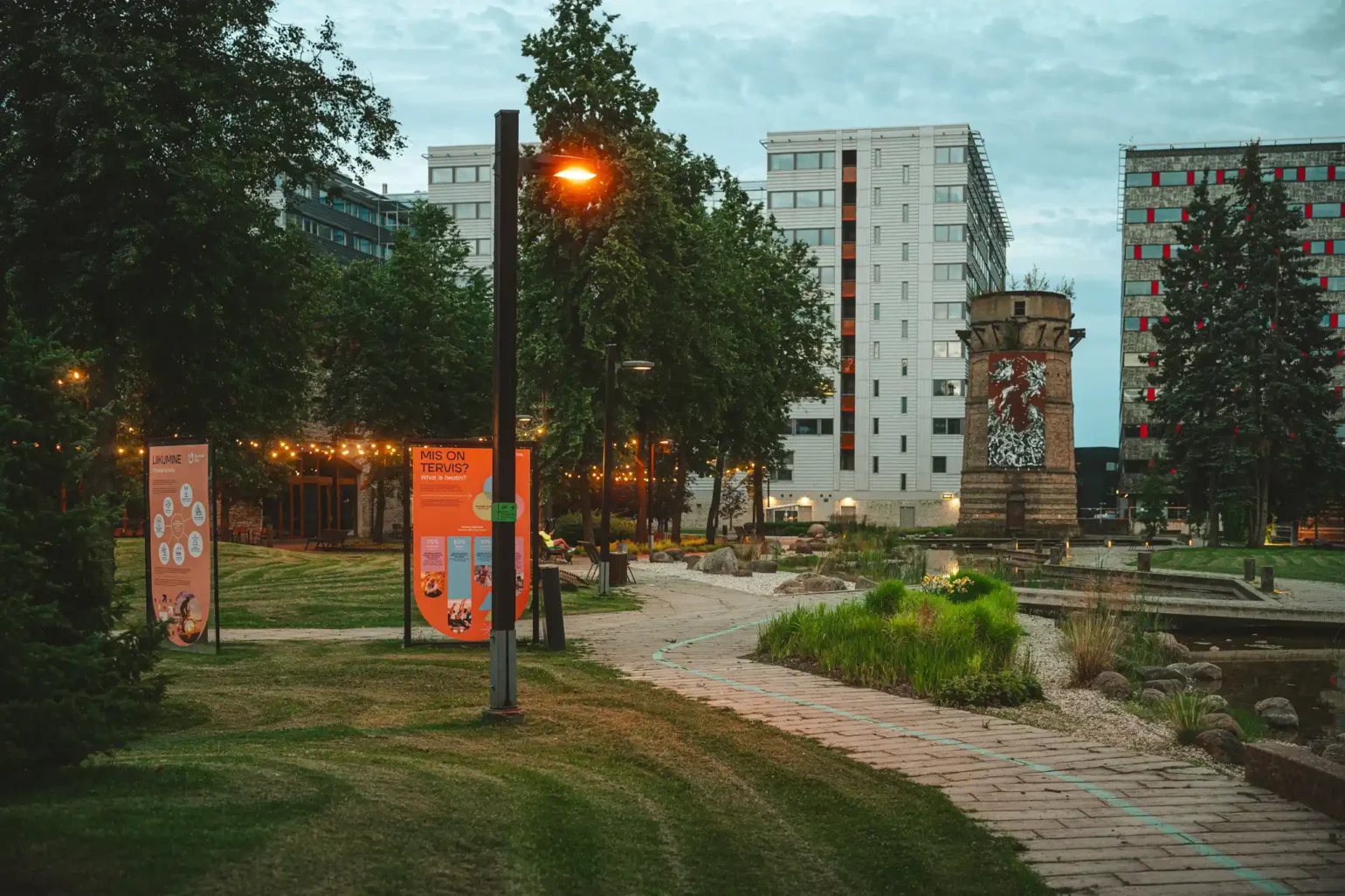
“The Last Judgment Day” is a monumental street art work created by Edward von Lõngus, which combines classical art, contemporary social criticism and a strong spatial context. The work, almost eight metres high, is executed on steel plates and installed on the old water tower of Ülemiste City, whose history adds an important layer of meaning to the work.
The work is the artist’s interpretation of Michelangelo’s famous fresco “The Last Judgment” in the Sistine Chapel, but placed in the context of today’s world. As the author himself describes it, it is like an “altarpiece for a modern religion”, where the central faith is no longer God, but money and economic success.
Visually, the work feels grand and sacred, but its content is critical and warning. Lõngus draws attention to social inequality and values, where “the top one percent owns most of the world’s wealth, while the rest try to survive”. This creates a parallel with the idea of religious salvation, replacing it with the contemporary struggle for wealth and status.
The location of the work also plays an important role. The former water tower, which once served clean water as the basis of life, was later turned into an oil tank and then left empty and abandoned. The artist calls it “a silent monument to a world that values oil more than clean water”, emphasising the shift in the environment and in values. It is precisely this contrast that makes the location especially powerful for the work.
“The Last Judgment Day” carries a clear warning. According to the artist, it refers to the fragility and instability of the world order, where a system that has seemed self-evident so far may unexpectedly collapse. The work reflects the crises and changes of recent years, inviting the viewer to think about both personal and social choices.