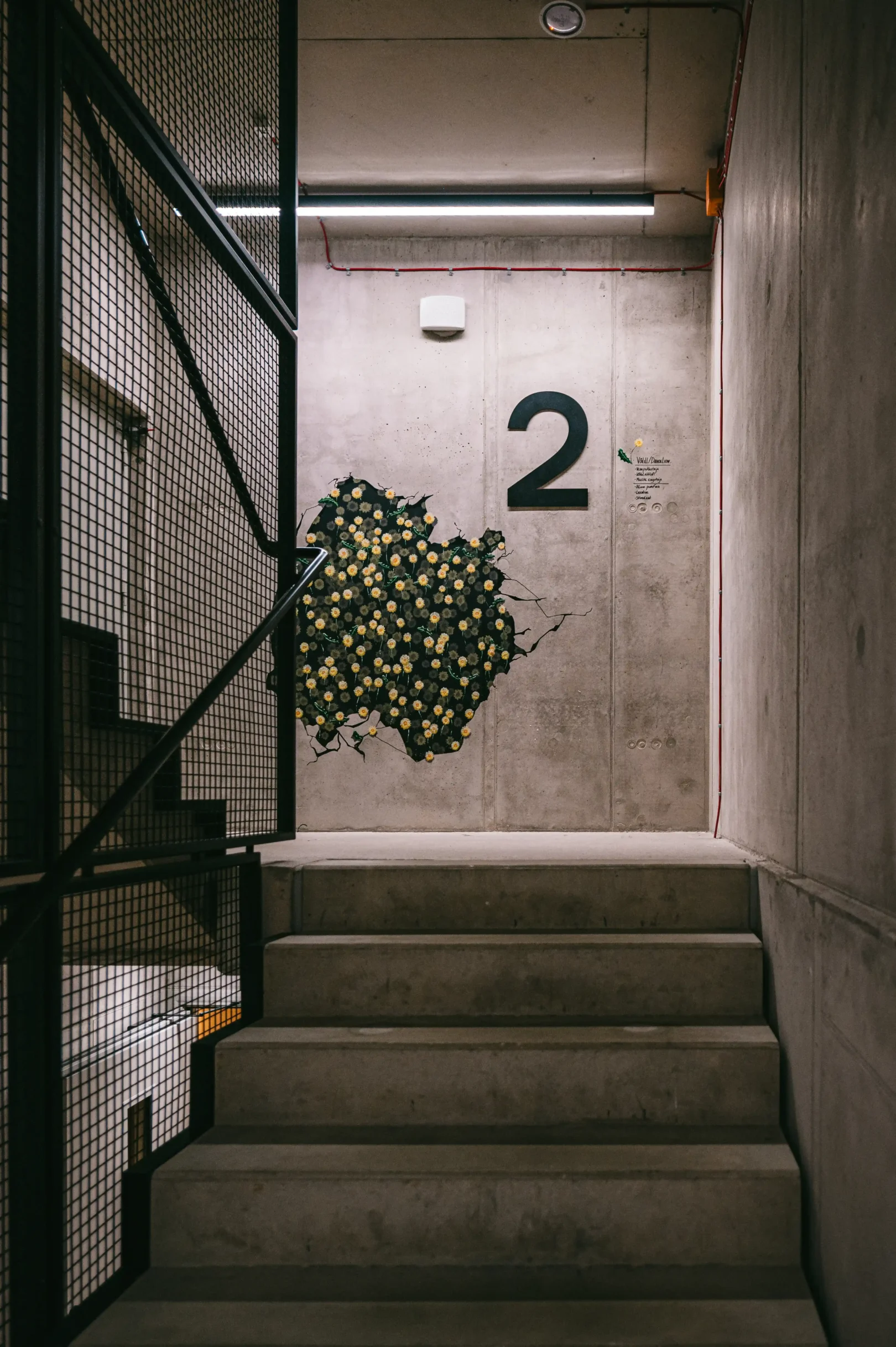
Estonian Medicinal Plants Break Through
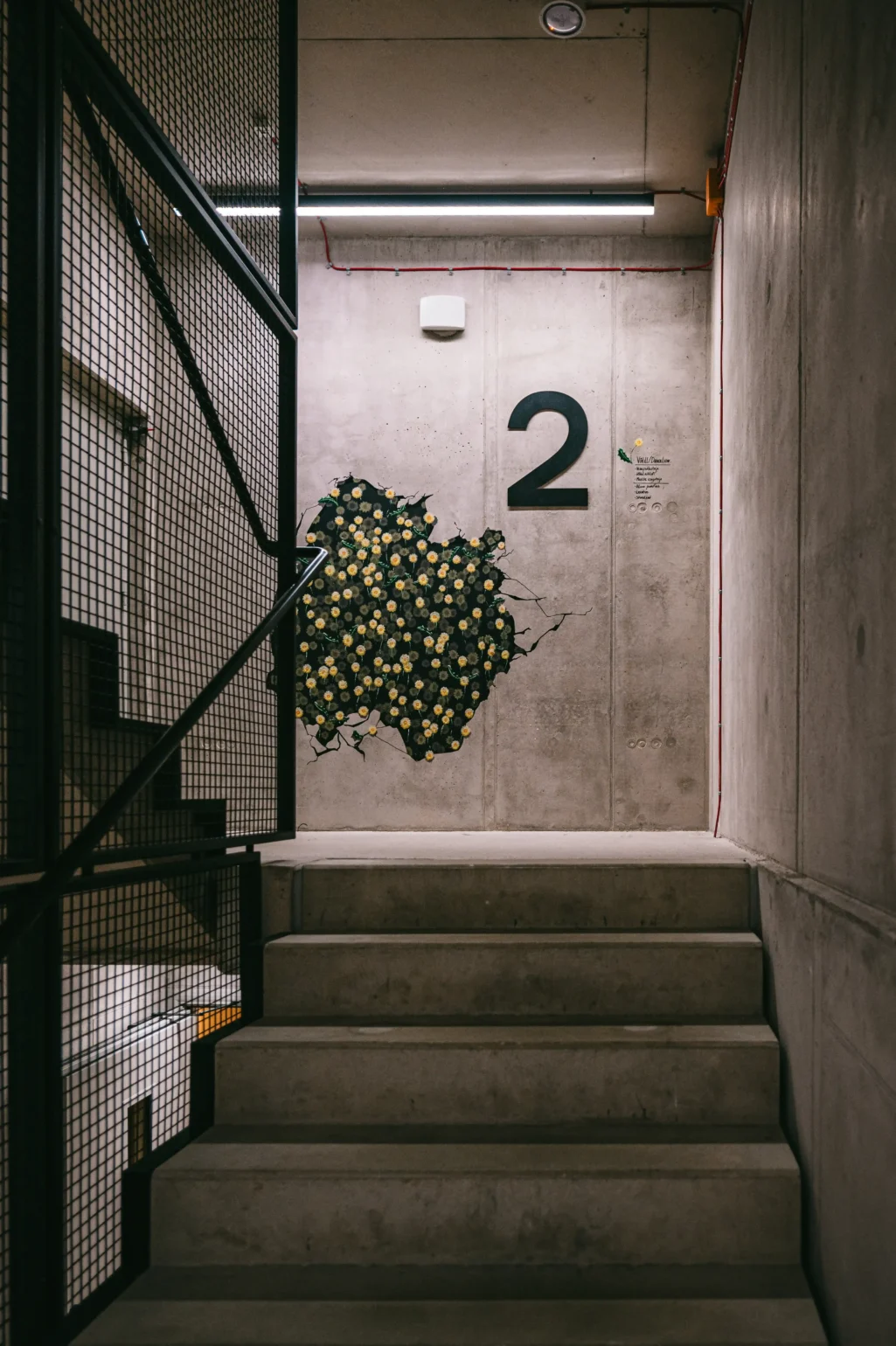
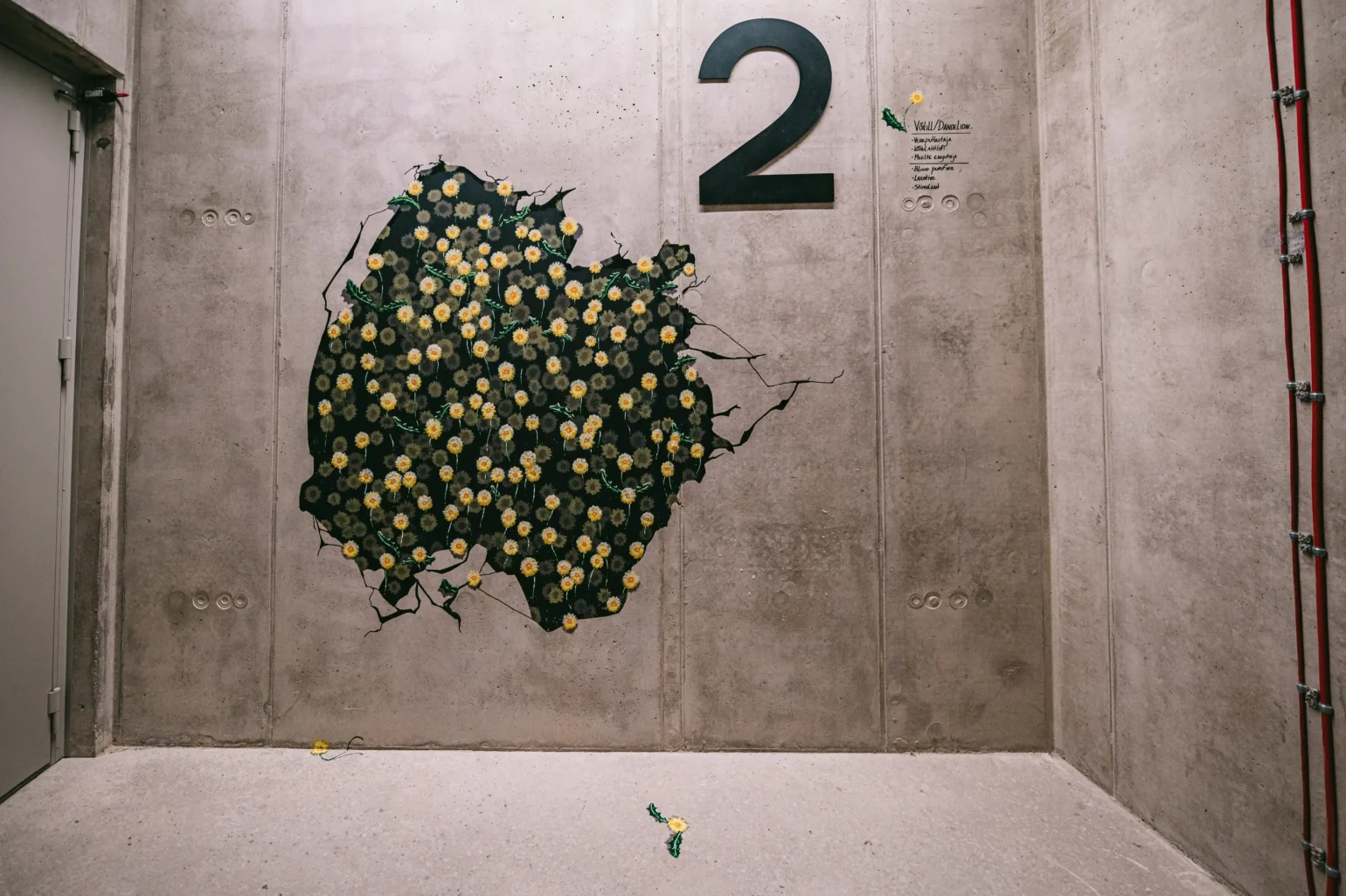
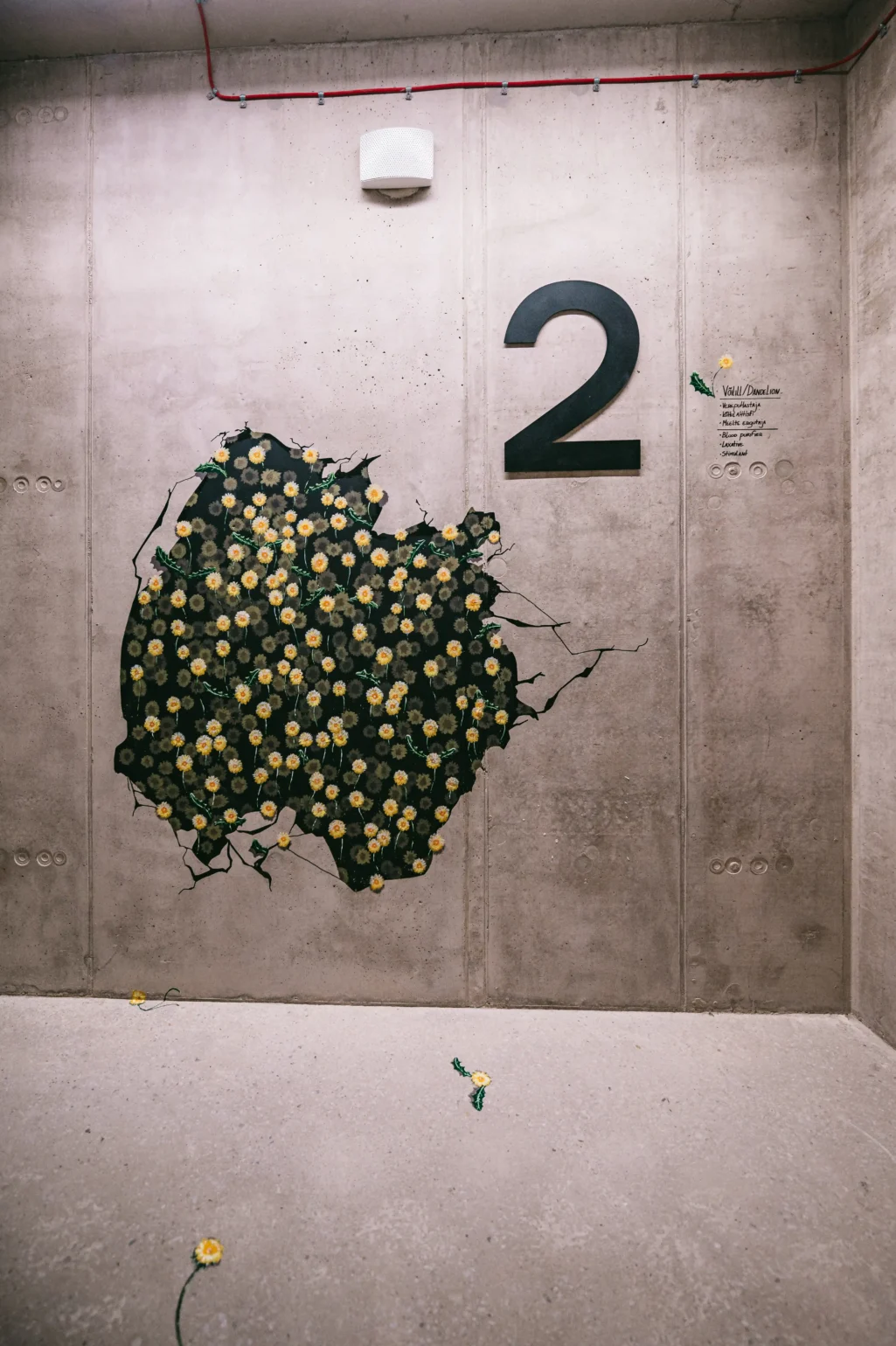
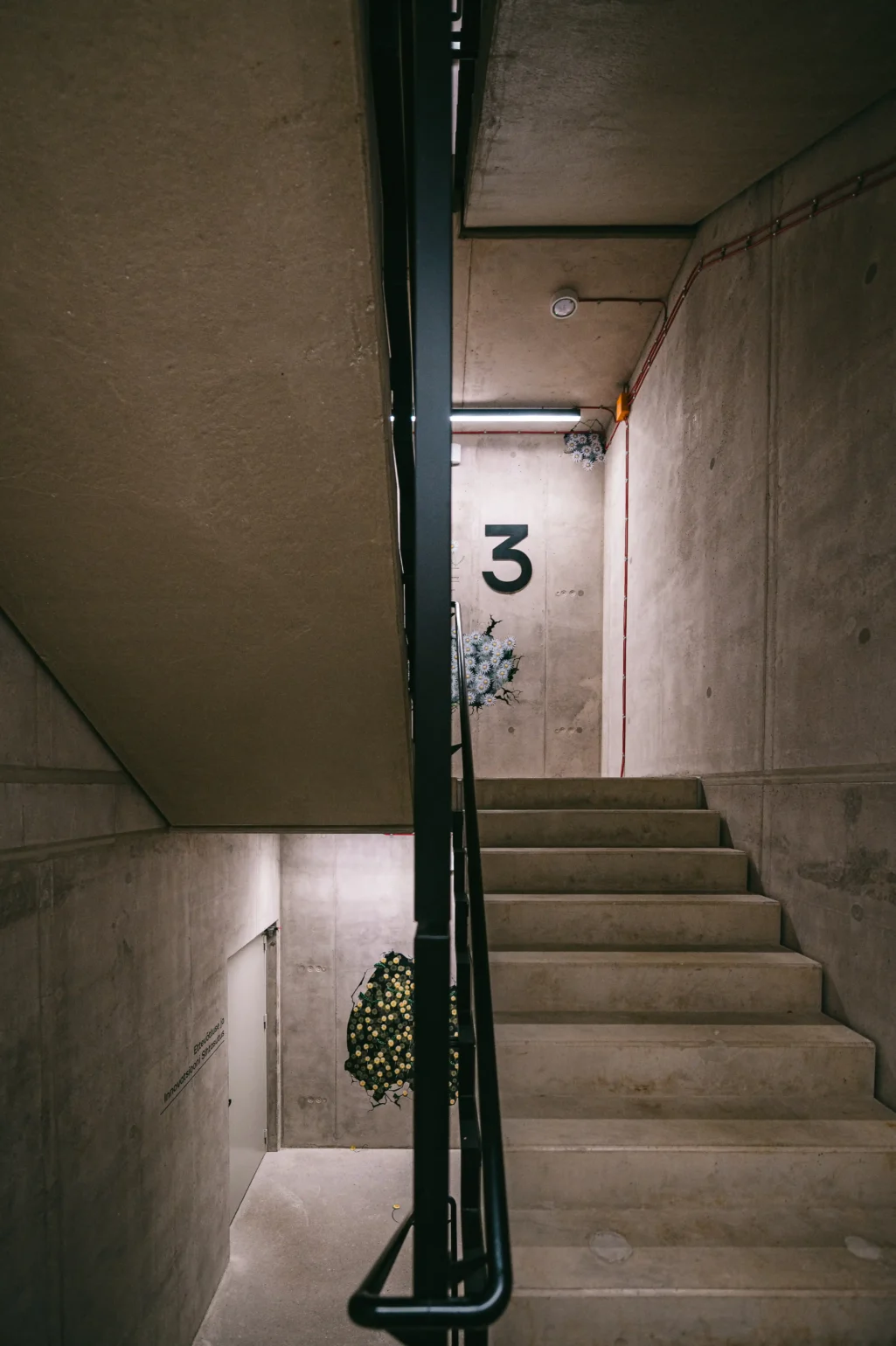
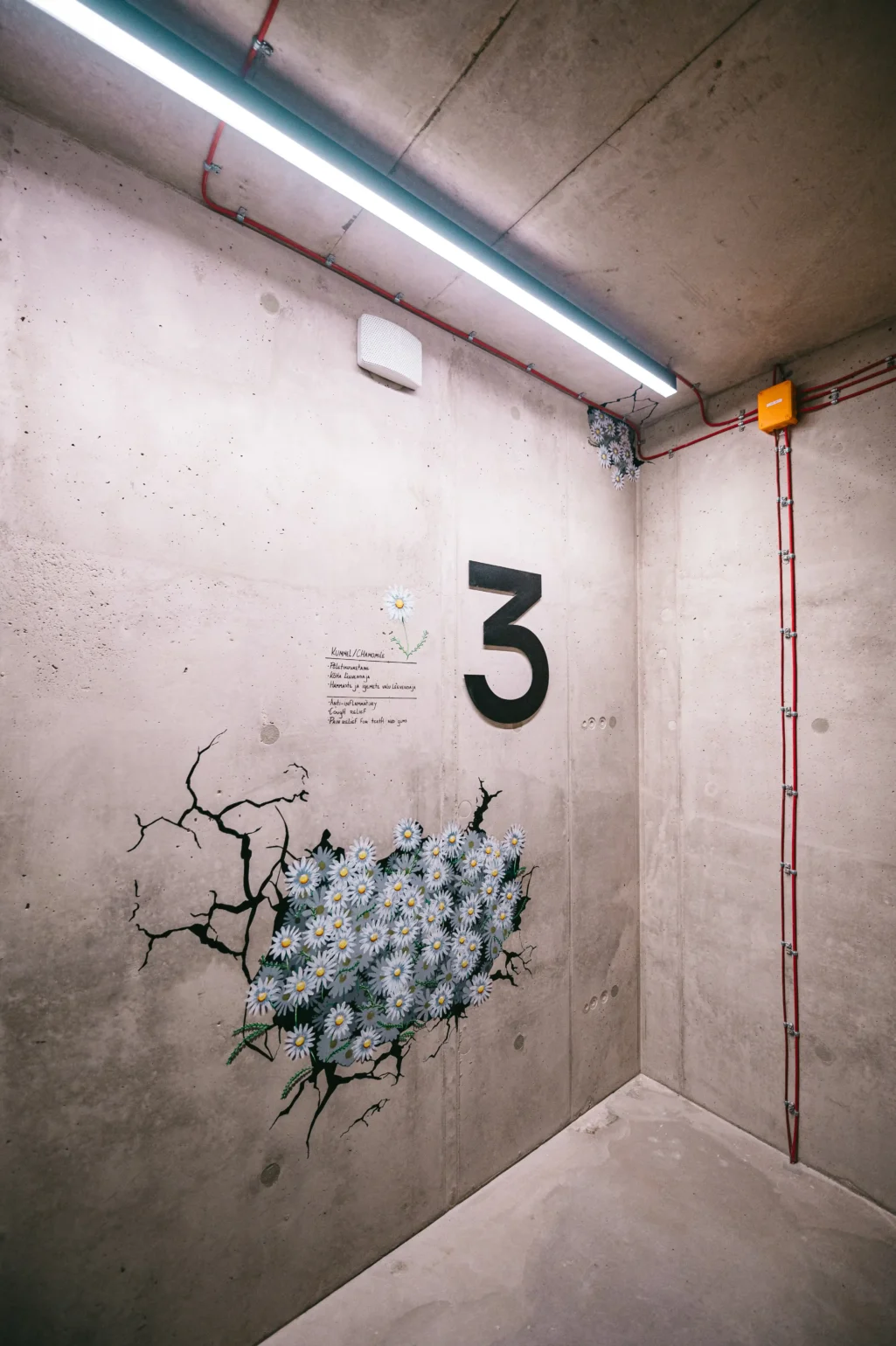
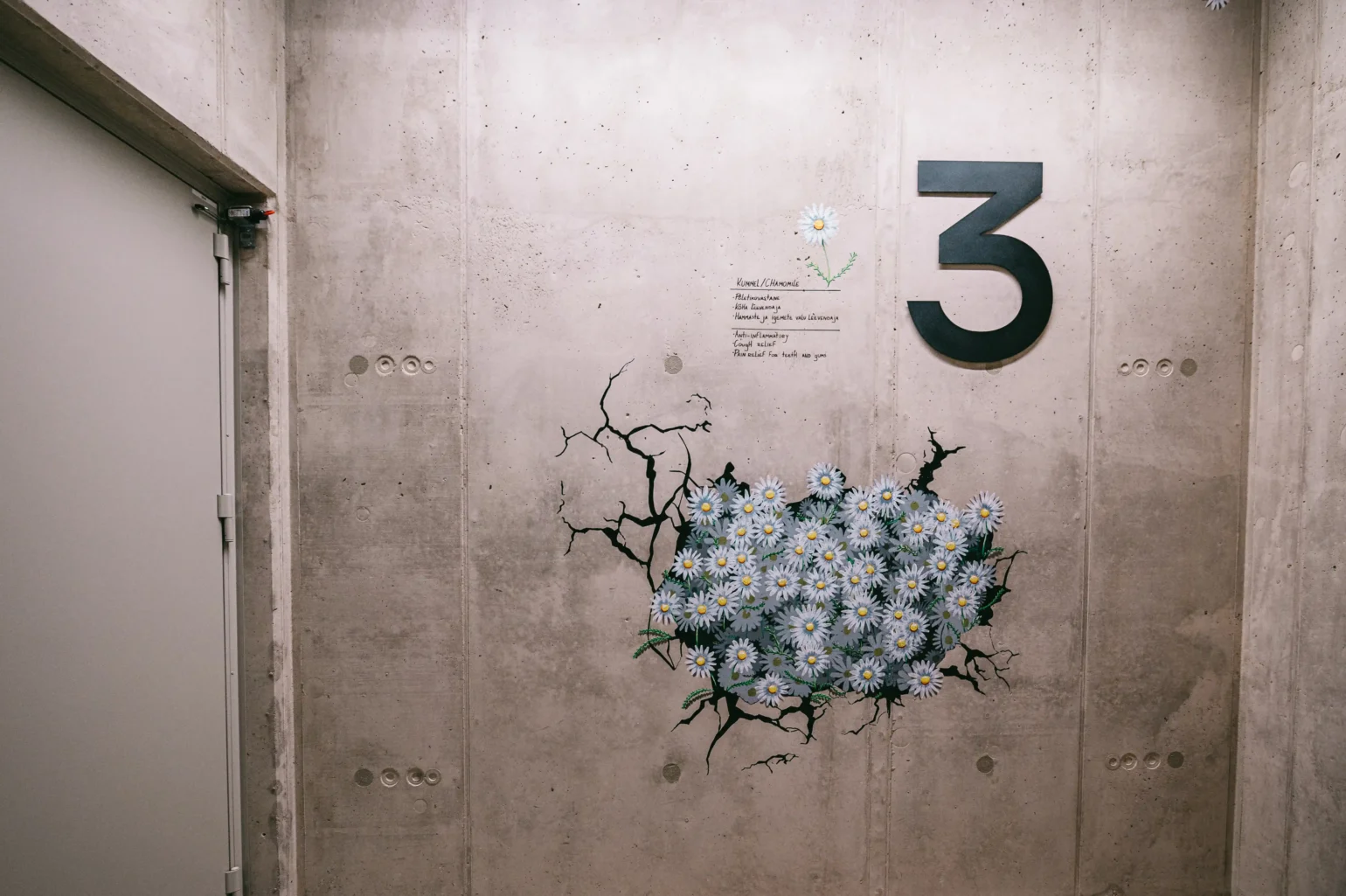
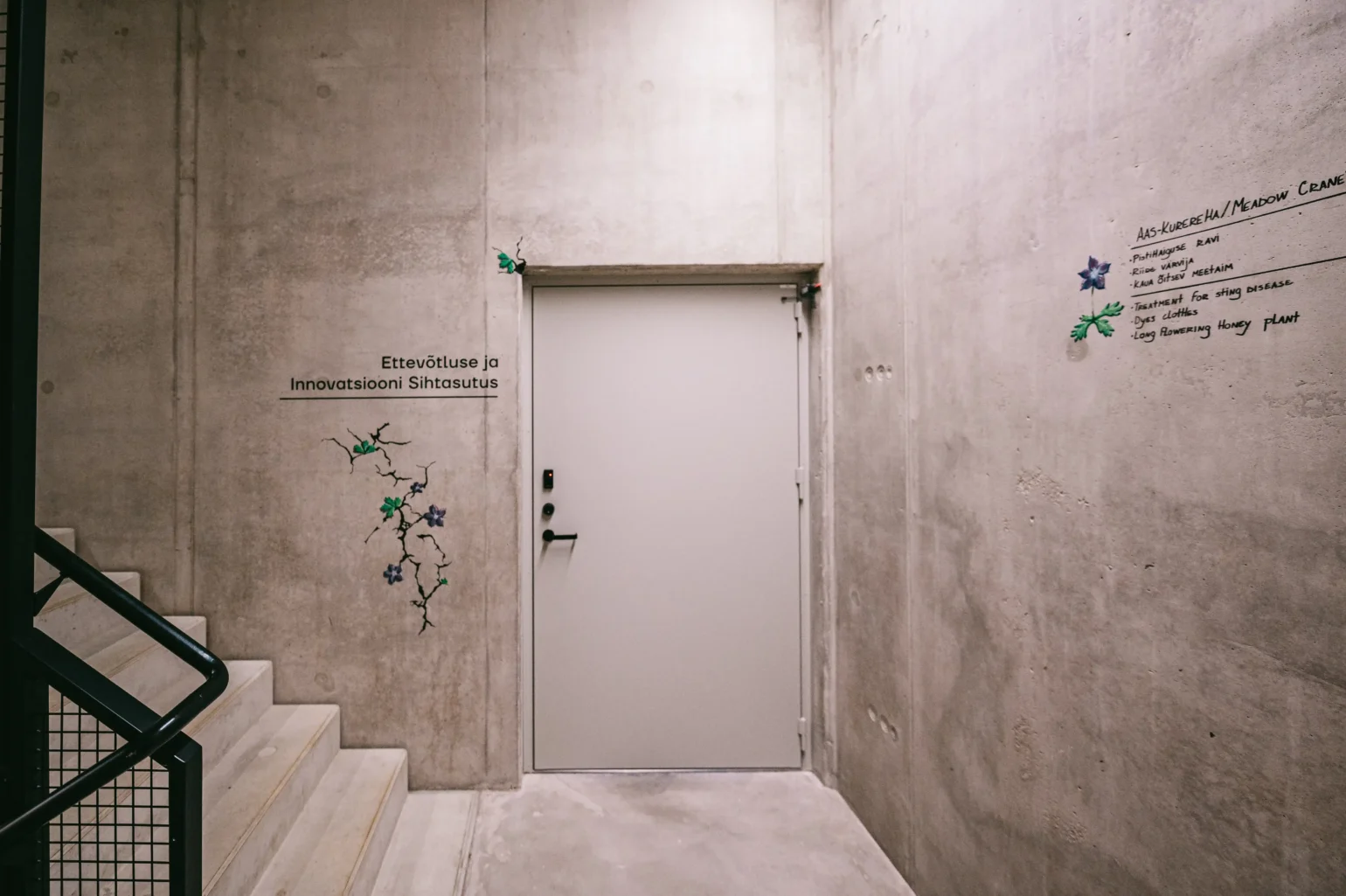
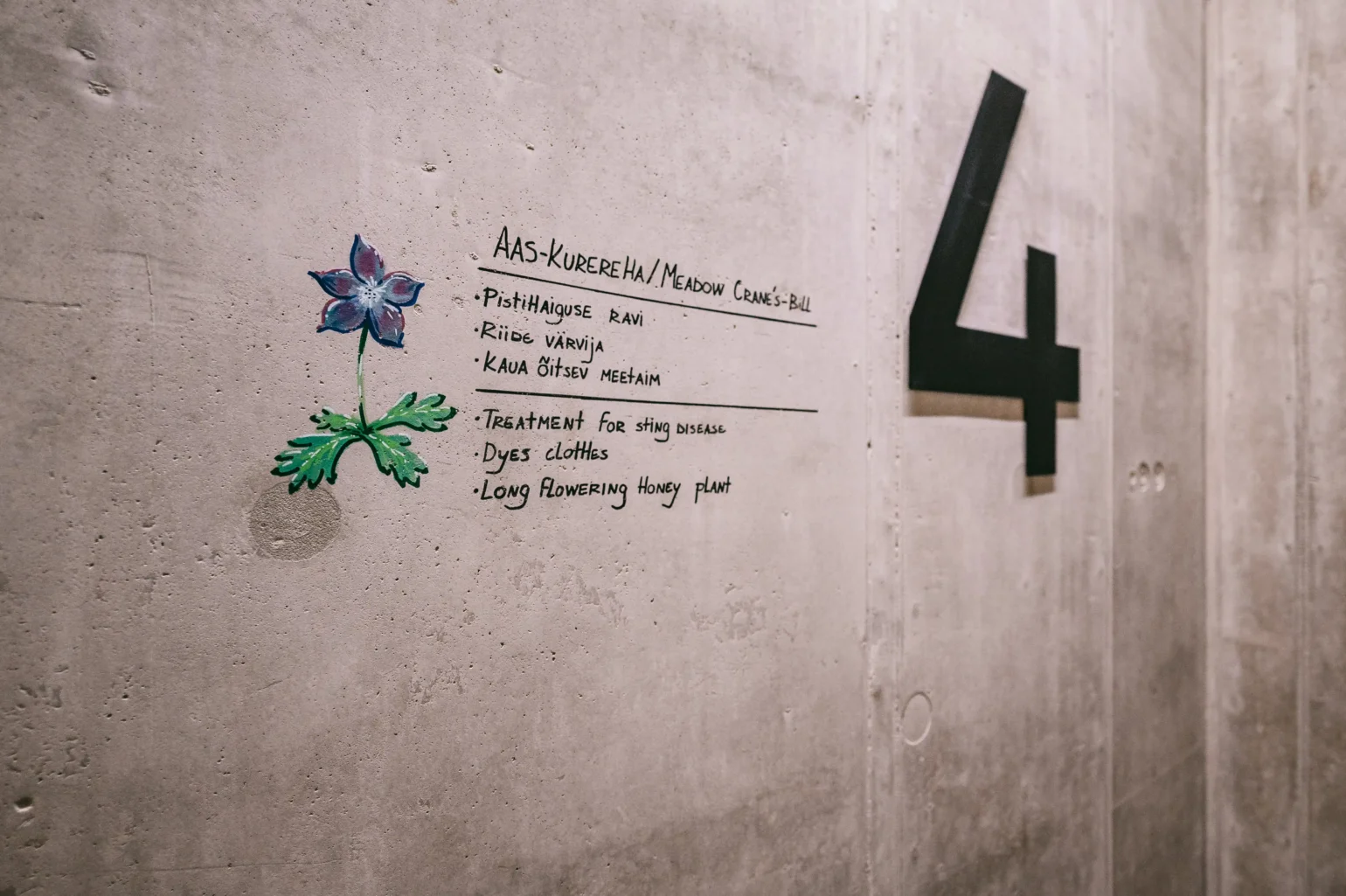
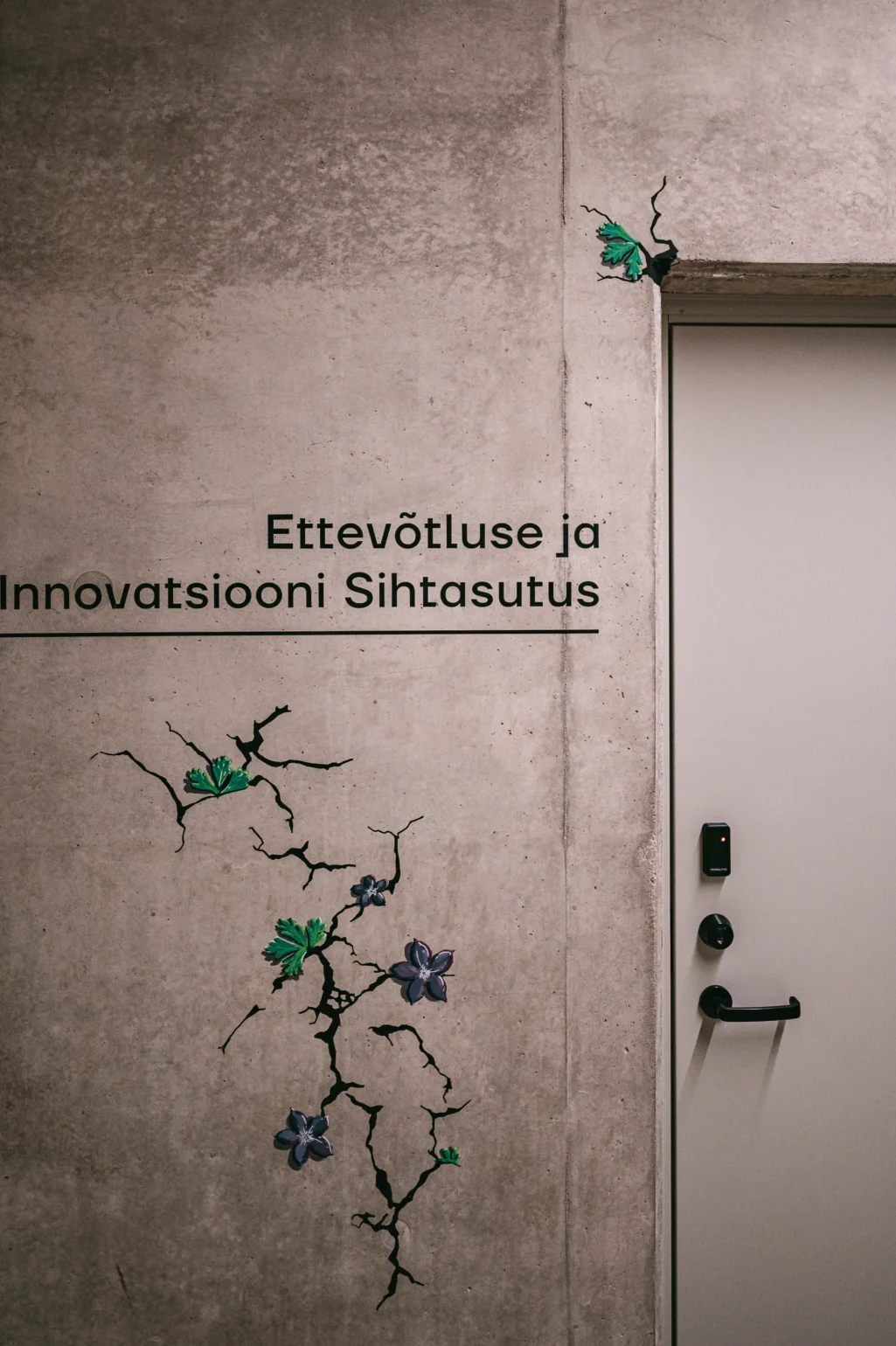
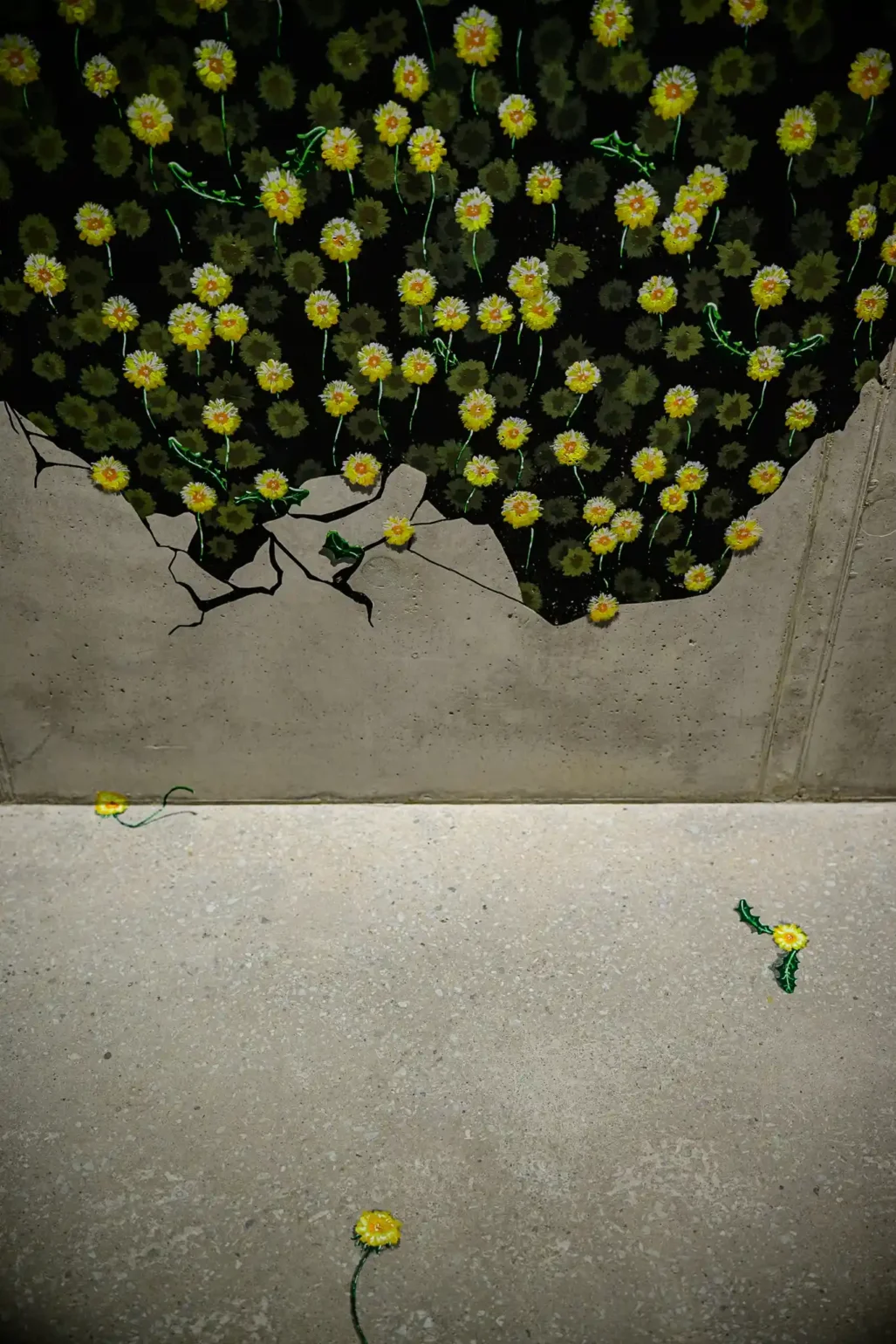
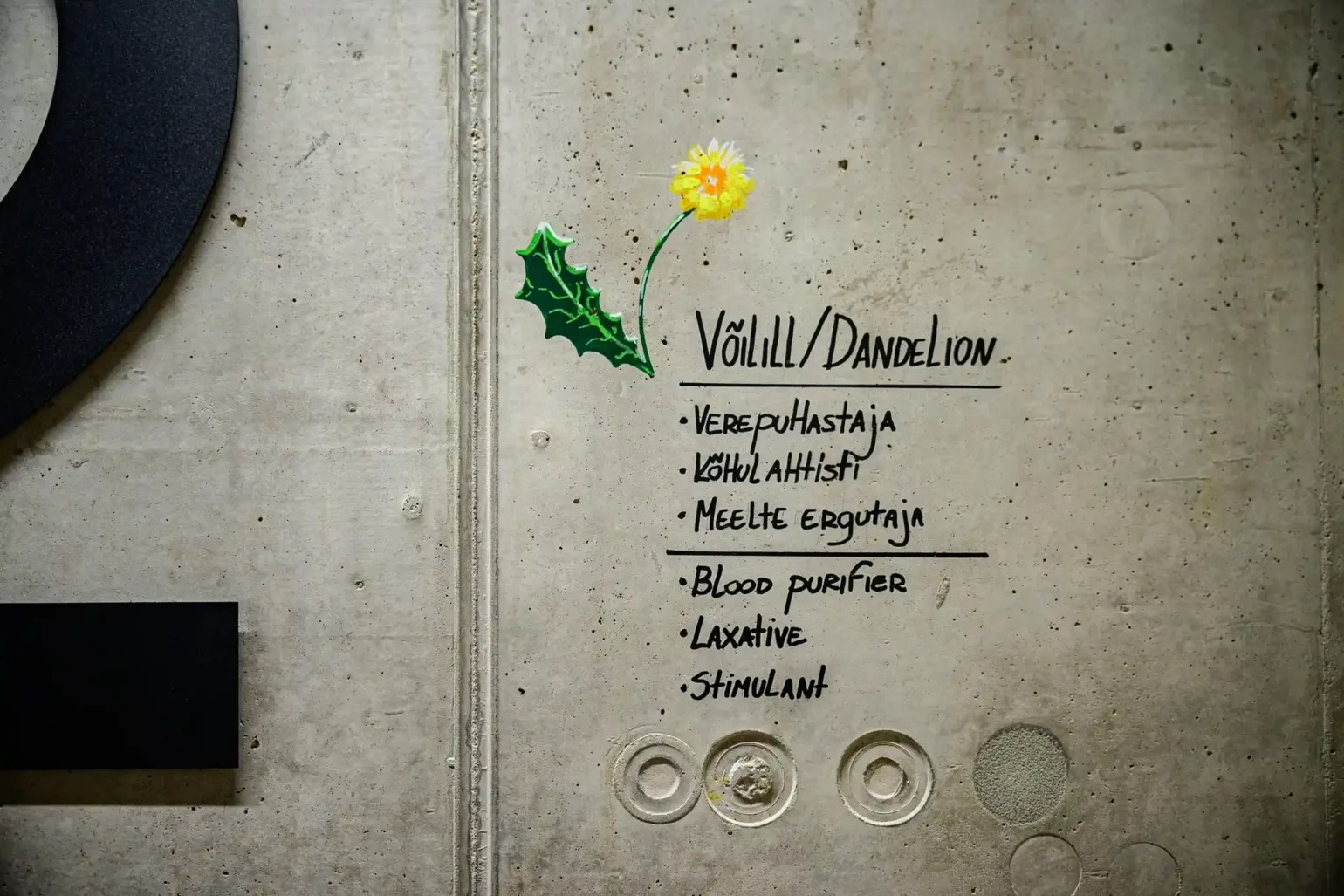
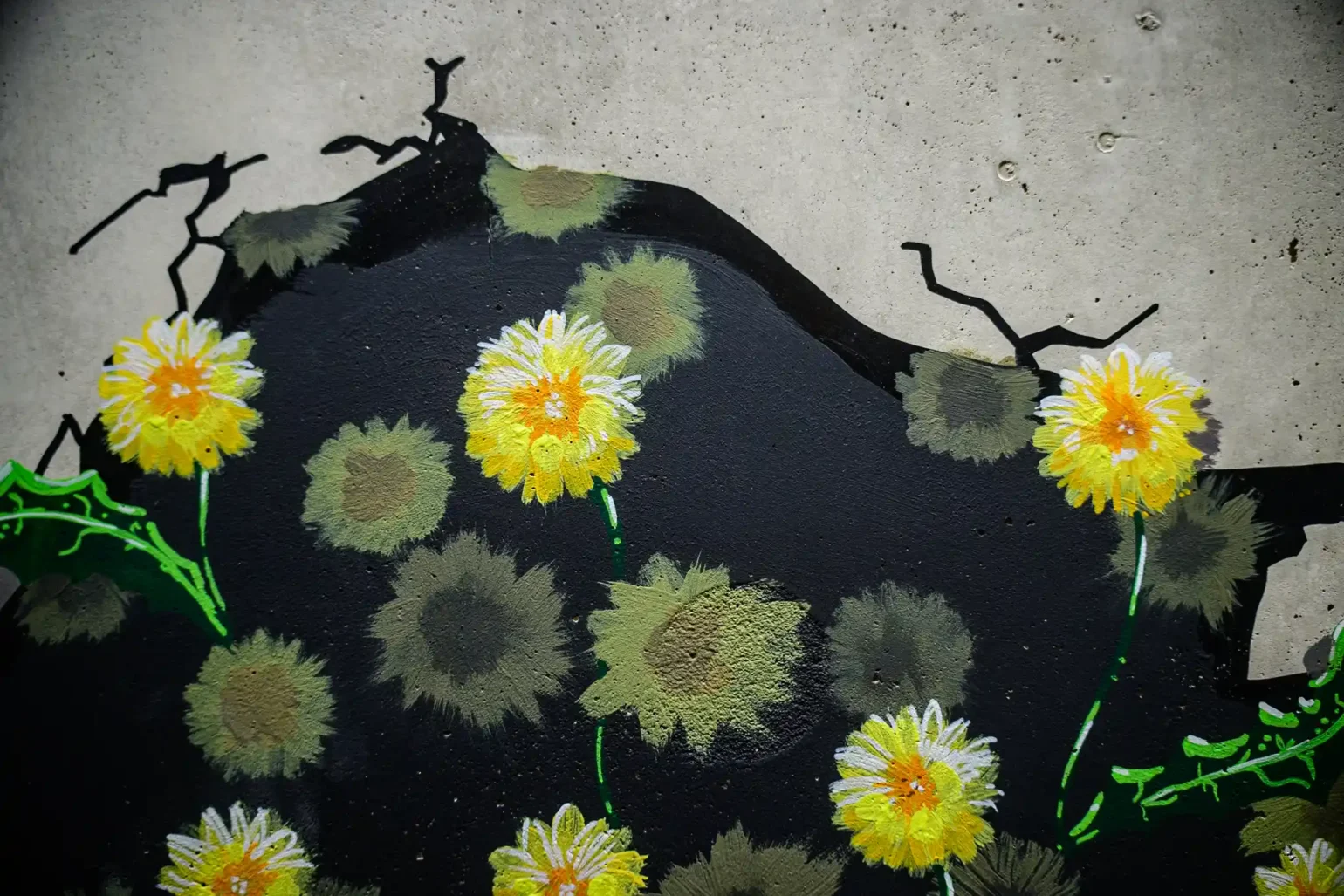
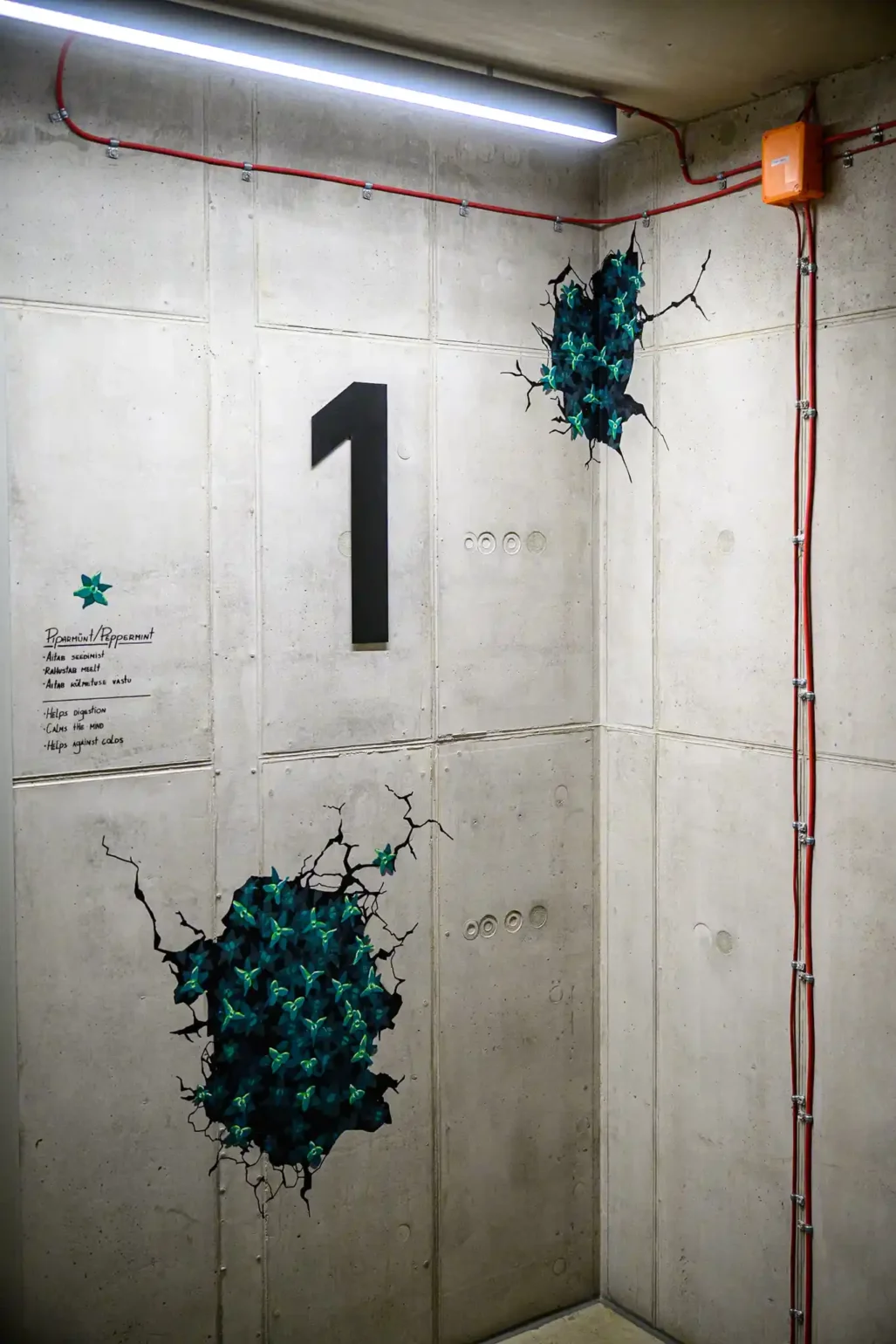
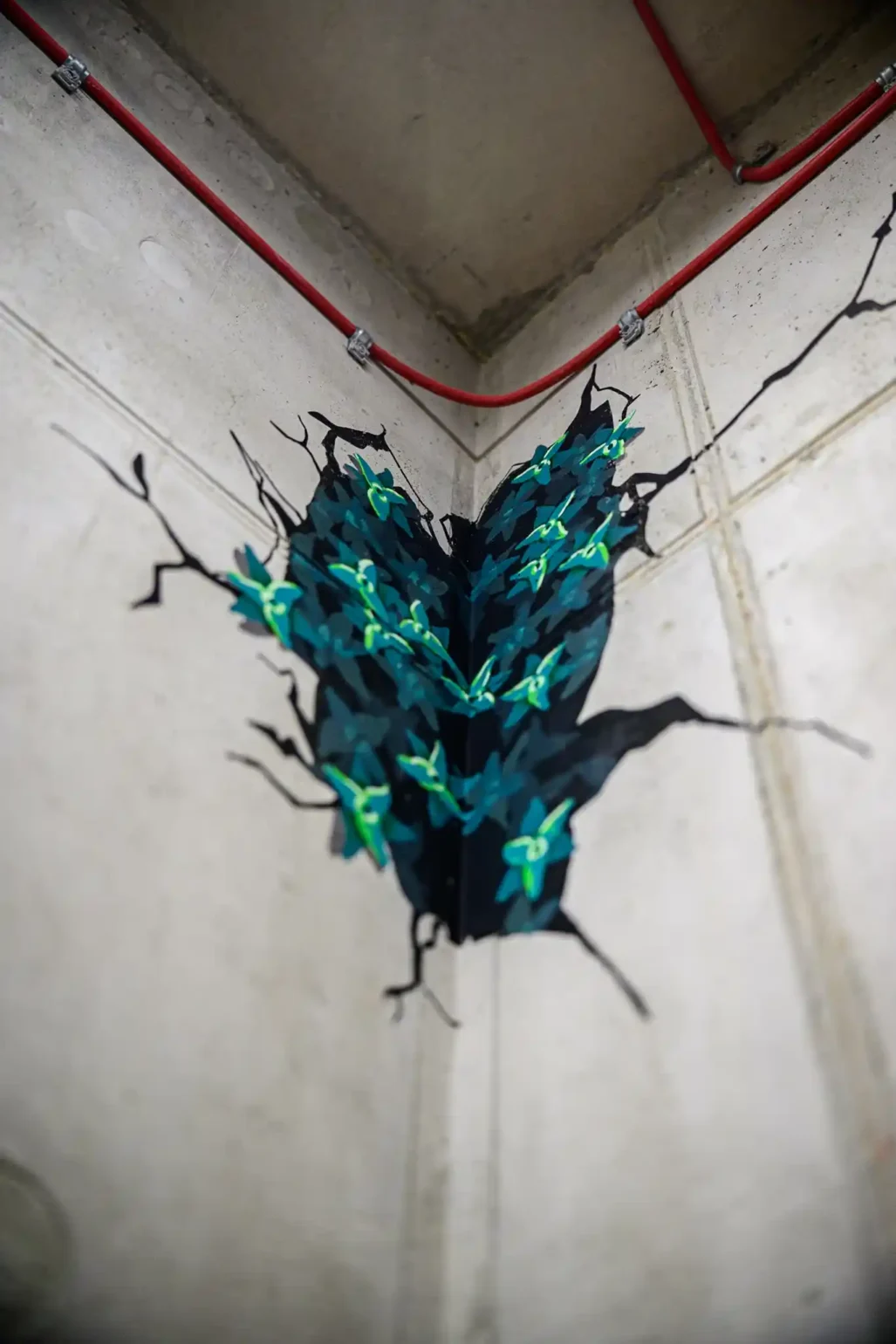
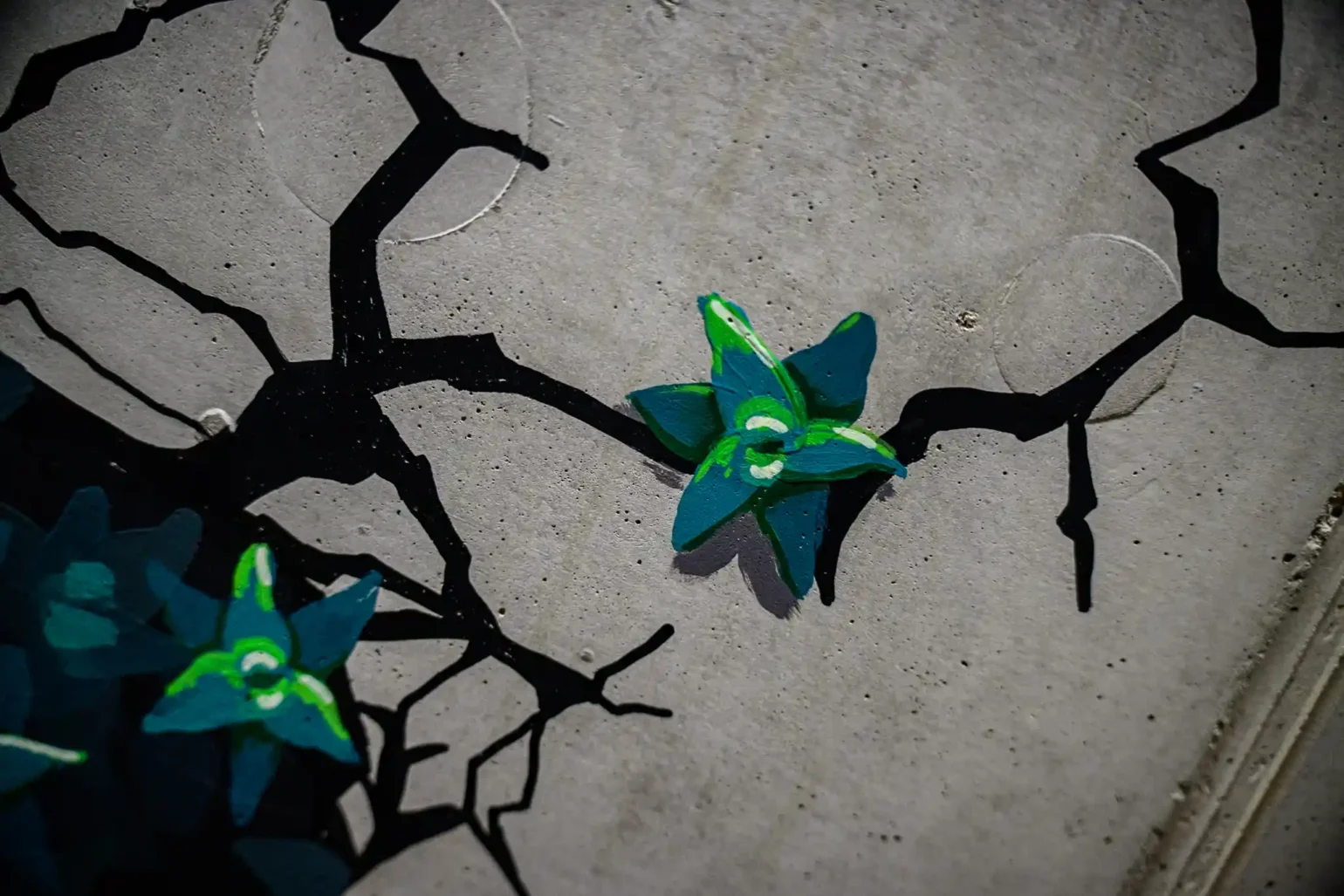
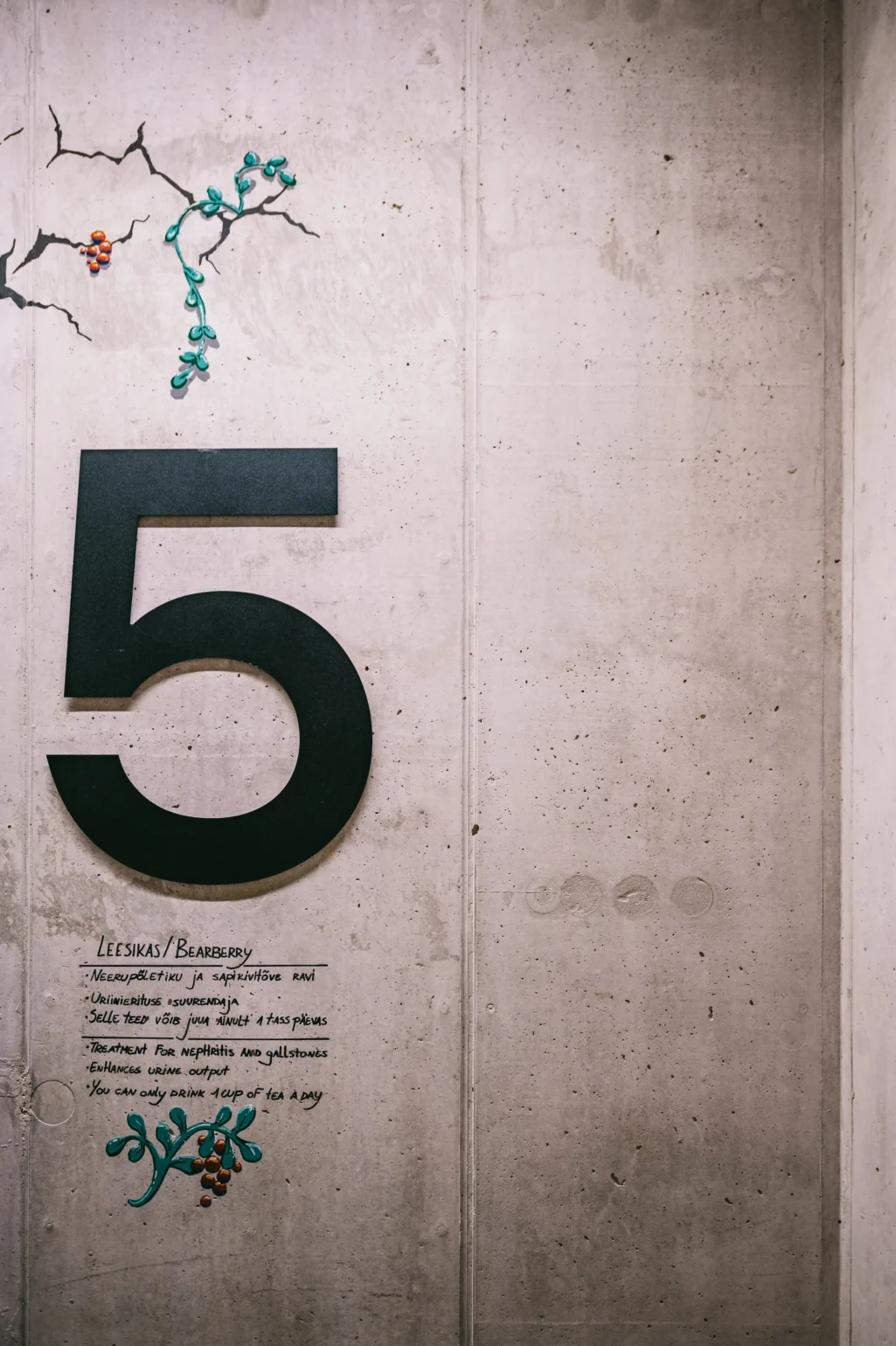
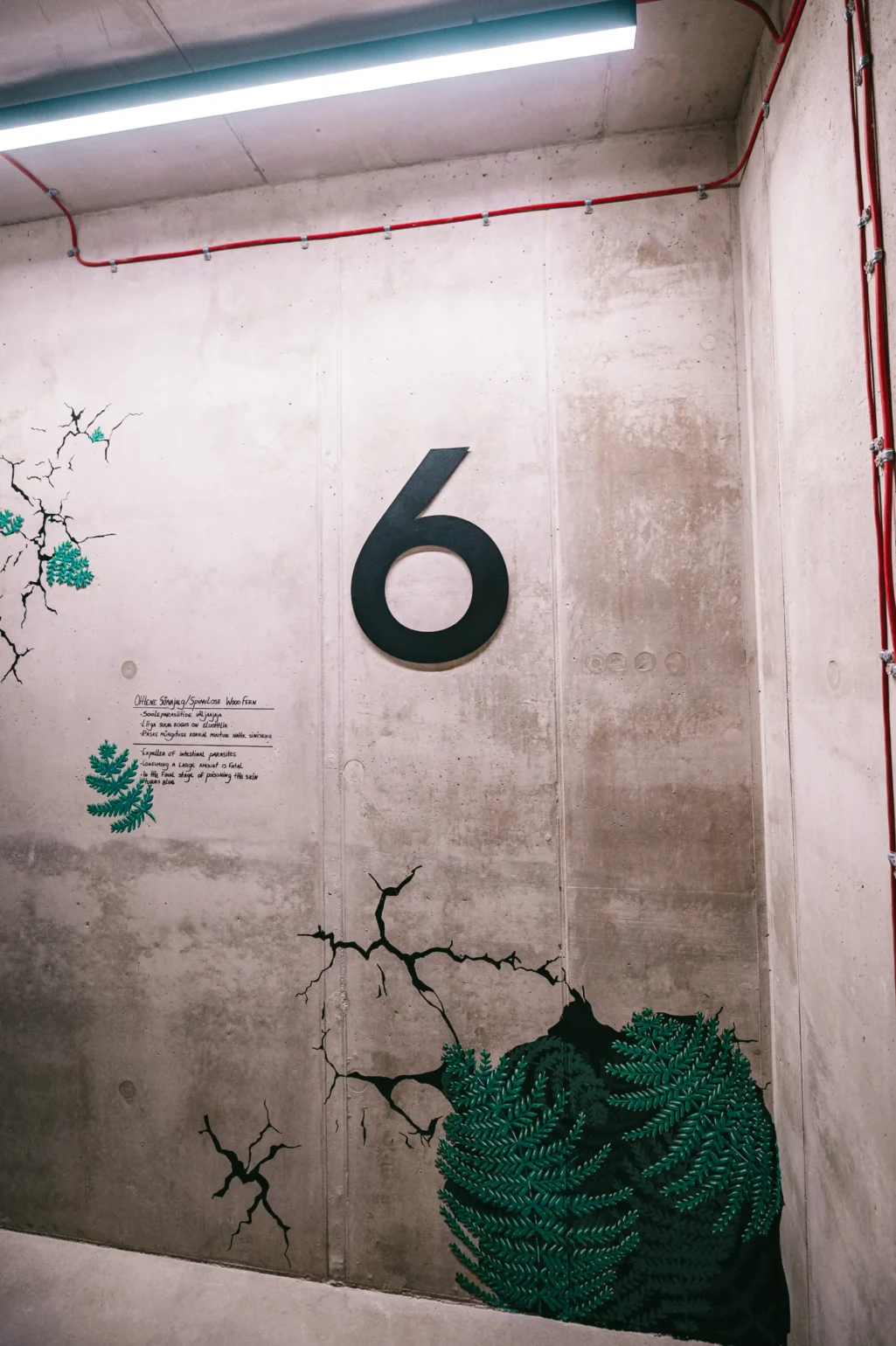
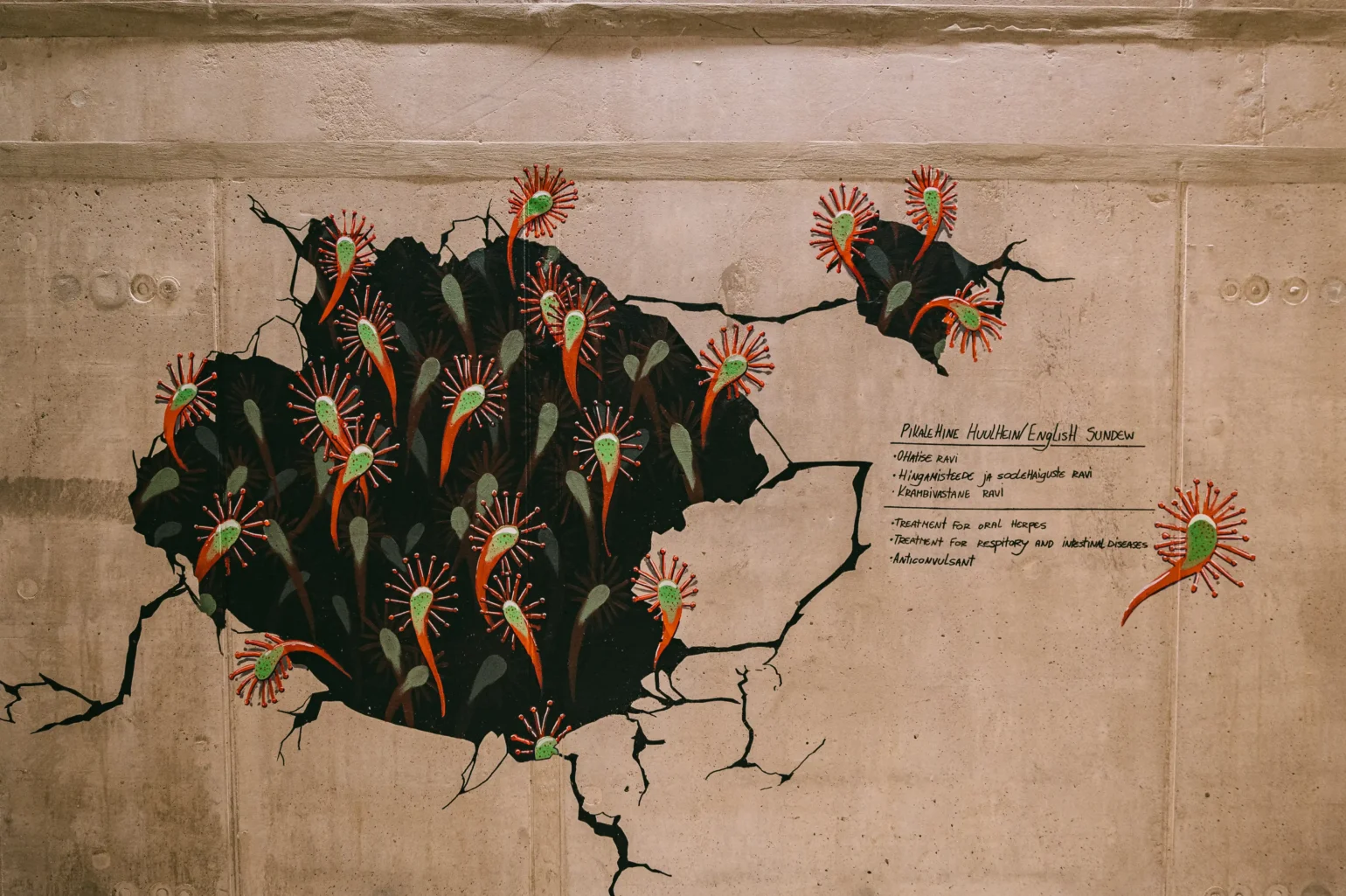
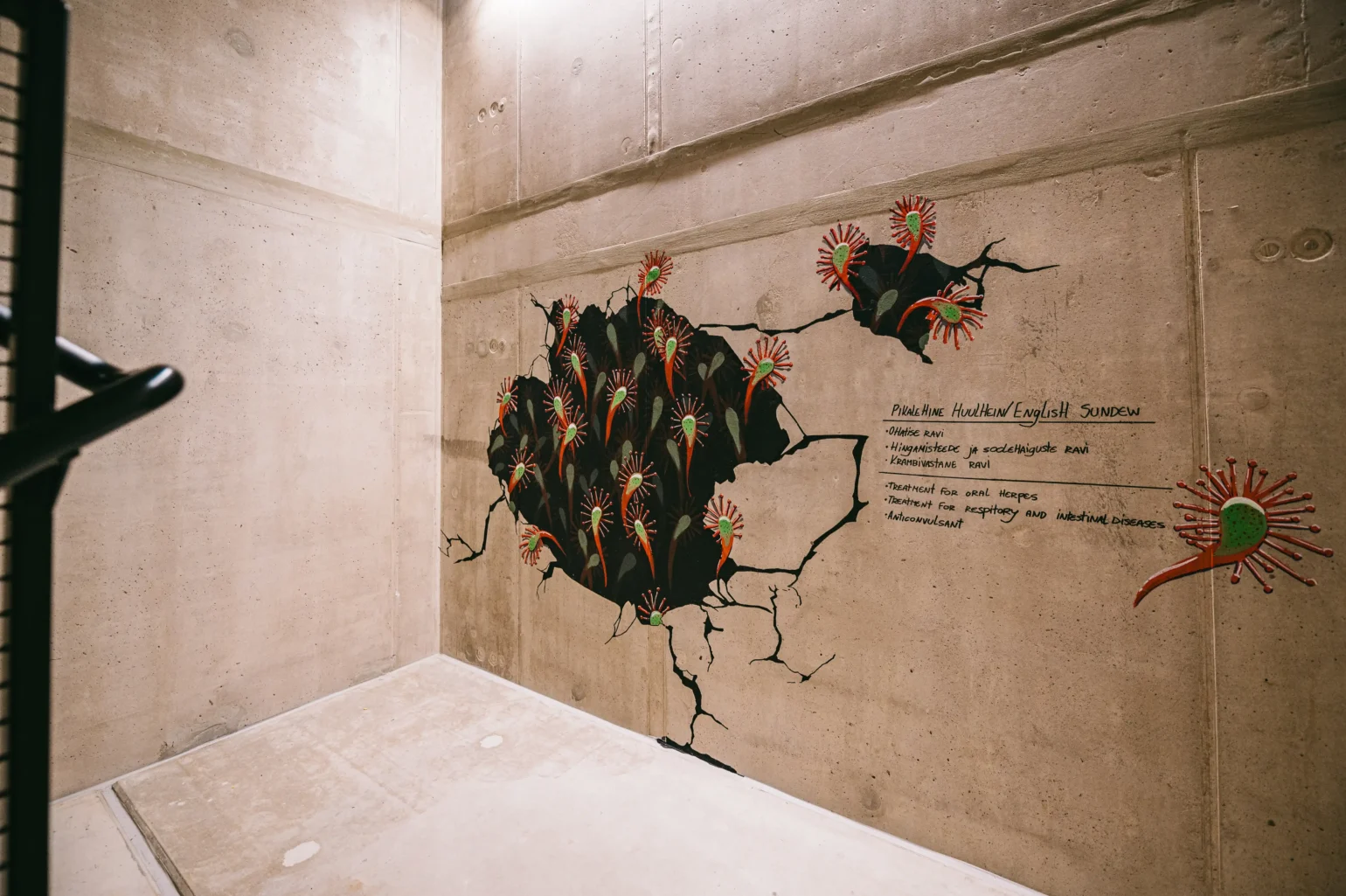
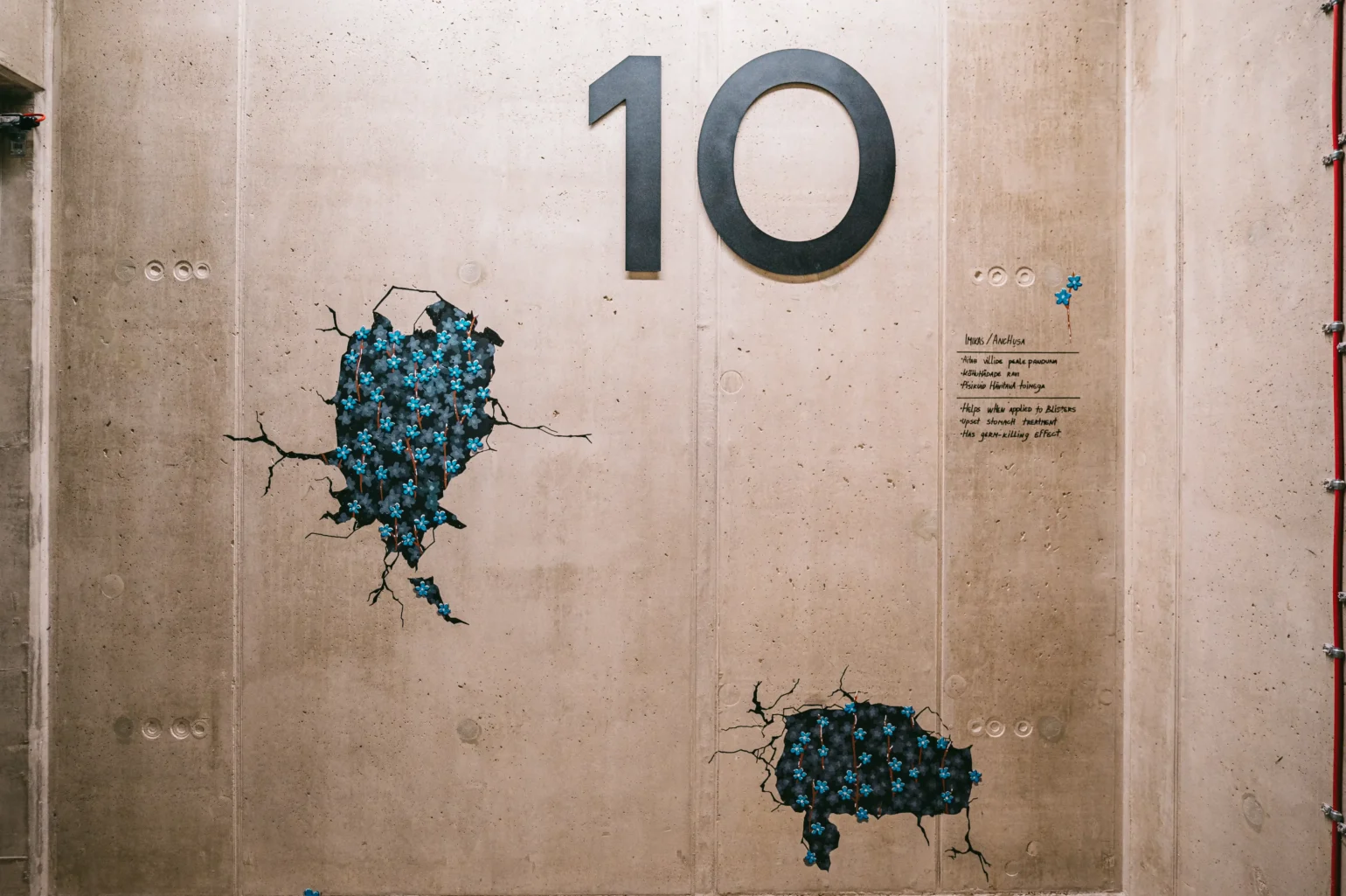
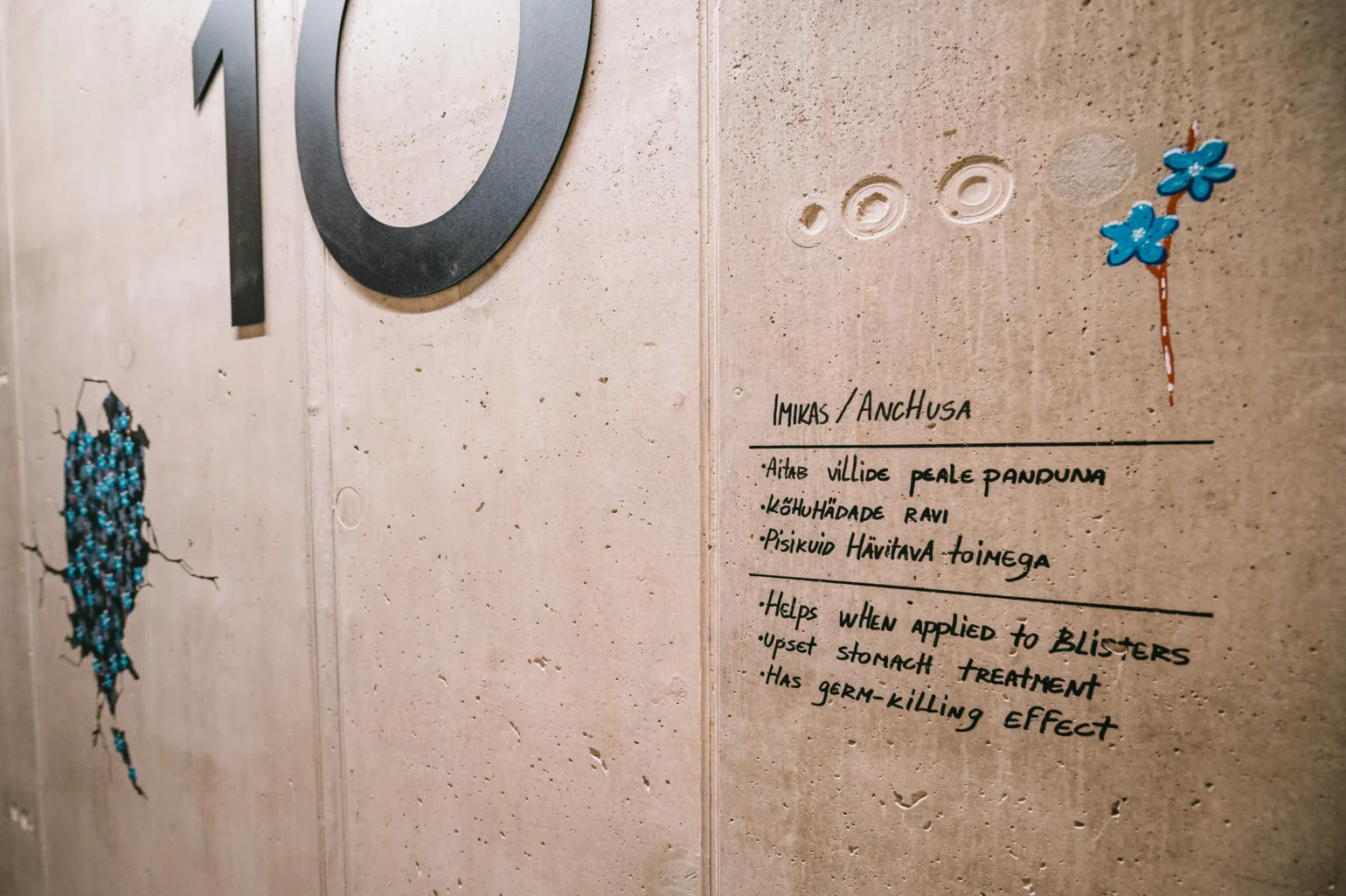
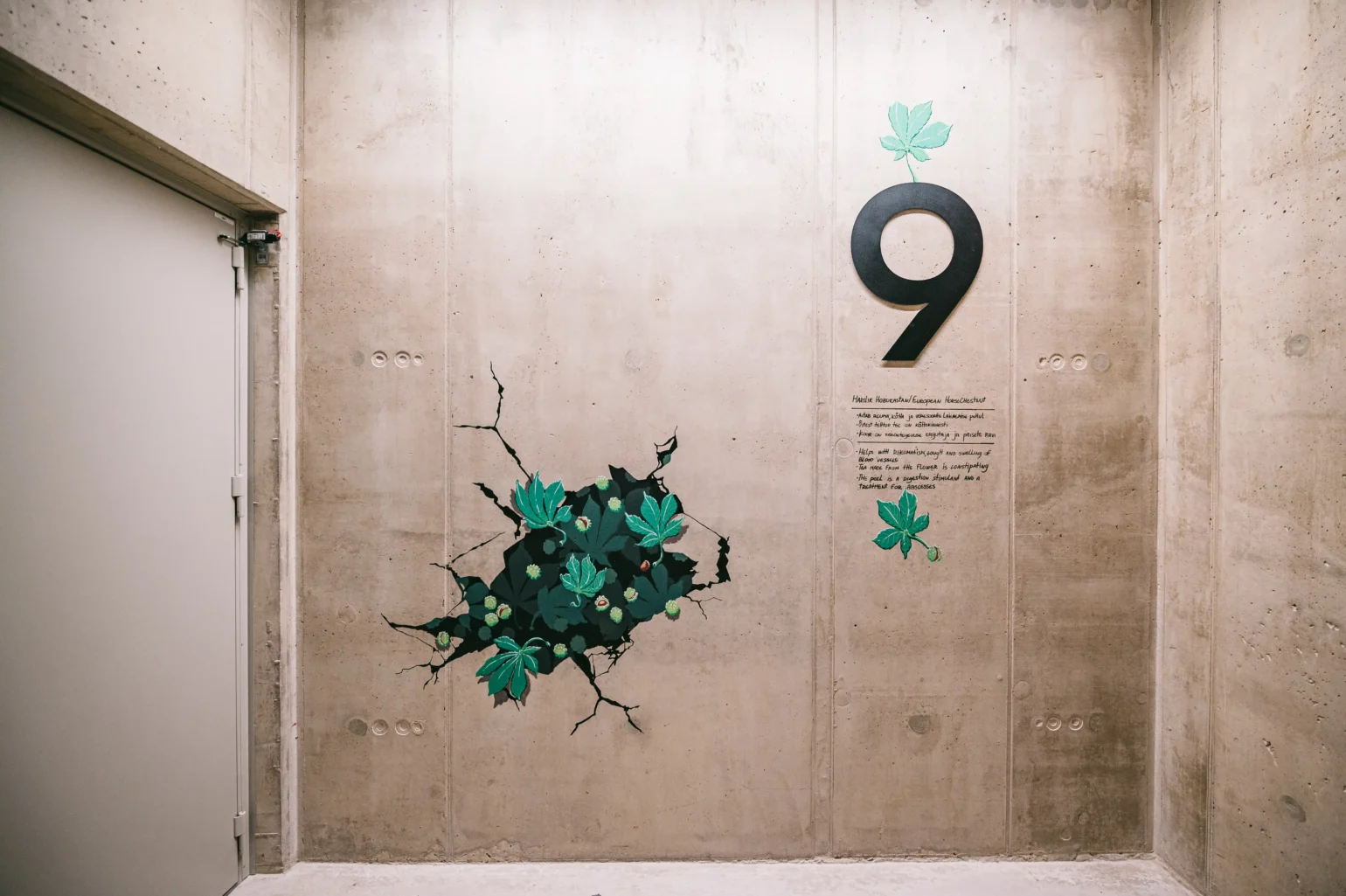
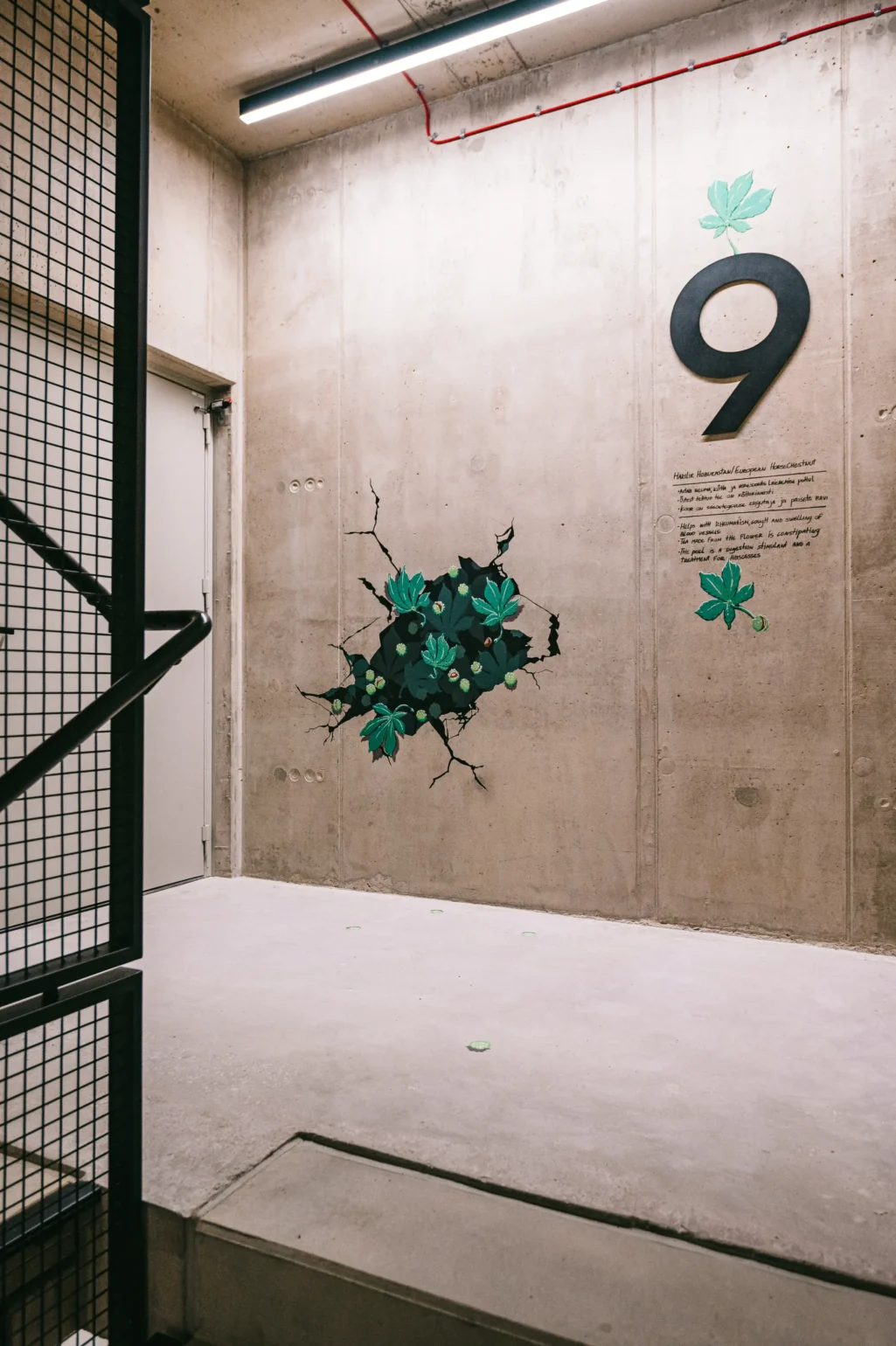
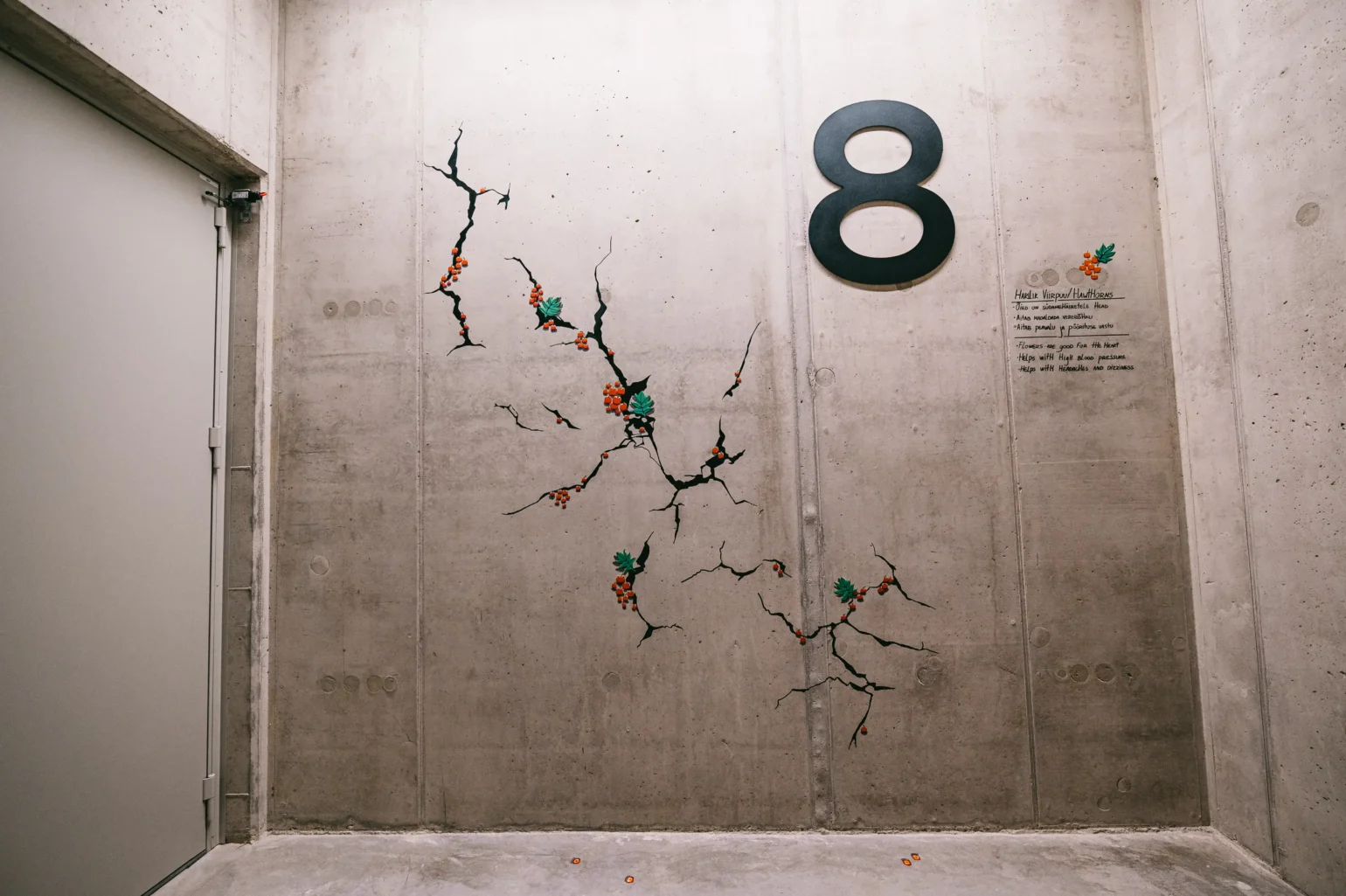
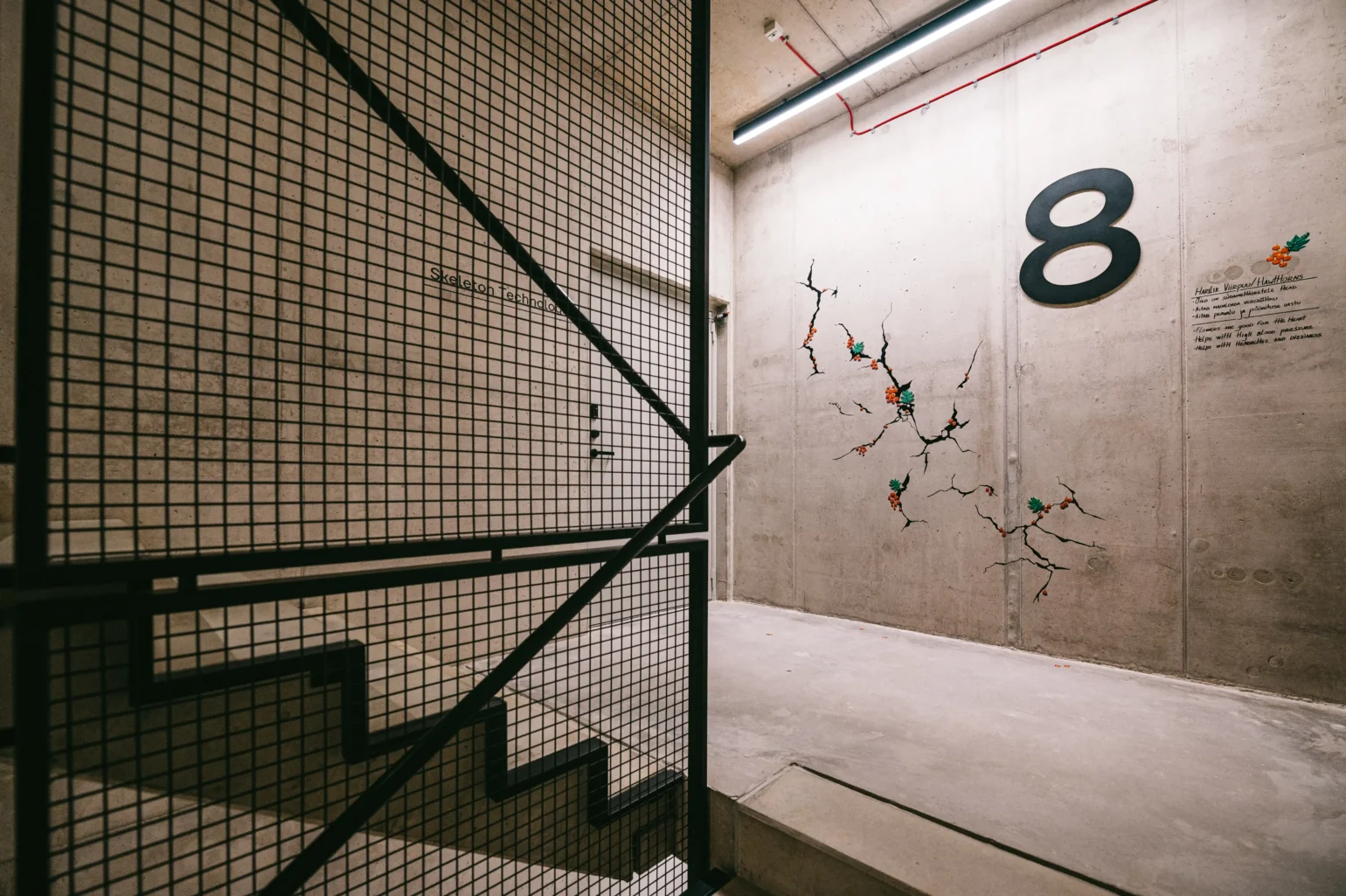
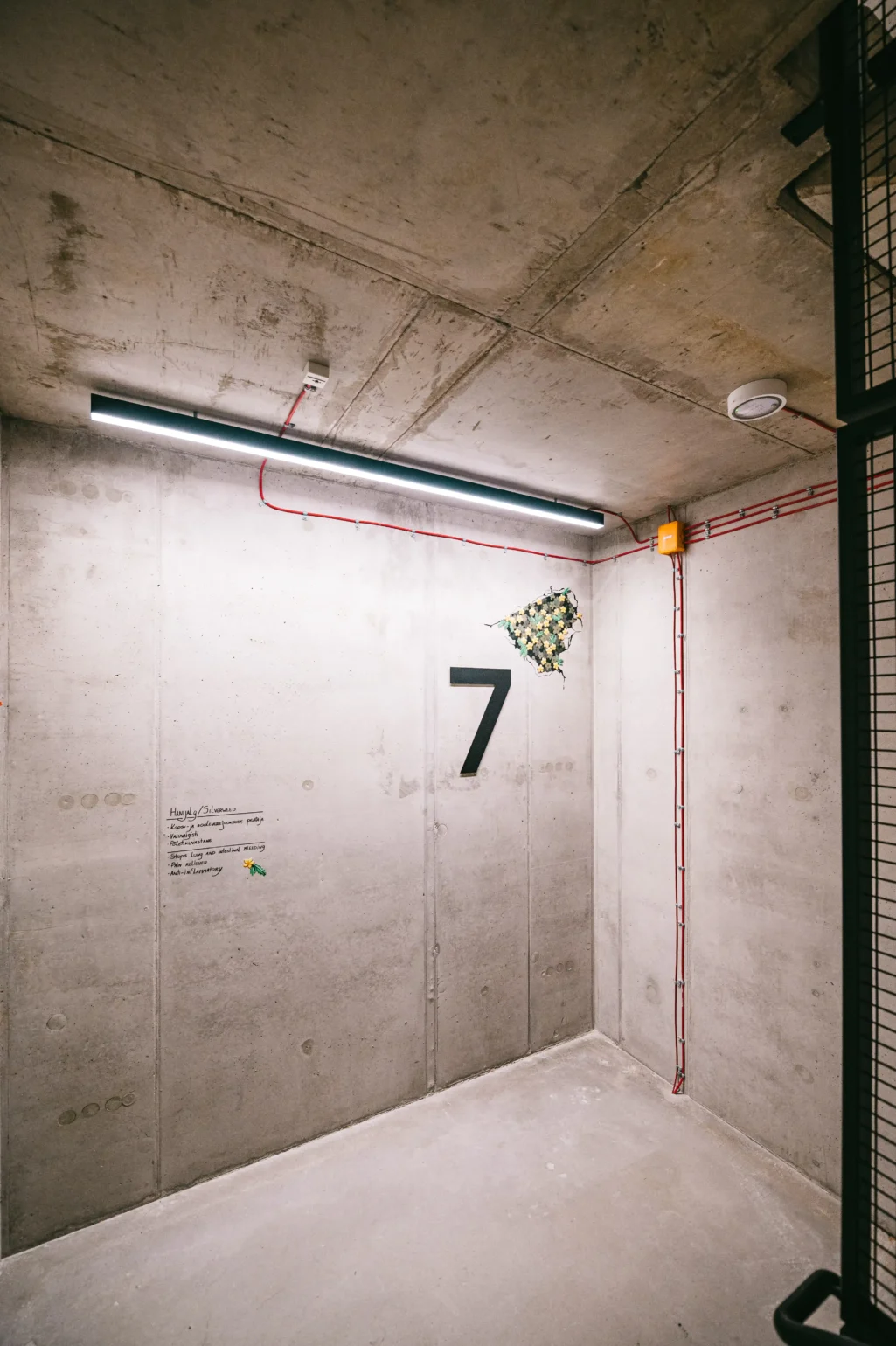
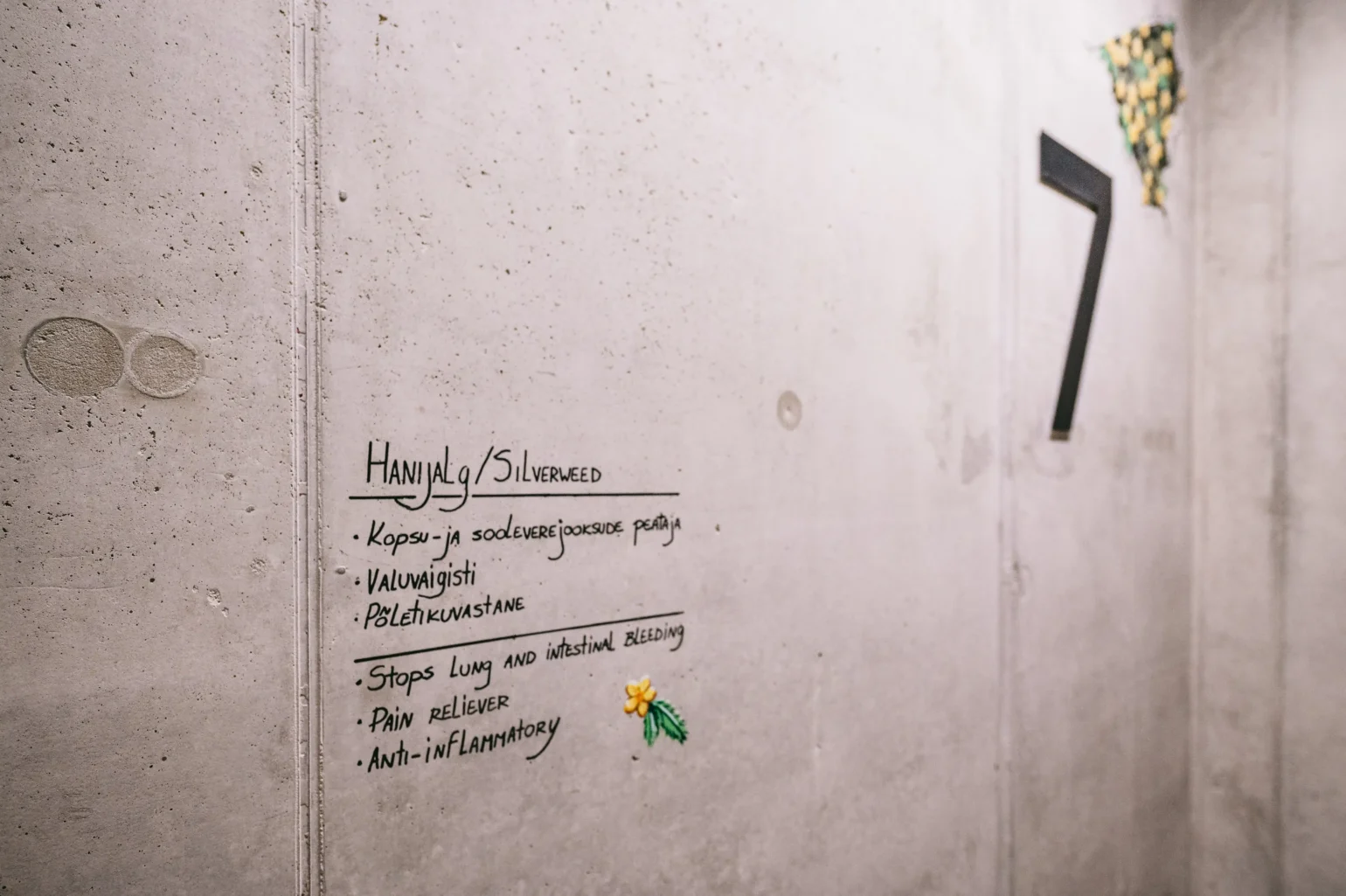
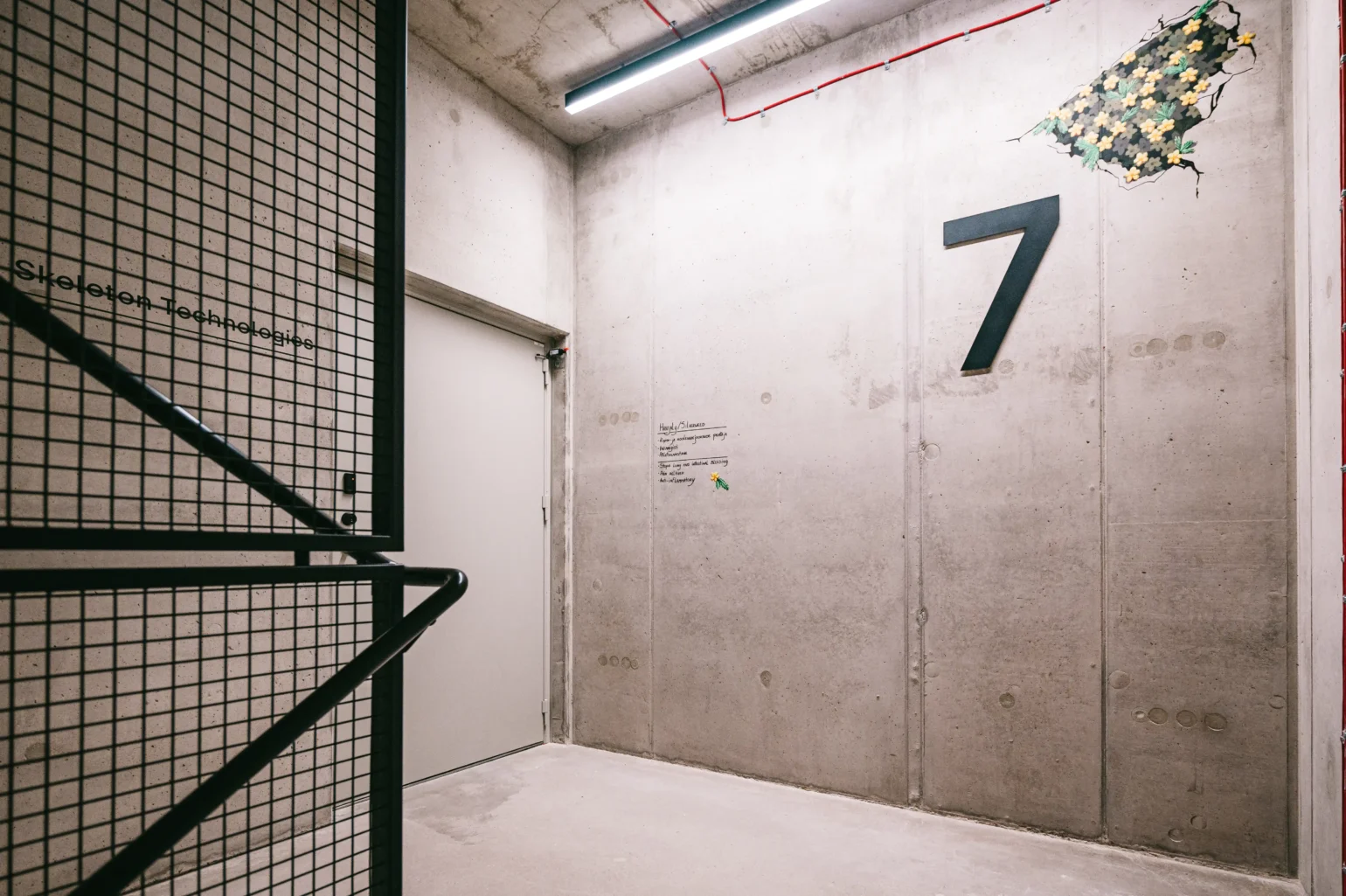
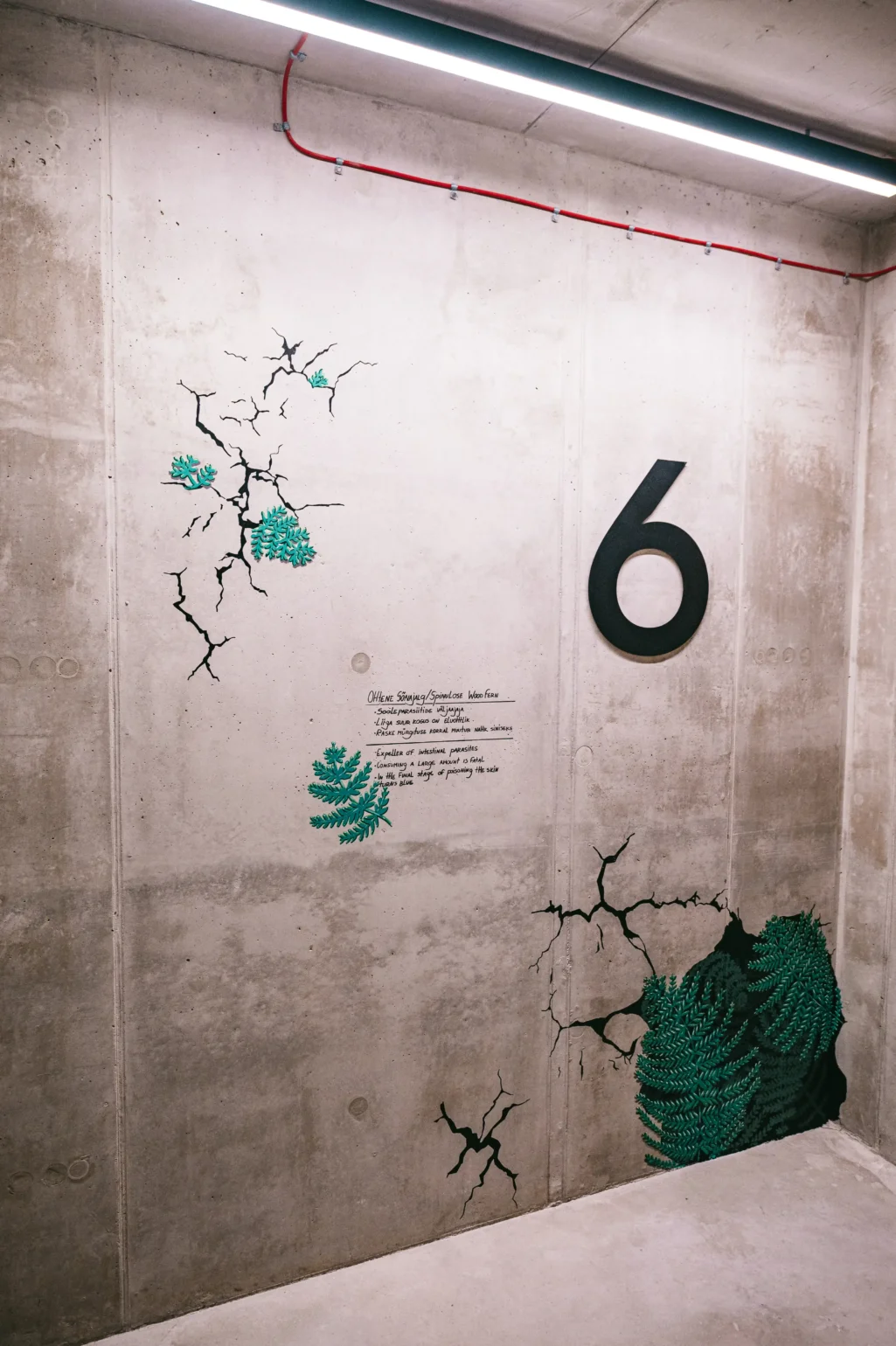
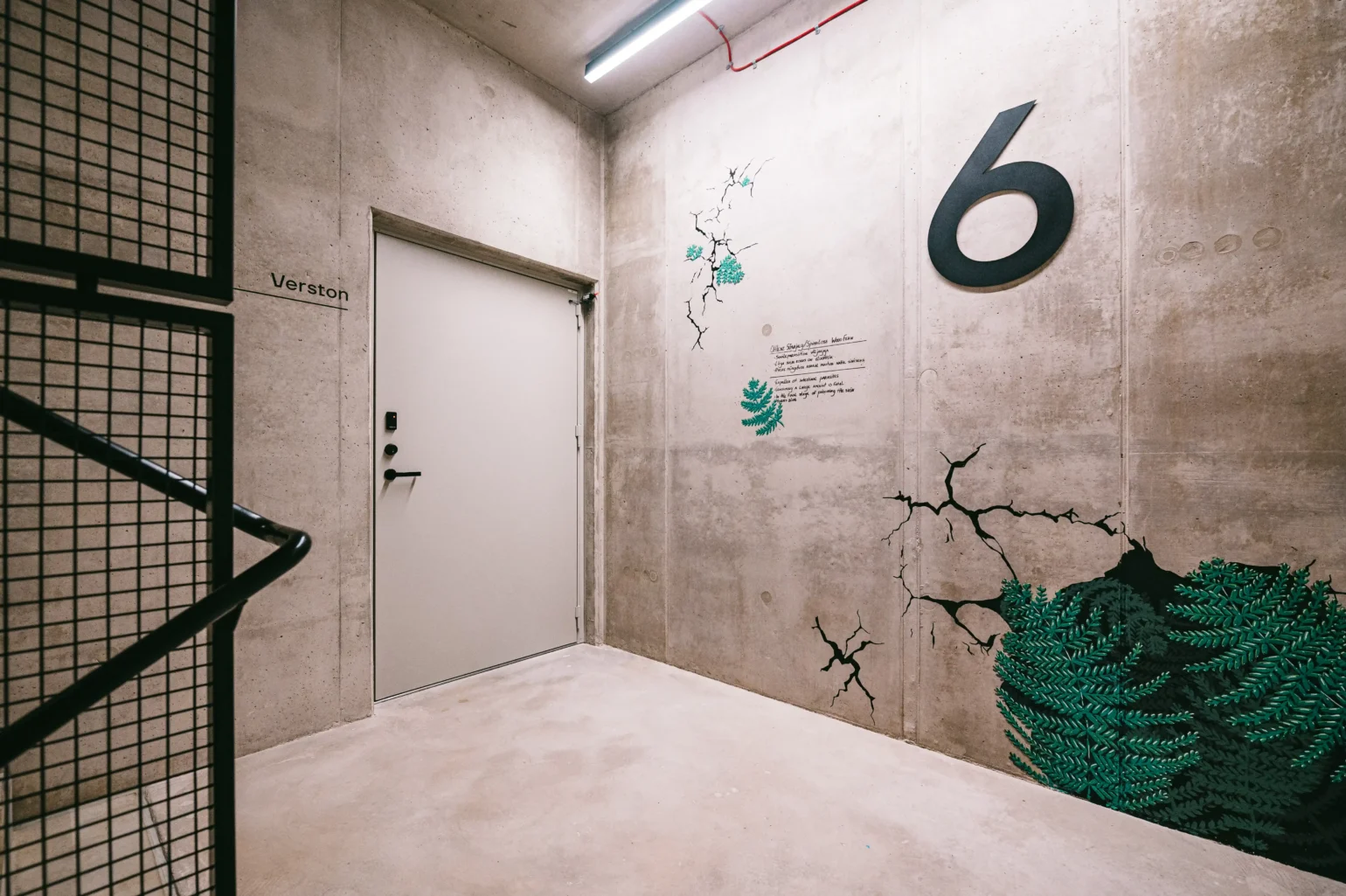
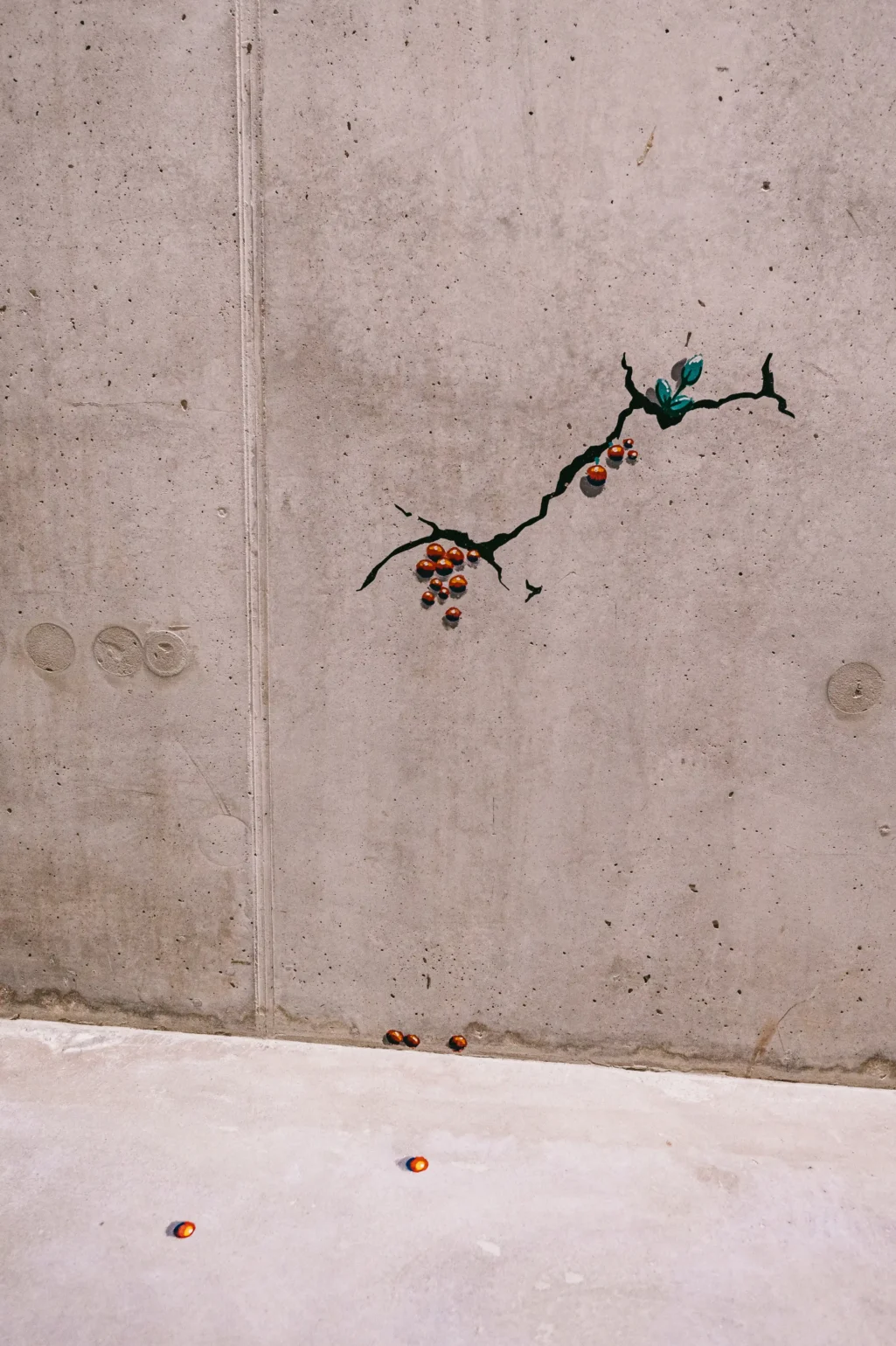
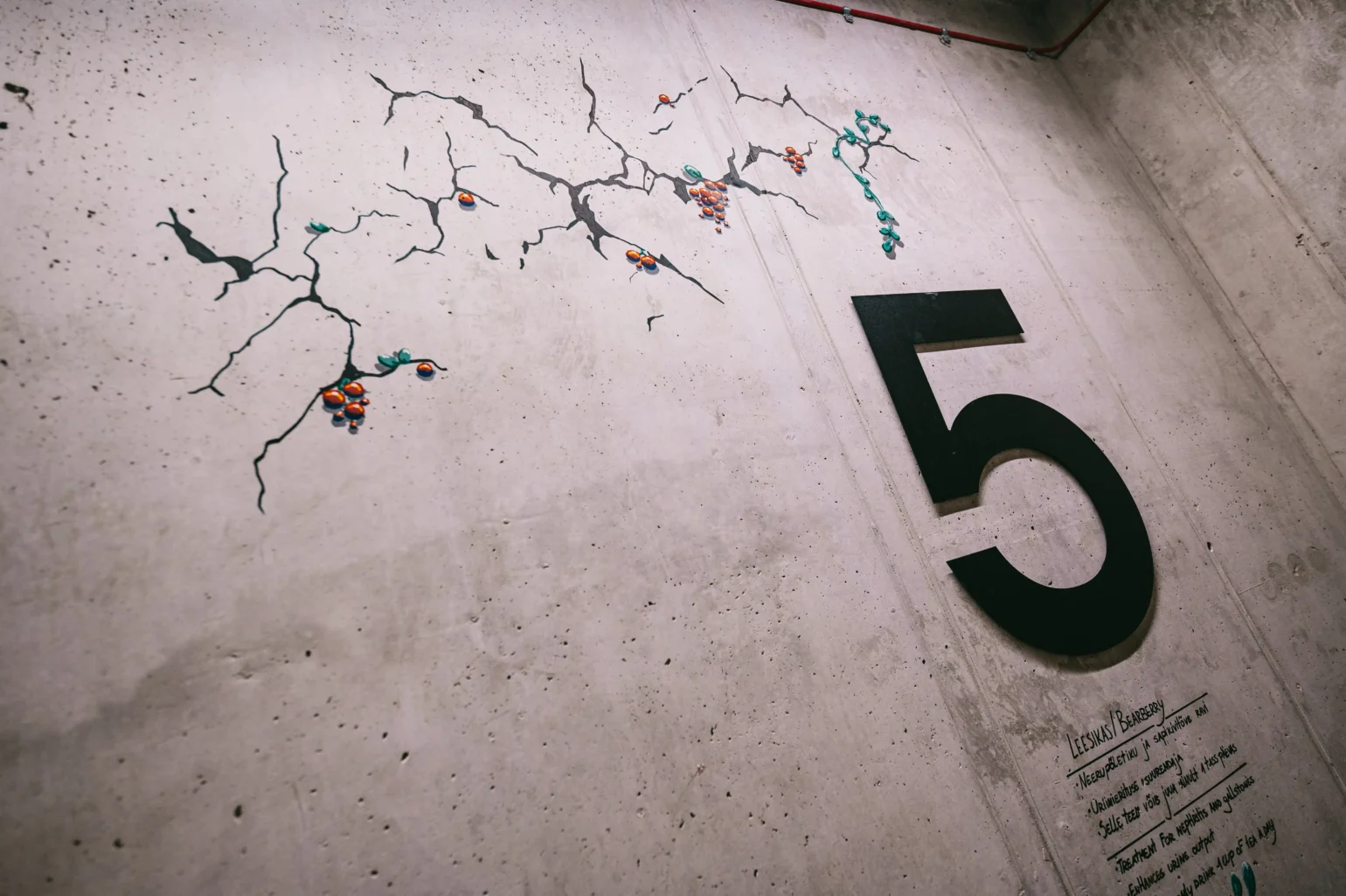
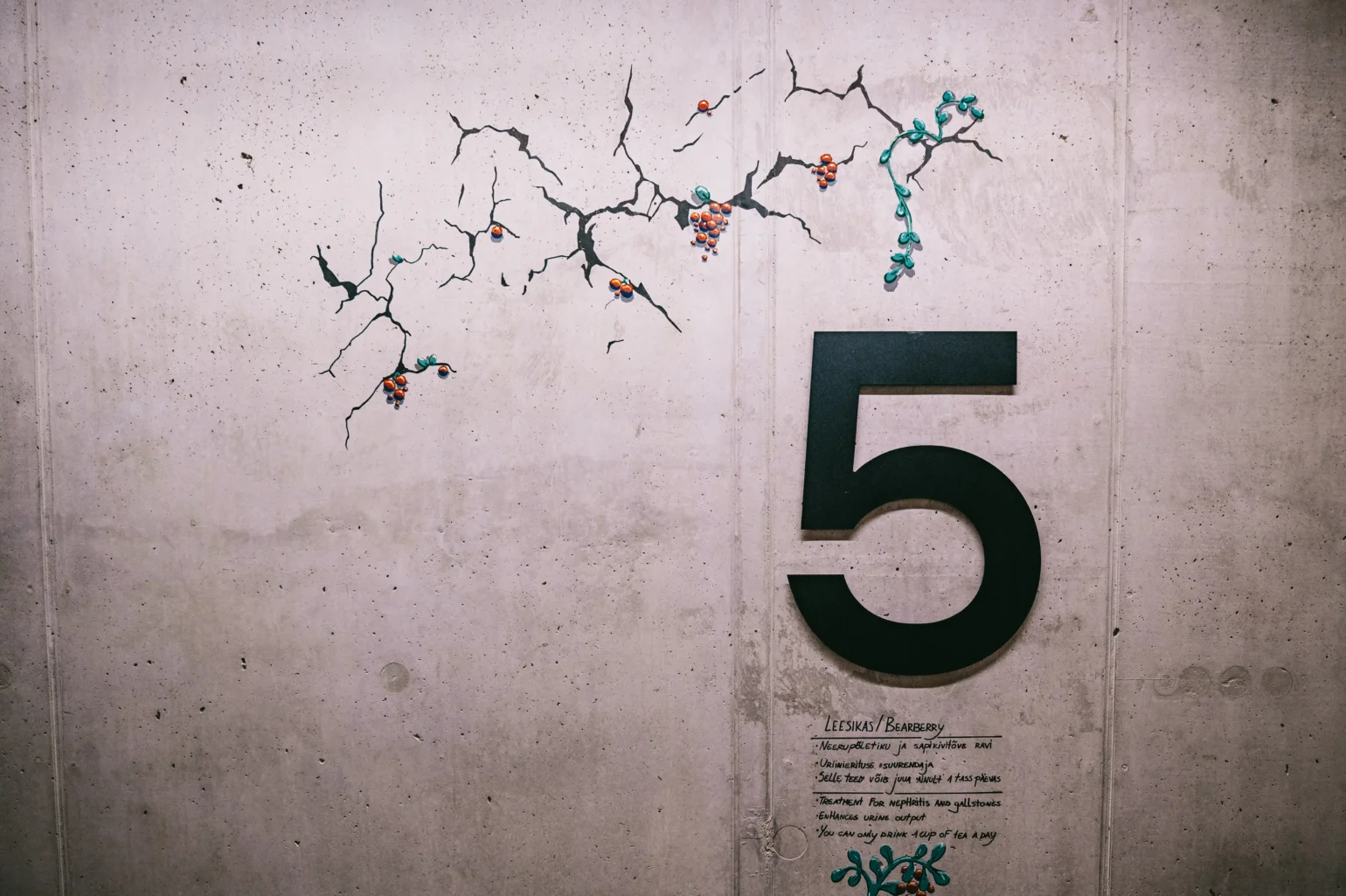
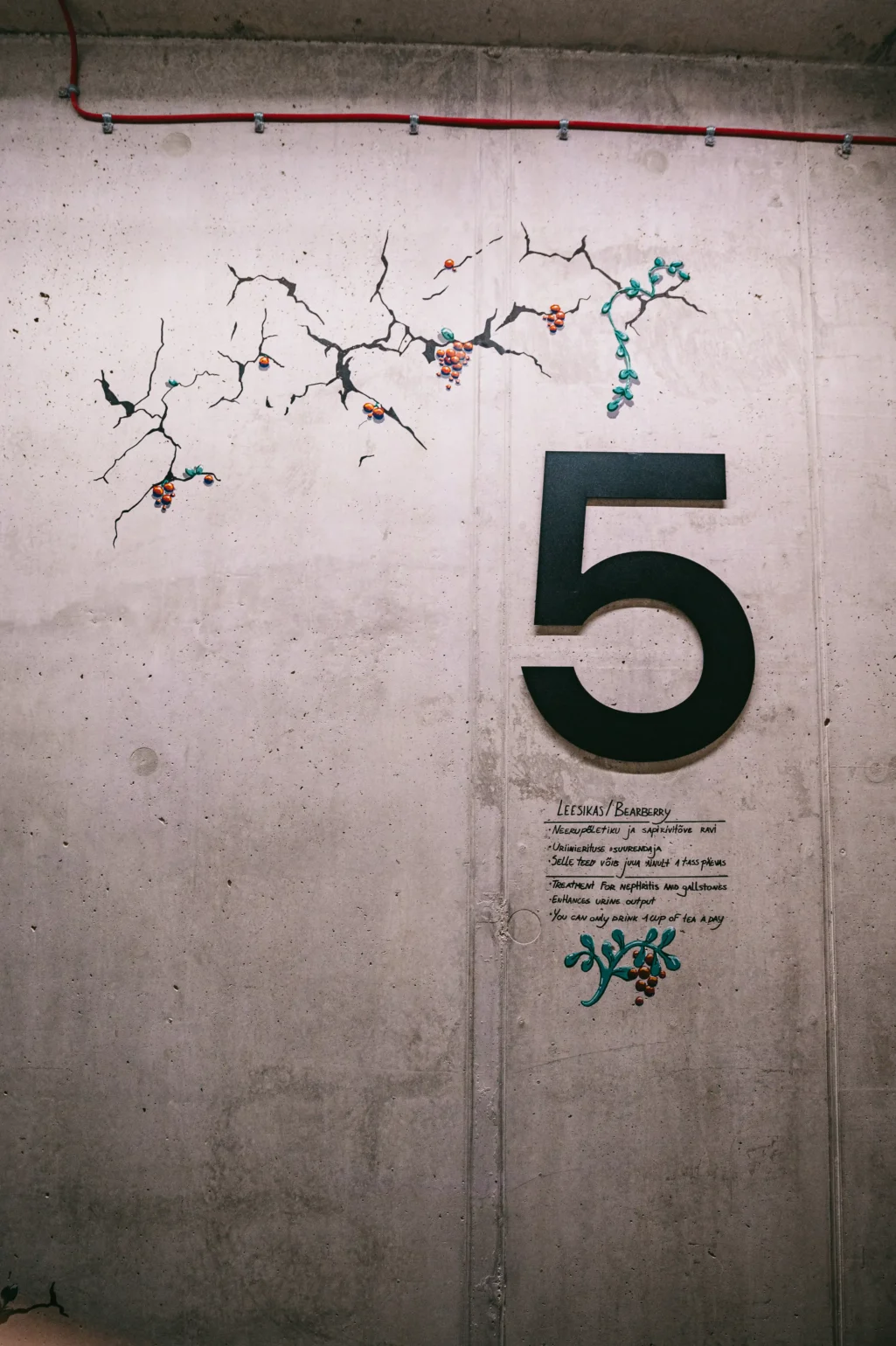
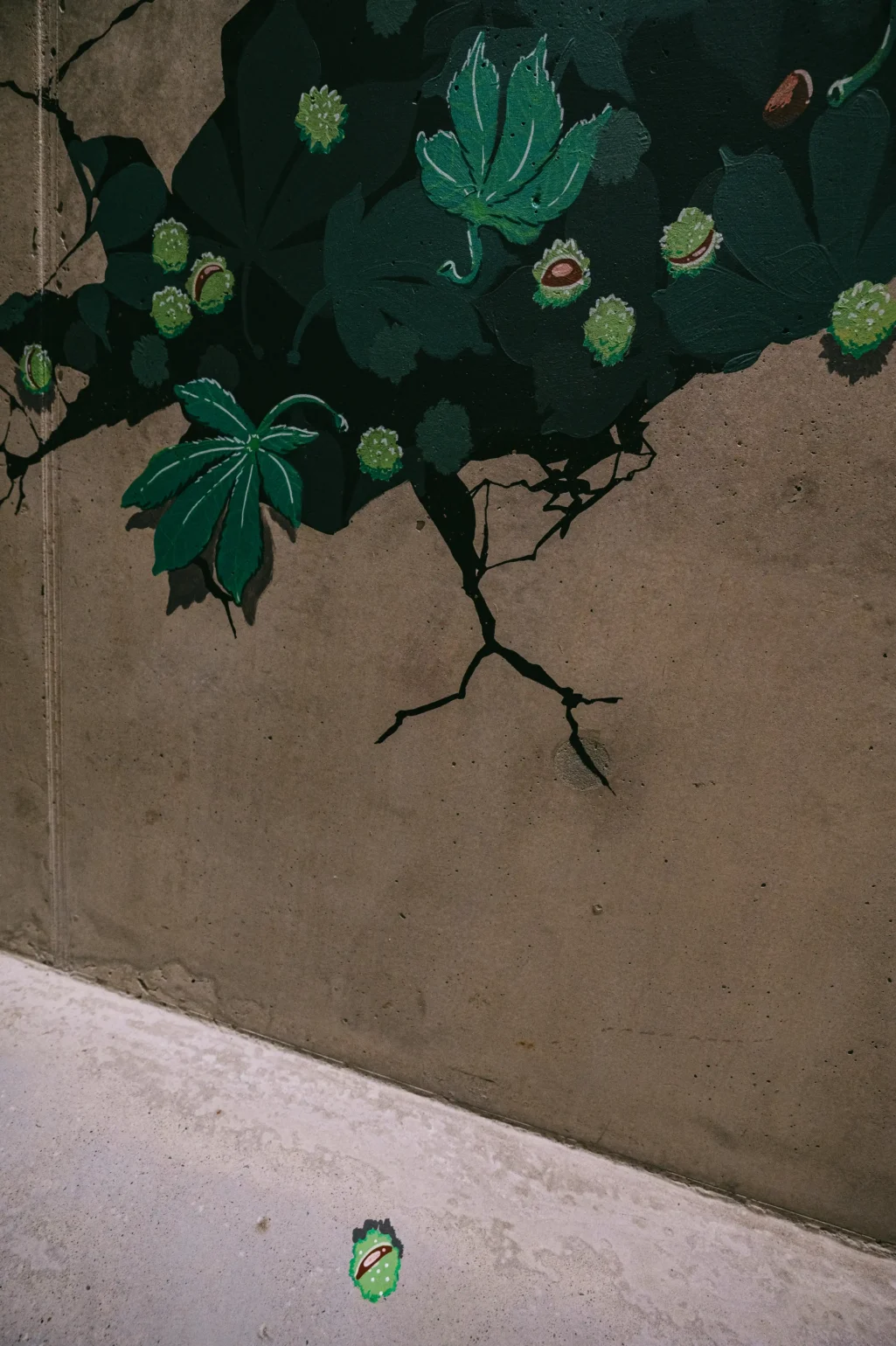
“Estonian Medicinal Plants Break Through” is a spatial work that activates the imagination, where nature breaks through into visibility in the middle of an urban environment. After trying out the first ideas, Alex Toodu reached the final solution quite quickly: “The idea of depicting medicinal plants breaking through the walls of the stairwell immediately seemed powerful because of its sense of space and its timeless visual that sets the imagination working.”
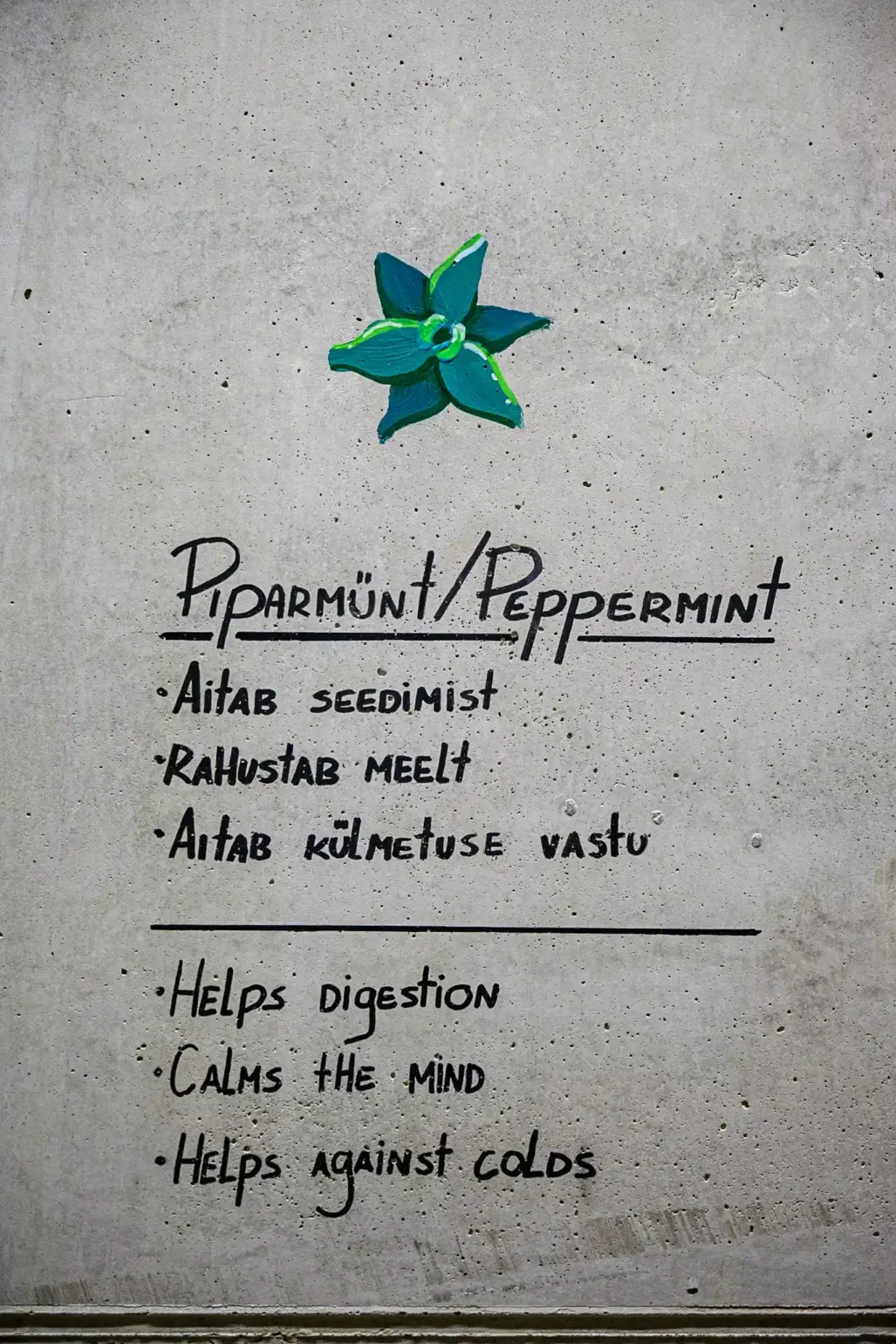
At the centre of the work is the idea that cracks and openings appear in the walls of each floor, from which different plants with healing properties stretch out. These are not merely visual elements, but a direct reference to Alma Tomingas’s life’s work as a researcher of medicinal plants. For this reason, handwritten notes are also depicted on the walls, marking which ailments the specific plant helps against. “As if Alma herself had left messages for the residents of the building,” the author describes, creating a personal and lasting dimension for the work.
The plants breaking through the wall also work, at the same time, as a broader image of the untameable force of nature, which finds its place even in the most urbanised environment. This contrast – living and organic nature inside a concrete surface – also reflects the identity of the Alma Tomingas building, where science, nature and the contemporary urban environment are closely connected with one another. The plant motif relates to the nature-oriented interior design of the whole building, connecting art and architecture into one whole.
Visually, the work strongly plays with spatial perception and illusion. The cracks and openings painted into the concrete are created to be as realistic as possible, taking into account the lighting conditions of the stairwell, so that the viewer is left with the impression of an actual breaking open. At the same time, the plants are depicted in natural, vivid tones and in a simplified, but clearly recognisable style, which adds lightness and playfulness to the work. The plants seem to rise from a dark hole towards the light, conveying movement and life.
Concrete is not merely a background here, but an active visual figure – a surface that hides and at the same time reveals. This creates a layered experience, where the viewer gets the feeling that what is visible is only part of the whole and that the world of plants continues also where the eye does not currently reach.