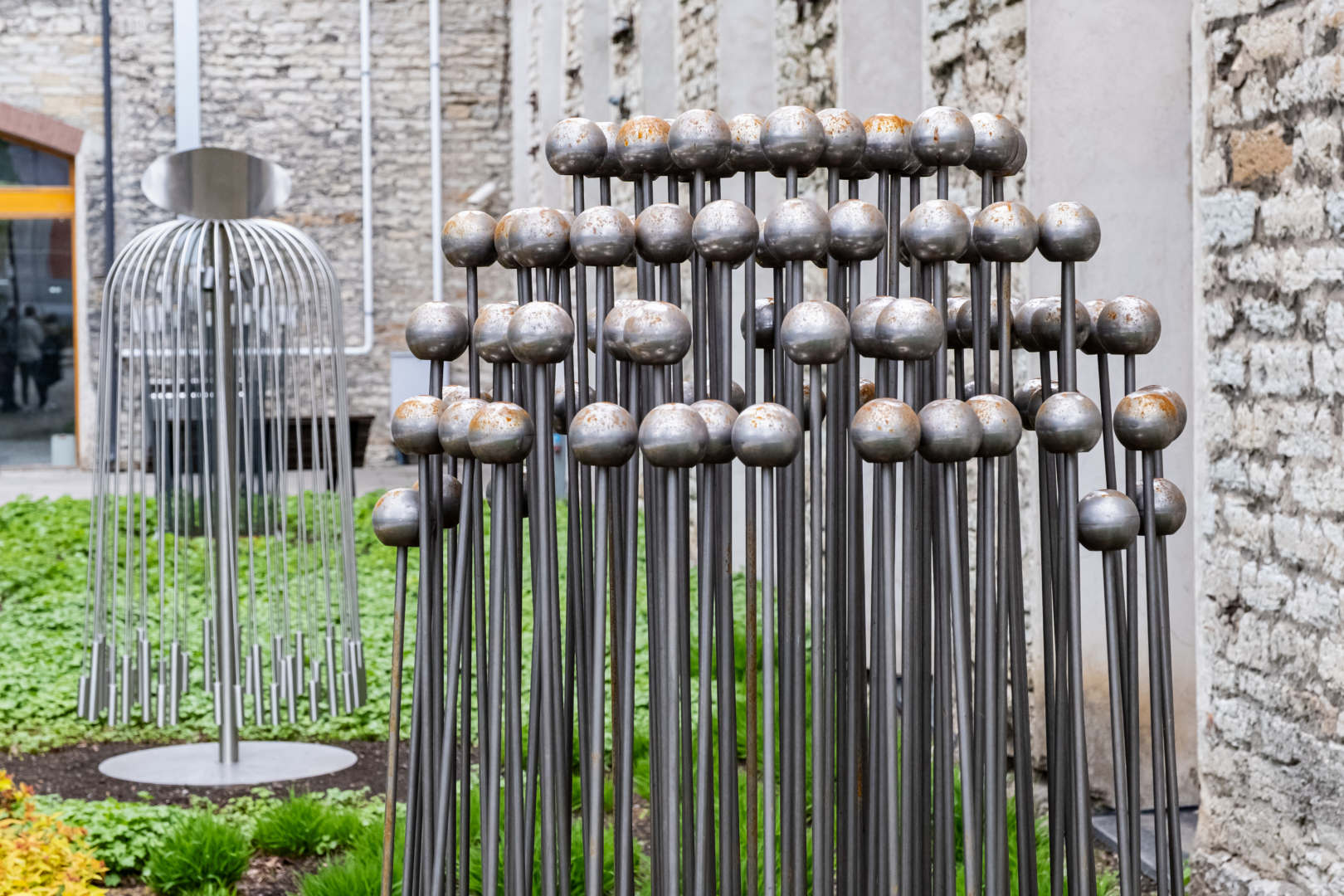
Sounding Together
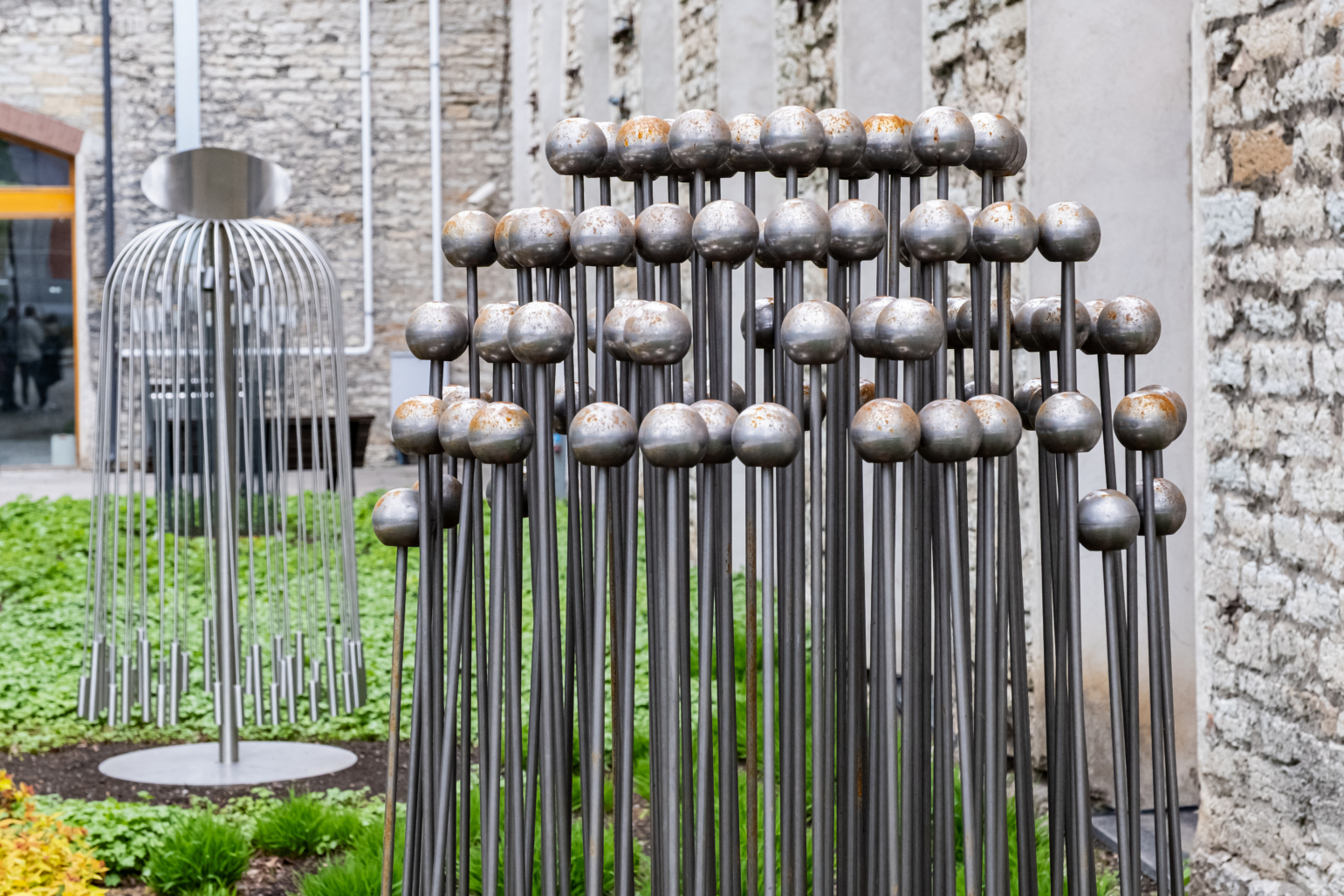
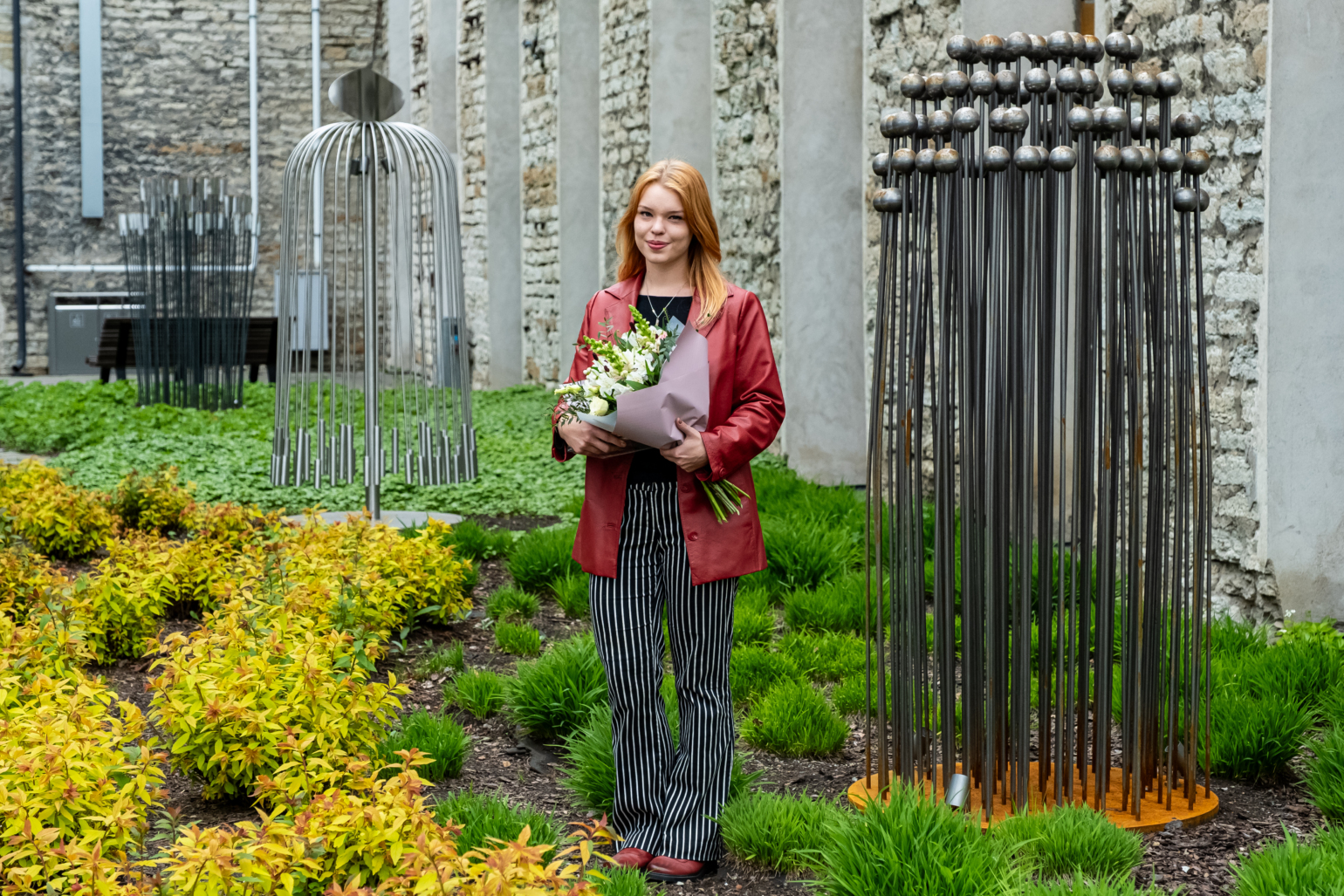
“Sounding Together” is a sculptural work created by EKA student Lume Tuum under the supervision of EKA lecturer Kirke Kangro. The work was born as the result of a student competition, where six young artists presented their ideas and also received thorough feedback on them. Lume’s work was selected, sensitively combining the character of the space with a poetic concept.
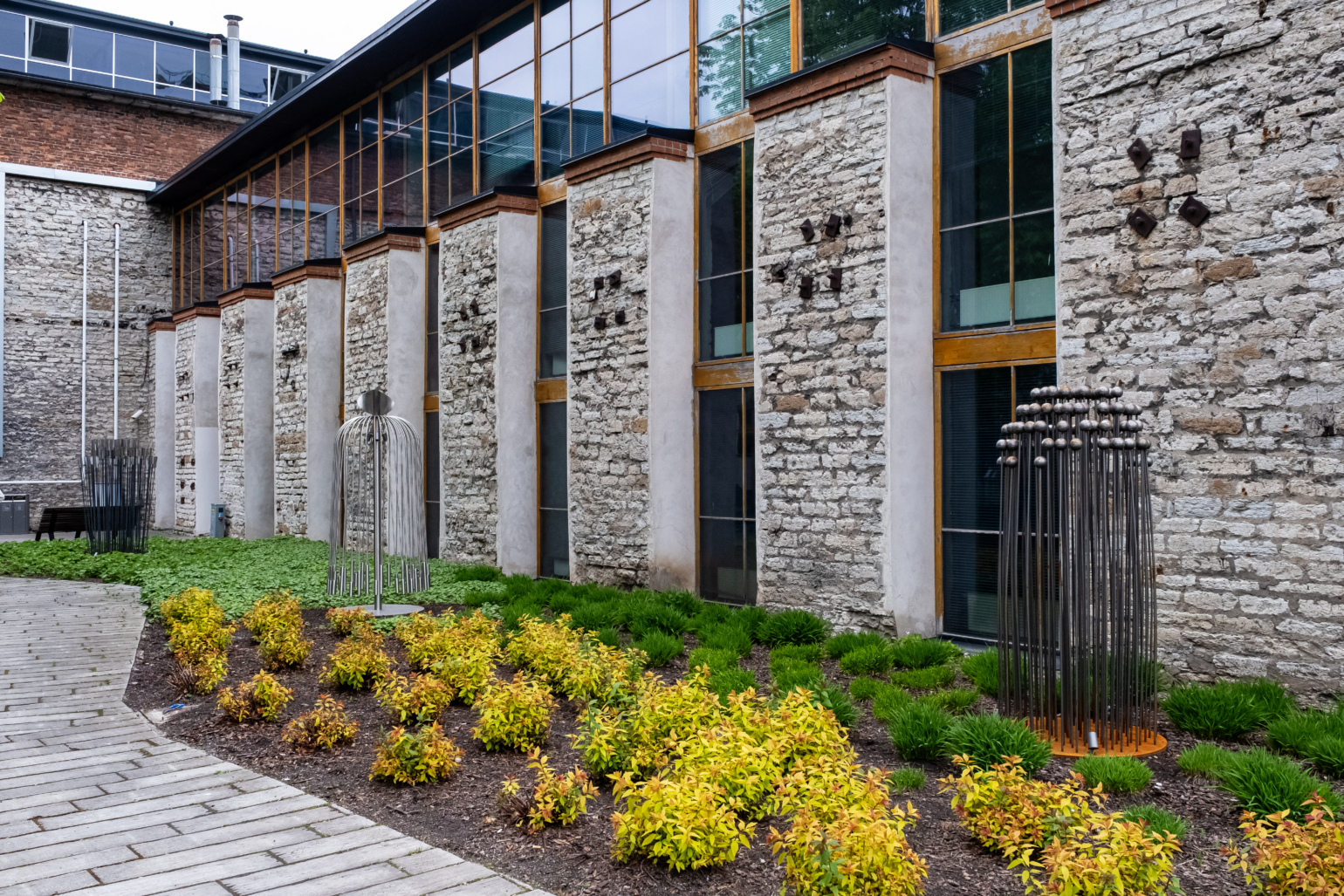
The starting point for the design developed from a direct spatial experience. A visit to the garden, where the work was intended to fit, led the artist to think about the elements present there – openness, greenery and wind. The garden, located between large buildings, creates a special contrast where the natural and architectural environments meet. It was precisely this dissonance that inspired the artist to treat wind as an invisible yet perceptible material and to search for its visual and formal expression.
This led to the idea of plant-beings – sculptures that seem to grow out of the environment and respond to movement and air. The central concept of the work, “Koos kõla”, refers to the relationship between people and the meaning of interaction. Learners, employees and visitors meet daily in the campus, and the artist interprets this as a constantly moving system where contact gives rise to something new and resonant. This metaphor emphasizes the value of a co-creative experience and the invisible connection between people.
The work’s development was also strongly influenced by supervisor Kirke Kangro, who noted that the combination of metal and plant-like formal language creates a strong visual tension. The garden’s chamber-like and intimate scale provides a suitable environment for the sculptures, where details can come into focus. At the supervisor’s suggestion, a third form was added to the initial two, enriching the whole and creating a more dynamic composition.
The execution of the sculptures was carried out by HN Steel, whose technical contribution enabled the artist’s idea to materialize in durable and precisely finished forms. In this way, creative thought and engineering execution meet in the work, resulting in a spatial installation that relates to its surroundings both visually and perceptually.